Inform ★ Engage ★ Empower
June 2026
|
|
|
|
|
What the Runoff Is Really Asking
Experience vs. Combat
|
|
|
|
|
The Governor and Senate races will drive strong turnout on June 16 — but the Secretary of State race deserves an equally thoughtful vote. The chaos of recent years — Fulton County fights, the QR code crisis, the endless litigation — reflects what happens when this office is led weakly. Georgia Republicans delivered their verdict on the current SoS unmistakably: Brad Raffensperger was repudiated by his own party, finishing a distant third in the Governor's primary.
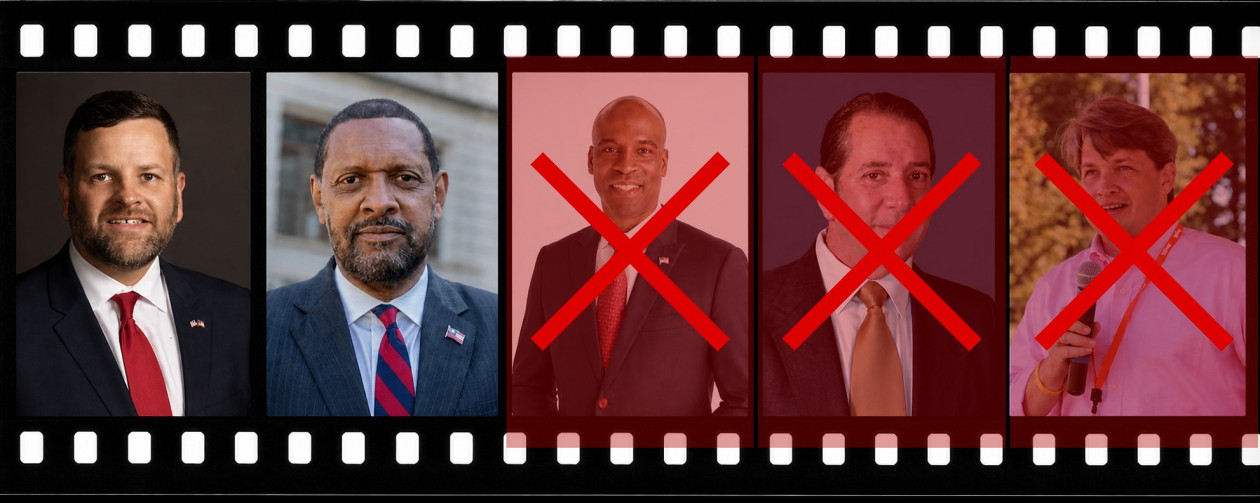
The May 19 primary narrowed the field from five to two. This month, we look at what the results reveal and why — despite appearances — this race is not settled. Whoever wins November's general election will make the most consequential election infrastructure decision Georgia has faced in years: replacing the Dominion voting system when its contract expires in 2028. This runoff is less a debate over goals than over who Republicans trust most to lead and deliver them.
|
| |
|
|
|
Editor-in-Chief
Paul Miller is a Fulton County resident who has served as a poll worker, poll watcher, deputy registrar, and observer in Fulton County elections. A retired technology and business leader, he brings a practical perspective shaped by firsthand experience.
|
| |
|
|
|
🗳️ Fulton County GOP Election Integrity Leadership Team
Team Lead: Kevin Muldowney | BRE Liaison: Kevin Muldowney |
Poll Watchers: Steve Smith | Poll Workers: Lucia Frazier & Melissa Fioriollo |
Newsletter: Paul Miller | Design: Adrianne Miller
|
| |
|
|
|
|
|
A Deeper Look into the Primary Results
Three Voting Blocs
|
|
|
|
|
The primary sorted the five candidates into three distinct groups. Understanding those blocs — and what happens to their voters in the runoff — is the key to understanding June 16. See last month's newsletter for full candidate profiles.
|
| |
|
|
|
EXPERIENCE BLOC
Tim Fleming
39.2% · 333,854
Gabe Sterling
12.0% · 101,686
Total
51.2% · 435,540
|
|
|
COMBAT BLOC
Vernon Jones
27.3% · 232,310
Ted Metz
5.6% · 47,691
Total
32.9% · 280,001
|
|
|
SWING BLOC
Kelvin King
15.9% · 135,735
Only candidate in this bloc
|
|
|
|
|
For full results, visit the Georgia Secretary of State Site HERE.
|
|
|
|
|
The Experience bloc — Fleming and Sterling — is the experience-first wing. Fleming served as Deputy Secretary of State under Brian Kemp and later as Kemp's chief of staff; Sterling was the office's chief operating officer and became its public face defending Georgia's 2020 results. They ran on institutional knowledge and the ability to actually manage the office. Together they won 51.2% of the primary vote.
The Combat bloc — Jones and Metz — is the fight-first wing. Jones is a former Democrat who became a prominent Trump ally after 2020. He's running his fourth race in four years. Metz spent 14 years in election-related litigation — all battle, all the time. Together, they drew 32.9% from voters who want a fighter in the office, not a manager.
The Swing bloc — Kelvin King alone — is the genuine wildcard. His wife, Janelle King, serves on the Georgia State Election Board and has been an outspoken advocate for election reform, giving King real credibility with Combat-minded voters. At the same time, King demonstrated substantive command of election policy at the primary debate and on his campaign website — appealing to Experience voters as well. His 135,734 supporters could go either way, and they may well decide the runoff.
|
| |
|
|
|
Comparing the Final Two
Agreement on Where to Go,
Not on How to Get There
|
|
|
|
|
Shared Long Term Goal
Both candidates support hand-marked paper ballots, cleaner voter rolls, and a new statewide voting system by 2028.
|
| |
|
|
|
Background
Deputy Secretary of State 2013–2017 under Brian Kemp; later Kemp's chief of staff. Elected to the state House in 2022. Chaired the House Blue Ribbon Study Committee — six statewide hearings, formal recommendations issued February 2026 →
The Case For
Knows the office from the inside. Established relationships across the legislature and executive branch. Argues he is the most electable conservative in November.
Liability
Kemp connection frustrates many election integrity voters. Skipped the primary debate. His Blue Ribbon panel's recommendations were never enacted by the legislature.
|
|
|
Background
Former Democratic state representative and DeKalb County CEO — has run a large government operation before. Switched parties after 2020. Won 27% in the primary largely on brand recognition; no direct involvement in election operations.
The Case For
Willingness to challenge institutional inertia. Calls for immediate emergency hand-marked paper ballots — closer to what Fleming's own committee recommended.
Liability
Four races in four years. The open question: can a career campaigner transition to running one of Georgia's most complex offices?
|
|
|
|
|
The debate over QR codes and paper ballots runs deeper than the technology. As this newsletter argued in April, the QR code is the symptom — the disease is the erosion of trust in Georgia's elections. A recent AJC poll makes the point plainly: only 49% of likely Republican primary voters support switching to hand-marked paper ballots, while 45% oppose it. The electorate is nearly split on the specific cure. What it isn't split on is the underlying demand — elections that are transparent, verifiable, and beyond a reasonable doubt.
Fleming's case rests on institutional knowledge, governing experience, and electability — but critics question whether steadiness alone satisfies a base demanding aggressive reform. Jones's case rests on grassroots credibility and a willingness to challenge the establishment directly — but skeptics question whether activist intensity translates into effective administration.
After years of promises and frustration, which do you trust to actually get it done?
|
| |
|
|
|
"I follow the old Buckley rule: support the most conservative candidate who can actually win — and from where I sit, the only logical choice here is Tim Fleming."
— MARK DAVIS, GEORGIA ELECTION INTEGRITY ADVOCATE (Read the full post HERE )
|
|
|
|
|
Looking towards June 16
This Race is Not Settled
|
|
|
|
|
You might look at that and conclude the race is settled. The numbers tell a different story. Primary runoffs always produce significantly lower turnout than the preceding primary. Georgia's own history makes this clear — runoff electorates routinely represent a fraction of the original primary pool, even in competitive statewide races. June 16 should do better than average, given the Governor and Senate races at the top of the ballot — but a substantial drop is still the baseline expectation.
|
| |
|
|
|
That matters because the runoff outcome depends on two things: which bloc shows up more, and where King's 135,734 voters go. If turnout drops roughly equally for both blocs and King voters split evenly, Fleming wins and wins comfortably. But if the Combat bloc — more motivated, more cause-driven — shows up at meaningfully higher rates, and enough King voters break toward Jones, the gap closes fast. Those two variables produce three very different outcomes:
|
| |
|
|
|
Scenario 1
Voters Play It Safe
Experience shows up: 45%
Combat shows up: 47%
King breaks to Jones: 40%
Roughly equal turnout. The electability argument wins. King voters break toward Fleming on pragmatic grounds.
Fleming +~75,000
|
|
|
Scenario 2
The Knife's Edge
Experience shows up: 40%
Combat shows up: 50%
King breaks to Jones: 63%
A 10-point turnout gap materializes. Enough King voters break Combat to nearly close the lead. The cost of complacency.
Fleming +~11,000
|
|
|
Scenario 3
The Upset
Experience shows up: 37%
Combat shows up: 53%
King breaks to Jones: 70%
A 16-point turnout gap. King breaks hard Combat. Jones wins — the kind of result that happens when a motivated base outruns a complacent frontrunner.
Jones +~22,000
|
|
|
|
|
The Bottom Line
Vote Thoughtfully, and Vote Soon
|
|
|
|
|
The Experience coalition holds a real primary advantage. But runoffs reward the motivated and punish the complacent. Scenarios 2 and 3 depend entirely on who shows up — and the Combat bloc has historically been more disciplined about returning for runoffs than establishment coalitions.
The next Secretary of State will oversee every Georgia election — and with the Dominion contract expiring in 2028, will make the defining election infrastructure decision of the next decade. Make your choice. Make it count.
|
| |
|
|
|
Early voting opens
June 6
|
|
|
Early voting ends
June 12
|
|
|
|
|
|
|
|