In this issue… architecture billings remain in a historic slump even as inquiries continue, while CRE sales, D.C. office upgrades, and ergonomic furniture demand point to selective market strength. Hybrid work debates intensify as Bank of America limits back-to-back remote days, workers link remote work to mental health, and flex-office platforms expand. Design coverage looks at purposeful meeting rooms, neuroinclusive environments, brand-building offices, civic spaces, and even a one-square-meter treehouse workspace. Product highlights include sustainable acoustic panels and ceiling tiles, flexible mobile tables, modular seating, and metallic hair-on-hide leather for elevated interiors.
|
| |
|
|
|
The U.S. office market showed signs of stabilization in July, with the national vacancy rate dropping to 17.7%, a 130‑basis‑point improvement year over year. Vacancy fell in 19 of the 25 largest markets, notably Dallas (18.7%) and Miami (11%), while San Francisco remained weak at around 26% despite high asking rents. Medical office space performed better than traditional office space, with slower declines in new starts and higher appreciation rates. Manhattan led office investment with about $5.2 billion in sales, followed by Dallas and the Bay Area. Overall office sales surpassed $36 billion across 1,576 transactions in the first seven months of 2026. Construction activity was limited, with roughly 29.5 million square feet under development, concentrated in Boston, Manhattan, and Dallas. Office‑related employment added 15,000 jobs in July but remained 80,000 jobs below the previous year’s level.
|
| Read more > |
|
|
|
A survey of nearly 14,000 workers shows that 59% of U.S. employees would reject a promotion requiring constant availability, with younger workers especially reluctant; many see promotions as imposing unspoken time expectations, and a significant portion have observed reduced happiness among colleagues who move into management.
|
| |
|
|
|
“Today’s workforce is clearly making the connection between how they work and how they feel. With the vast majority of people experiencing workplace stress at least some of the time, regardless of the type of work environment, employers should be paying closer attention to the conditions that can either support or undermine well-being. And for many workers, flexibility is a huge part of that equation, alongside manageable workloads, productive relationships, and work practices that allow people to do their best work.”
- Keith Spencer, Career Expert at FlexJobs
|
| |
|
|
|
|
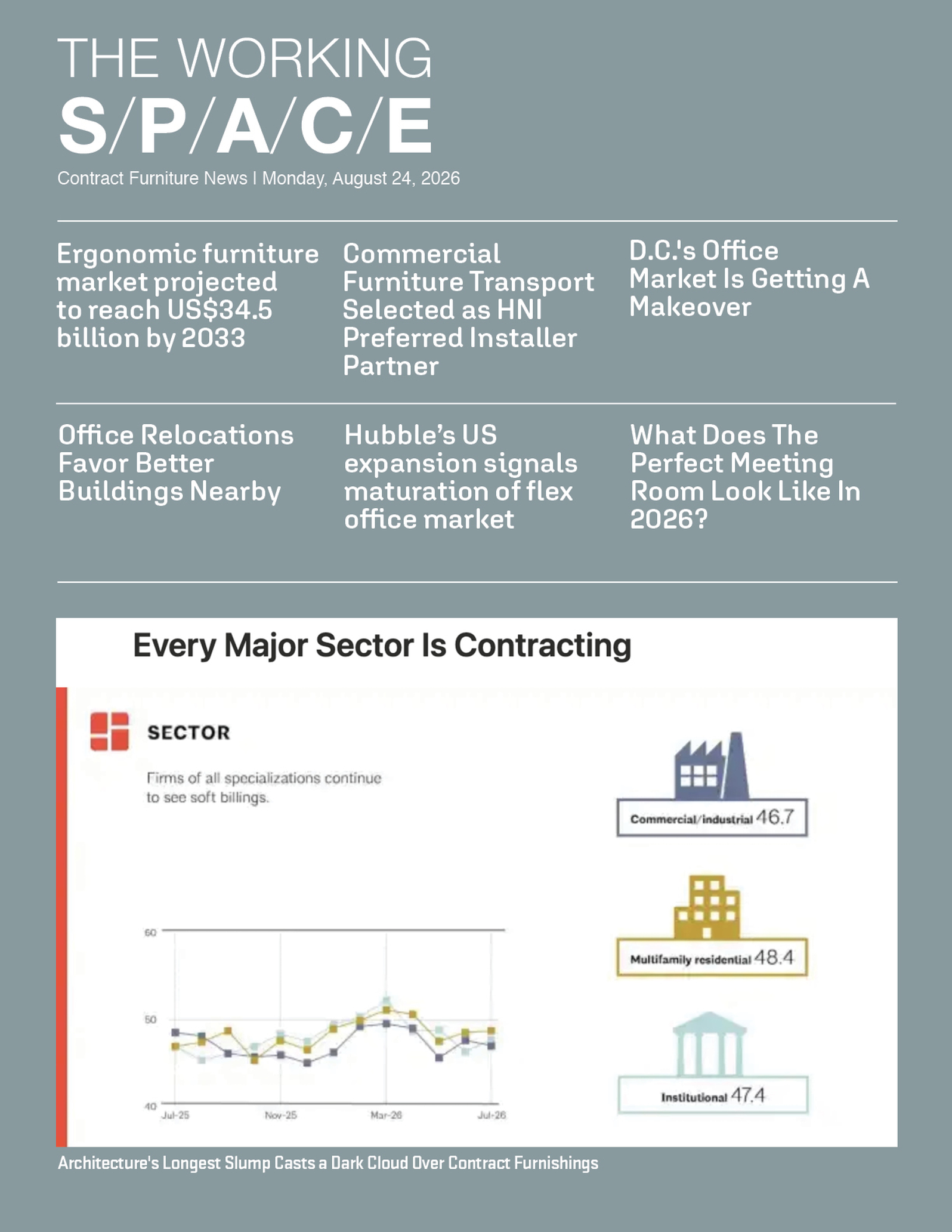
Architecture's Longest Slump Casts a Dark Cloud Over Contract Furnishings
|
|
The latest AIA/Deltek Architecture Billings Index signals that clients may still be talking about projects—but too few are committing to them. For the contract furnishings market, that is an increasingly serious warning about the large-project pipeline ahead.
The building industry has spent years waiting for the next turn in the cycle. July’s architecture billings data suggests the wait is not over.
The AIA/Deltek Architecture Billings Index fell to 46.6 in July, down from 47.3 in June and below the 50-point threshold that marks growth. More troubling than one month’s decline is the duration: AIA says the industry has now endured nearly three and a half years of soft business conditions, the longest such stretch in the index’s history.
That makes this more than another weak monthly reading. It is a dark cloud on the horizon for everyone whose business depends on large commercial, institutional and multifamily projects moving from idea to construction—and eventually into the furnishing, specification and installation phases.
The ABI is especially important because architecture firms sit near the front of the development cycle. AIA says the index typically leads nonresidential construction activity by nine to 12 months. When architects’ billings and signed design contracts are weak today, the implication is that fewer projects may reach the downstream stages that create demand for contract furniture, lighting, flooring, textiles and related services next year.
There is still interest. The project-inquiries index registered 52.6 in July, meaning clients continue to ask questions and explore possibilities. But the design-contracts index fell to 47.2. That gap tells the story: Companies, institutions and developers may want to build, renovate or expand, but too many projects are not clearing the financial, budgetary or confidence hurdles required to become real commissions.
For the contract furnishings sector, inquiry volume is not the same as a qualified project pipeline. A manufacturer can hear plenty of early optimism from dealer partners, architects and end users, yet still see fewer projects advance to furniture budgets, specifications and purchase orders. In a long downturn, that disconnect can produce extended sales cycles, more value engineering, postponed installations and heightened competition for the work that does move forward.
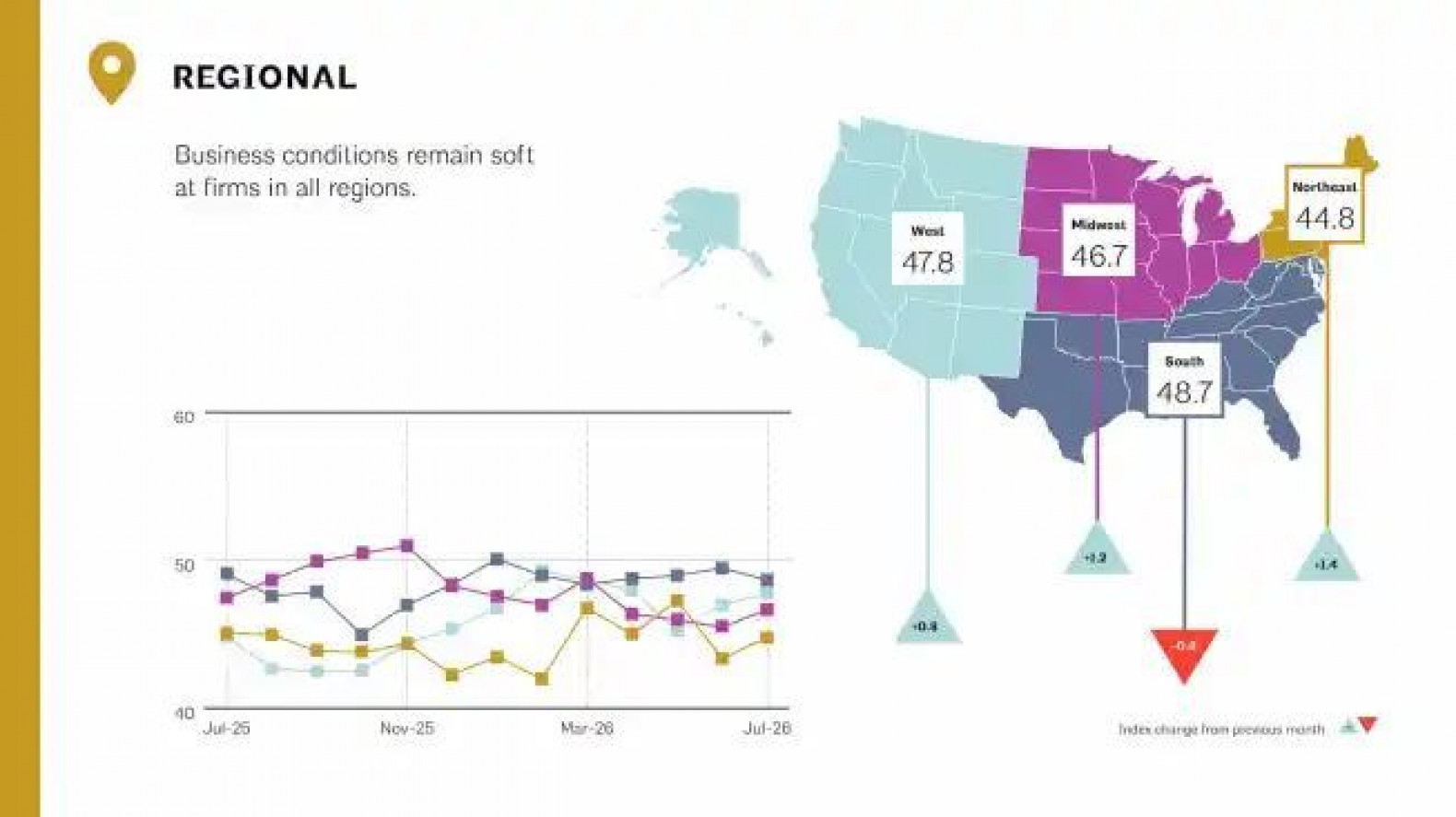
Weakness was widespread. All four regions remained below the growth threshold, with the Northeast posting the lowest score at 44.8. Billings also declined across every practice specialization. Commercial and industrial firms have not recorded billing growth in four years, according to AIA, while multifamily and institutional firms—two categories that had shown some improvement earlier this year—have softened again.
That is particularly concerning for the large-project business that supports the contract market. Corporate offices, higher education, health care, multifamily developments and public-facing institutional facilities are not just individual sales opportunities; they are the projects that fill dealer backlogs, support manufacturers’ production planning and create demand for ancillary products and installation services. A thinner architecture pipeline today can mean a more difficult revenue environment across the furnishings ecosystem tomorrow.
AIA Chief Economist Richard Branch pointed to macroeconomic uncertainty, warning that higher oil prices could add inflation pressure and potentially lead to higher interest rates later this year. For developers trying to make a project pencil out, even a modest change in financing costs can be decisive. A project does not need to be formally canceled to damage the market. It can be delayed, downsized, rebid or simply left in limbo.
This also complicates the rosy narrative that investment in new buildings and facilities is broadly accelerating. The ABI is not a direct count of construction starts or capital spending, and it should not be treated as the only measure of investment. But as a widely watched leading indicator, its prolonged contraction is persuasive evidence that the flow of new building work is not strengthening in the way optimistic political messaging would suggest.
The administration can point to announcements, proposed developments and long-term investment commitments. The ABI measures something more immediate: whether clients are actually hiring architects and signing contracts to move those plans forward. In July, the answer was still too often no.
For contract furnishings companies, the appropriate response is not panic. There will still be renovations, relocations, refreshes, health-care work, education projects and select large developments. But this is the time to scrutinize the quality of the pipeline, favor opportunities with committed funding, protect margins against late-stage value engineering and deepen relationships in segments that remain relatively resilient.
The most unsettling part of July’s report is that the industry does not appear to lack ideas or demand. It lacks conversion. After nearly three and a half years of soft conditions, the distance between a project someone wants to pursue and one they are ready to finance remains the central problem—and it is a problem the contract furnishings market cannot afford to ignore.
|
| |
|
|
|
The ergonomic furniture market is set to grow from $21.5 billion in 2026 to $34.5 billion by 2033, driven by a 7 % CAGR, increased demand for workplace comfort, posture support, and productivity‑enhancing solutions such as ergonomic chairs, sit‑stand desks, and adaptable workstations. Remote and hybrid work trends are expanding the market into residential spaces, while sustainability, modularity, and smart furniture create new opportunities. North America leads the market, with Europe and Asia‑Pacific also showing strong growth, though higher prices and limited awareness in developing regions pose challenges. Manufacturers that combine ergonomic functionality, adaptability, and sustainable materials are well positioned for continued demand.
|
|  www.interiordaily.com www.interiordaily.com
|
|
|
|
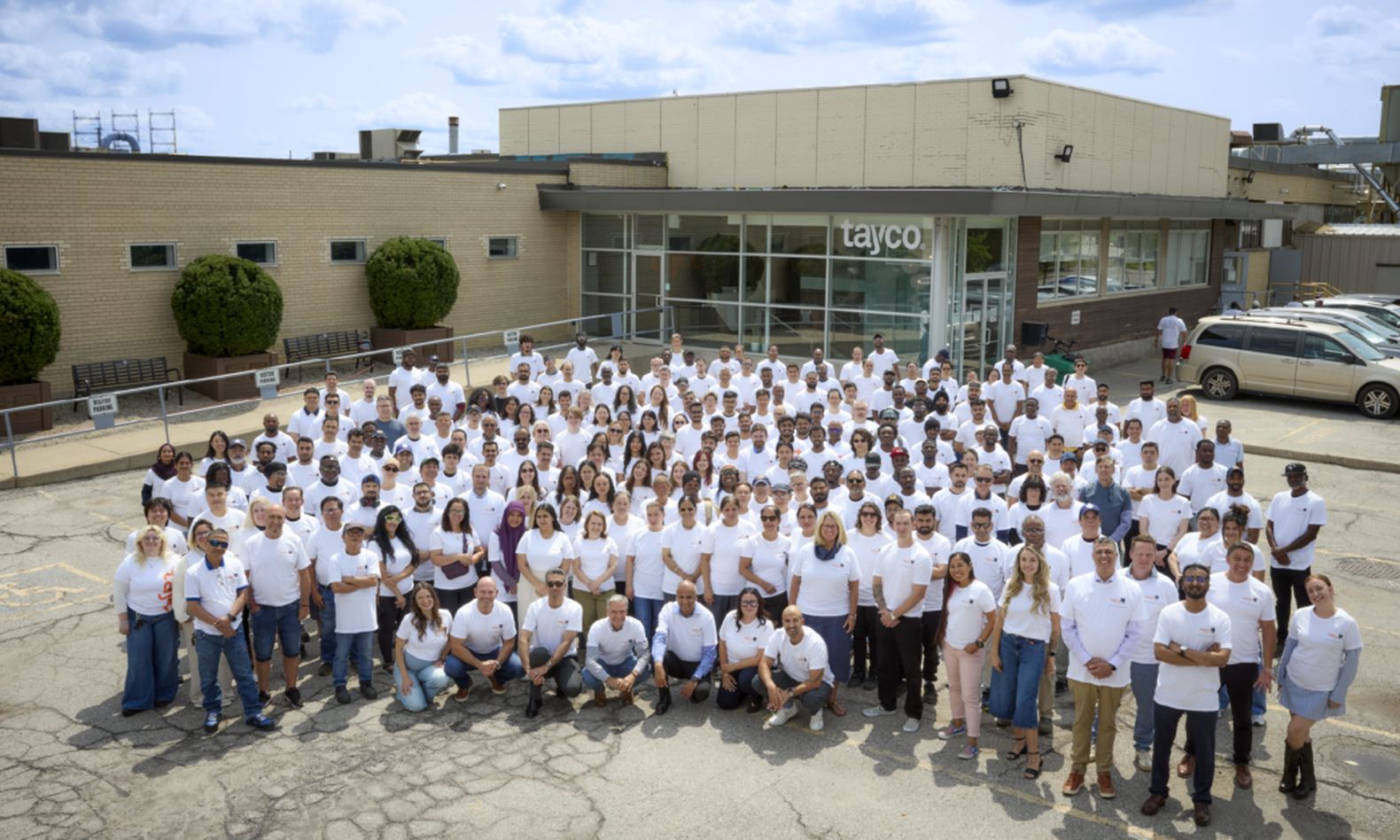
Tayco, a Canadian commercial furniture manufacturer celebrating 50 years, has again earned the 2026–2027 Great Place to Work® Certification, reflecting strong employee trust, pride, and engagement. The award highlights Tayco’s culture of collaboration, professional growth, community involvement, and its commitment to preserving a people‑first approach as it expands globally.
|
| |
|
|
|
Commercial Furniture Transport (CFT) has been chosen as HNI Corporation’s Preferred Installer Network partner for the New York, New Jersey, and Connecticut metro area, joining a select group of seven nationwide PIN partners. The partnership gives HNI dealers a local, turnkey solution for receiving, warehousing, delivery, installation, and project management, including union and non‑union teams, site coordination, inventory handling, last‑mile logistics, and ongoing service work. By collaborating early with CFT, out‑of‑region dealers can streamline planning, reduce risk, and ensure consistent customer experiences across the complex New York commercial interiors market.
|
| |
|
|
|
Design Milk has significantly reduced its editorial staff after layoffs in January and July, transitioning under Sandow’s ownership to integrate with the Architonic platform while maintaining editorial oversight. The publication now uses AI tools for assistance, includes a disclaimer on AI‑assisted content, and continues to produce sponsored Instagram posts that have drawn mixed reactions from followers. Recent initiatives include a free workshop on branding and SEO, and the brand maintains a strong social media presence despite recent staffing cuts.
|
|  businessofhome.com businessofhome.com
|
|
|
|
The D.C. office market is experiencing a surge of high‑value renovations as owners invest millions to upgrade aging trophy buildings and add premium amenities such as rooftop spaces, penthouses, modern lobbies, fitness centers, and conference facilities. With vacancy rates low in top‑tier properties and overall market vacancy still high, investors are acquiring distressed assets at deep discounts, then spending substantial capital to reposition them for quality‑seeking tenants, especially law firms. Recent projects include $10 M‑plus overhauls by Garfield Investments, Grosvenor, and other firms, targeting both new and existing owners to create competitive, experience‑focused office environments.
|
|  www.bisnow.com www.bisnow.com
|
|
|
|
Office occupiers are increasingly prioritizing locations close to employees, seeking buildings with strong transit access, talent proximity, and amenities that boost attendance and workplace experience. The 2026 CBRE survey shows higher in‑person expectations, a gap between desired and actual office days, and a clear preference for flexible, high‑quality spaces, while AI begins to influence space planning, emphasizing adaptable environments for future tenant needs.
|
|  www.globest.com www.globest.com
|
|
|
|
Commercial real estate sales surged in the first half of 2026, with transactions for properties valued at $25 million or more climbing nearly 30% year‑over‑year to $164 billion, driven by larger deals and increased sell‑side advisory activity. Financing also expanded, highlighted by Goldman Sachs’ $40 billion in CRE loans, a 21% rise, while AI data‑center projects and distressed assets added further momentum despite a stable Federal Reserve rate environment.
|
|  allwork.space allwork.space
|
|
|
|
Ikea’s sofa colors have shifted toward neutral tones like gray and beige since 2011, with a steep decline in vibrant hues. Data from catalog analyses shows early dominance of green and blue, later moving to tan, beige, and patterned designs, and a recent resurgence of interest in colorful options driven by designer trends, vintage collections, and consumer searches for bold shades. While neutral palettes still dominate, signs indicate a gradual return of brighter upholstery in living rooms.
|
|  www.fastcompany.com www.fastcompany.com
|
|
|
|
Hubble, a UK flexible office marketplace now part of Yardi, is launching in the U.S. across eight markets, offering a free listing platform that aggregates space from major flex operators and boutique providers. It aims to simplify on‑demand office acquisition with no lease commitments, providing broker‑like assistance at no cost and earning commission only on successful placements. The service targets small‑ and medium‑size businesses seeking rapid, flexible workspace solutions amid growing hybrid work trends and uncertain demand, and plans to expand to ten additional cities by year‑end.
|
|  www.facilitiesdive.com www.facilitiesdive.com
|
|
|
|
Wildfire smoke is forcing office landlords to prioritize indoor air quality, as recent smoke events have reached unhealthy levels in major cities and tenants now expect clear information and healthier environments. Building owners are installing sensors, adjusting HVAC systems, and communicating filtration measures to address smoke infiltration and improve cognitive performance, responding to growing tenant pressure for fresh air and visible air‑quality management.
|
|  allwork.space allwork.space
|
|
|
|
Bank of America will prohibit eligible hybrid employees from working remotely on two consecutive business days starting in mid‑September, requiring remote days to be spread across the week. The change aims to balance office occupancy, enhance in‑person collaboration, and better utilize office space without altering the overall three‑days‑in‑office expectation or total remote days per week.
|
|  allwork.space allwork.space
|
|
|
|
Remote work, especially fully remote arrangements, is seen as having the strongest positive impact on U.S. workers’ mental health, with half of respondents favoring it over in‑person work. However, 70% of workers regularly experience stress at work, citing management, job security, and workload as primary sources. While many feel engaged, meetings are identified as the top productivity disruptor. The findings highlight the need for employers to prioritize flexibility, manageable workloads, and supportive environments to improve well‑being.
|
|  allwork.space allwork.space
|
|
|
|
Hybrid work succeeds when organizations intentionally define why employees gather in the office, focusing on activities—such as brainstorming, mentoring, and collaboration—that are more effective in person, while leveraging AI thoughtfully and emphasizing strong management over rigid policies.
|
|  allwork.space allwork.space
|
|
|
|
The under‑desk treadmill became a staple for remote workers, offering quiet, low‑profile movement while they worked. Recent mandates forcing employees back to offices have disrupted these habits, as most workplaces lack the space, infrastructure, and budget to support walking pads. Studies show walking desks burn extra calories and have modest cognitive impacts, but commercial‑grade equipment is needed for office use. Adoption now depends on employer willingness to invest in wellness‑focused workstations.
|
|  www.indexjournal.com www.indexjournal.com
|
|
|
|
Companies are tracking employees’ hybrid schedules to optimize office space, coordinate teamwork, and maintain productivity, leading many firms to set specific in‑office days or prohibit consecutive remote days. This approach aims to balance flexibility with business needs, improve real‑estate utilization, and ensure collaborative interactions among staff.
|
|  www.fastcompany.com www.fastcompany.com
|
|
|
|
Civic spaces are evolving to strengthen community identity, connection, and resilience by embracing hyper‑local design, mixed‑use community hubs, and technology that enhances service access while preserving human interaction. These environments also prioritize employee well‑being and continuous learning, recognizing that supportive workplaces improve public service, and they aim to foster trust, belonging, and adaptability for both citizens and government staff.
|
|  www.haworth.com www.haworth.com
|
|
|
|
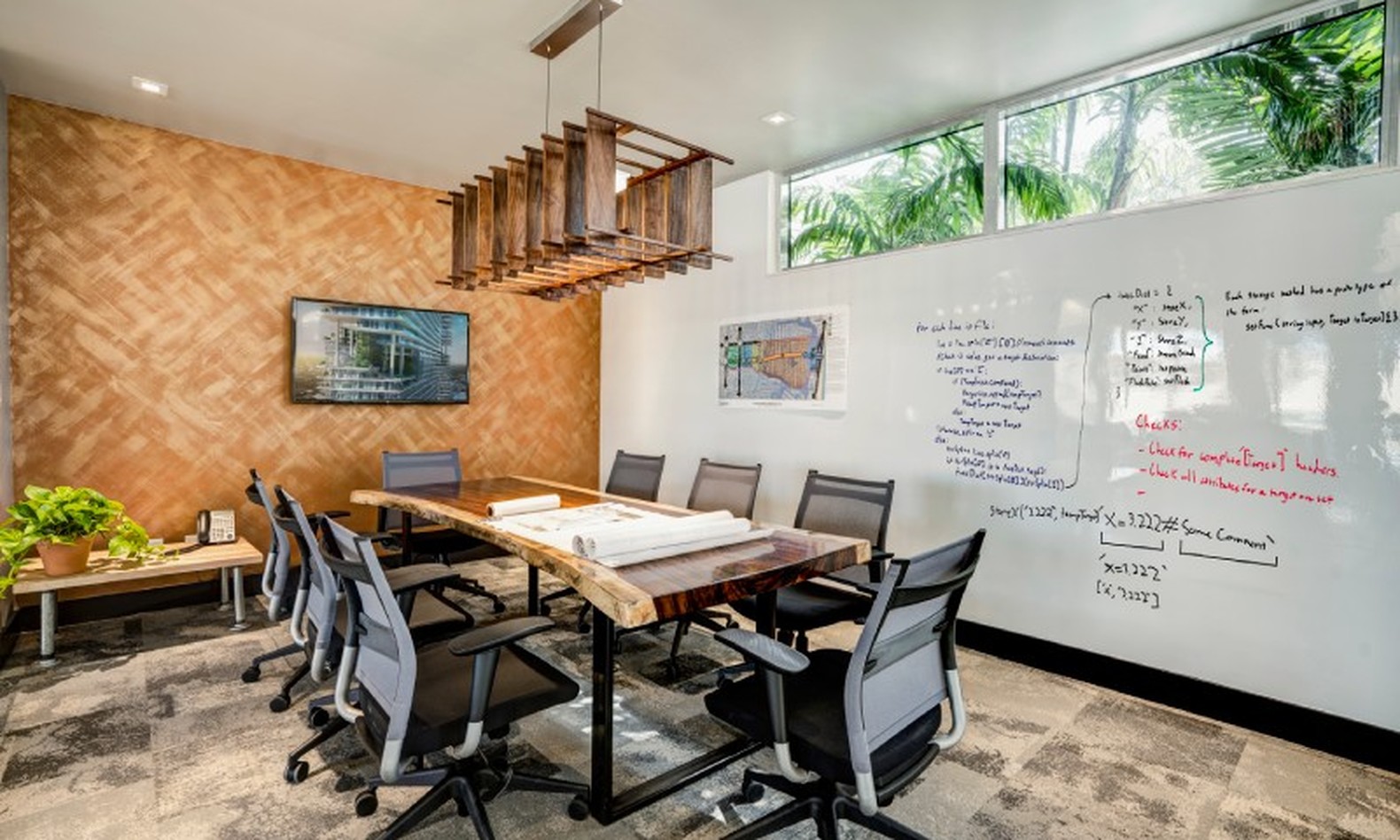
In 2026, US meeting room bookings are trending toward smaller groups, shorter durations, and tighter scheduling, with the typical reservation for six people lasting three hours and made about six days in advance, especially on Wednesday mornings. Amenities are largely standard—Wi‑Fi (99%), air conditioning (85%), screens and whiteboards (both 76%)—while video‑conferencing is present in only 42% of rooms; notable differences emerge versus the UK, where flipcharts dominate and whiteboards are less common, and in New York, where bookings average eight people, feature whiteboards in 83% of rooms, and include significant Saturday activity.
|
|  allwork.space allwork.space
|
|
|
|
Modern office design should prioritize human well‑being by integrating lighting that supports circadian rhythms, acoustic zones to reduce fatigue, ergonomic furniture, biophilic elements, and adaptable spaces for neurodivergent employees. These thoughtful choices boost employee satisfaction, retention, and productivity, reinforcing brand identity and delivering measurable ROI such as lower absenteeism and higher team morale.
|
|  officeinsight.com officeinsight.com
|
|
|
|
KI Europe’s 2026 ESG report highlights the company’s commitment to sustainable design and manufacturing, emphasizing long‑lasting furniture with warranties up to 25 years, extensive use of recycled materials (e.g., 50 % post‑consumer recycled polypropylene in the Postura+ chair and 100 % recycled content in the Sebel chair), and circular initiatives such as repurposing steel units into lockers. The report also underscores achievements in employee wellbeing, diversity, community engagement, and robust governance practices, supported by certifications like ISO 14001 and EPDs, demonstrating a holistic approach to environmental responsibility, social impact, and ethical management.
|
|  www.interiordaily.com www.interiordaily.com
|
|
|
|
|
Chicago workplace firms turn surplus office furniture into community impact
|
|
Wurkwel Ventures’ “Creating a Better Tomorrow” initiative partnered with Office Furniture Center‑Chicago and MAC Relocations to donate and install a full floor of office furniture for Big Shoulders Fund’s new Chicago workspace, extending the life of existing assets and supporting the nonprofit’s mission to improve education for Chicago’s children. The project showcases how furniture reuse and coordinated workplace expertise can generate both community and environmental impact while highlighting Wurkwel’s broader commitment to responsible asset management and in‑kind support for nonprofit organizations.
|
| |
|
|
|
|
Ultrafabrics Releases Research on Upholstery’s Role in Seating Comfort
|
|
Ultrafabrics’ third‑party testing reveals that its upholstery materials excel in comfort‑related performance, combining superior softness, flexibility, breathability, and thermal behavior. The study of 11 parameters shows the Brisa collection leads in moisture‑management and breathability, while Brisa, Ultraleather and Coast rank among the softest. Ultrafabrics samples also demonstrate lower heat‑flux values than polyurethane and vinyl, indicating more gradual heat exchange. These results highlight how upholstery influences long‑duration seating experiences across workplaces, healthcare, transportation, and entertainment settings.
|
| |
|
|
|
Wellness design now commands a premium across all major asset classes, with the global wellness real‑estate market projected to reach $1.1 trillion by 2029. Residential properties that prioritize wellness can achieve 10‑25 % higher resale values, commercial buildings see 4.4‑7.7 % higher rents per square foot, and hotels with strong wellness offerings generate over double the revenue per available room. Across sectors such as aviation, developers are integrating natural light, biophilic elements, flexible seating, and dedicated wellness spaces—like the yoga and sensory rooms at San Francisco International Airport’s Harvey B. Milk Terminal 1—to improve occupant well‑being, reduce stress, and ultimately boost performance and asset value.
|
|  www.gensler.com www.gensler.com
|
|
|
|
The wellness boom reflects a massive shift of consumer spending toward health‑focused experiences, driven by a desire for control, trust, status, stress relief, community, longevity, and self‑improvement. With the global wellness market projected to reach $9.8 trillion by 2029, brands and designers must create spaces that offer tangible progress, personalized data, social connection, and opportunities to maintain health and capability over a longer life.
|
|  www.gensler.com www.gensler.com
|
|
|
|
Office furniture has finally discovered the luxury-watch playbook: take a beloved classic, make fewer of it, add a number, and ask buyers to perform a small ritual of devotion before they’re allowed to hand over their money.
Vitra’s latest horological moment is the Panton Chair Classic Gold, a limited run of 999 individually numbered versions of Verner Panton’s iconic 1967 chair. At $5,900 apiece, it is less “somewhere to sit” than “a conversation piece for people who own other conversation pieces.” Each chair reportedly requires 26 handcrafted steps and more than 80 hours of work—which is reassuring, because for that price you want to know someone spent roughly two workweeks ensuring your seating arrangement is spiritually aligned.
The official launch is September 3, 2026. You probably won’t need to camp overnight outside a Vitra boutique, wearing a camping chair on your wrist and refreshing a group chat called “Panton Allocations.” But you do have to register on release day, because modern luxury demands a little friction. A chair cannot simply be bought; it must be pursued.
You can reserve a spot now, though the reservation doesn’t obligate you to purchase. It does, however, invite you to consent to data processing for newsletters—which is perhaps the most authentically contemporary part of the experience. You may not end up with a gold chair, but you will almost certainly receive updates about one.
In fairness, the Panton Chair is genuinely iconic, and Vitra’s Classic Gold treatment sounds painstakingly made. Still, there’s something delightfully absurd about applying the limited-edition-watch formula to office furniture. Soon, expect waitlists for ergonomic task chairs, “heritage” keyboard trays, and a titanium standing desk released in a run of 37, each engraved with the exact minute its owner decided they needed better posture.
|
|  register.vitra.com register.vitra.com
|
|
|
|
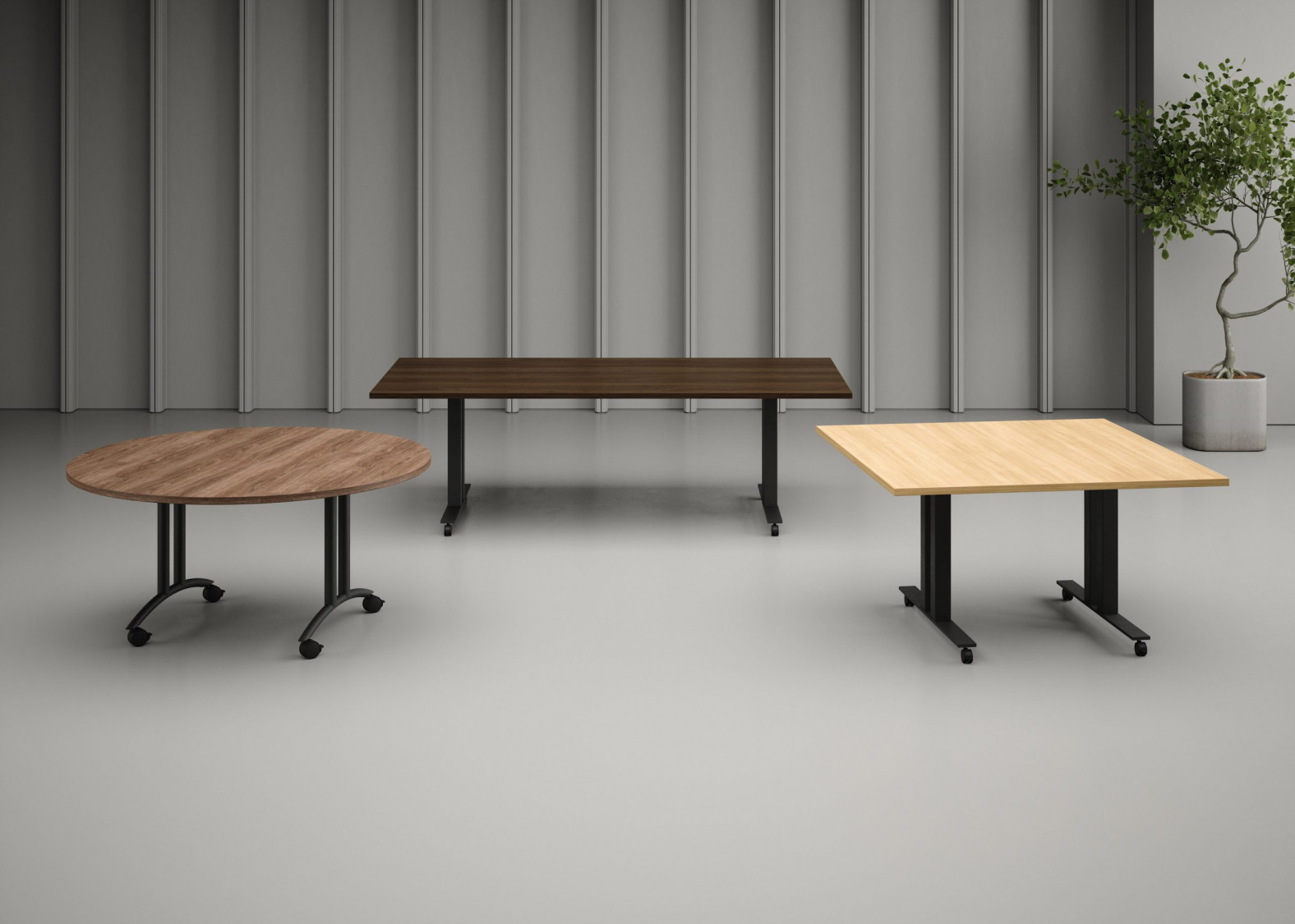
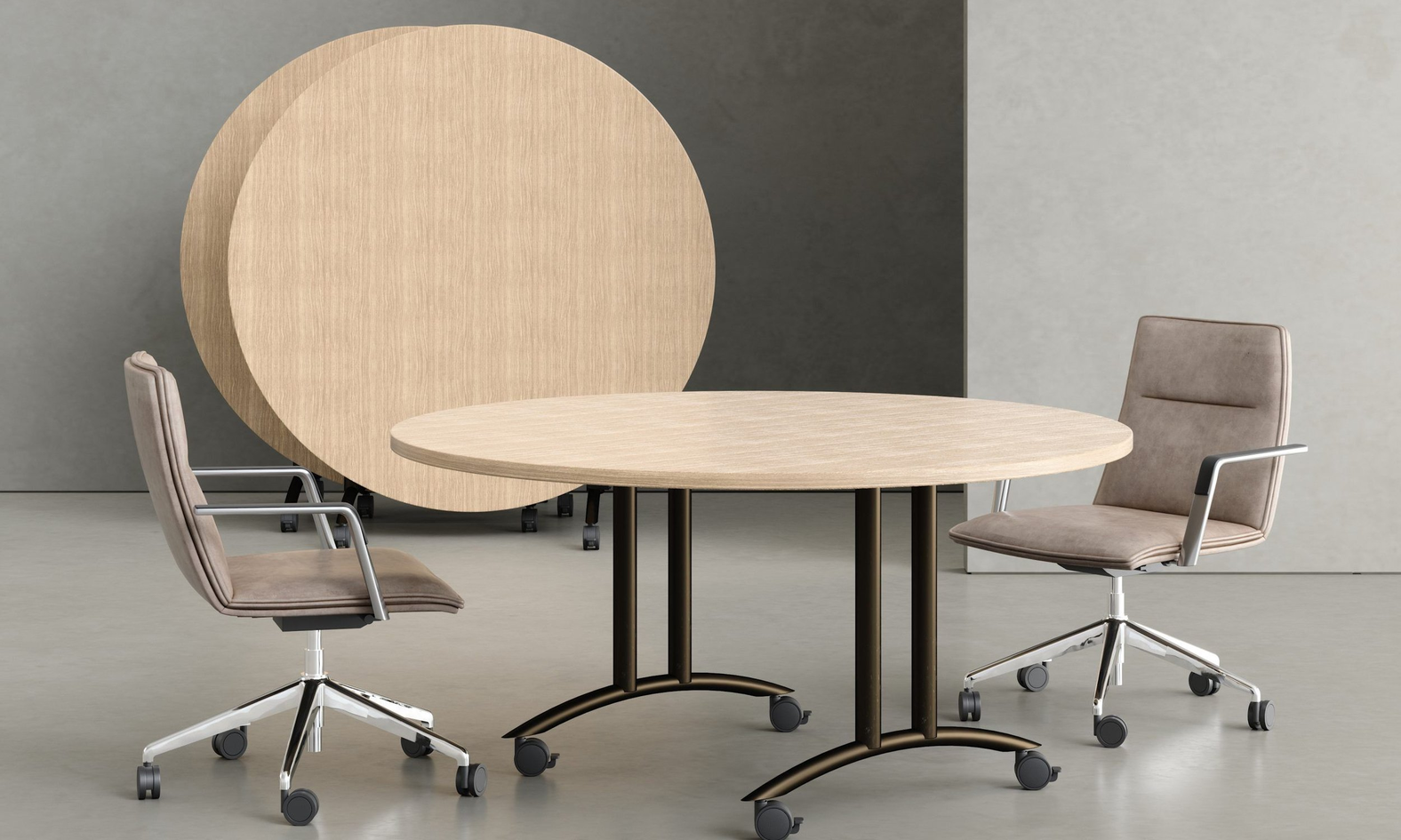
Nevers is expanding its lineup of adaptable workplace furnishings with Voltear, a collection of oversized mobile flip tables designed to help organizations quickly reshape meeting, training and collaboration spaces.
Available in 60-inch round and 96-inch rectangular models, Voltear brings the generous surface area of a traditional conference table to a mobile, space-saving flip-top format. The collection is designed for workplaces, classrooms and event settings where a room may need to serve multiple purposes in a single day.
The name comes from the Spanish word voltear—“to turn” or “to flip”—a nod to the product’s central promise: substantial tables that can still move, nest and store with ease.
“Voltear challenges the idea that a mobile flip table has to be small,” said Christopher Evenstad, Nevers CEO. “At 60 inches round and 96 inches long, Voltear delivers the presence and capacity of a large meeting table while giving facilities teams the flexibility to transform the room. With integrated power, it also keeps today’s connected users in mind.”
Each table is supported by a streamlined T-leg base with locking casters, allowing teams to reconfigure layouts without sacrificing stability. Round models create ample space for group discussion, while the 96-inch rectangular option supports larger meetings, presentations, training sessions and conference-style setups.
Voltear can also incorporate power directly into the tabletop, offering convenient access for laptops and other devices while preserving the collection’s clean visual profile. That integration reflects the increasingly technology-dependent nature of modern meeting and learning spaces.
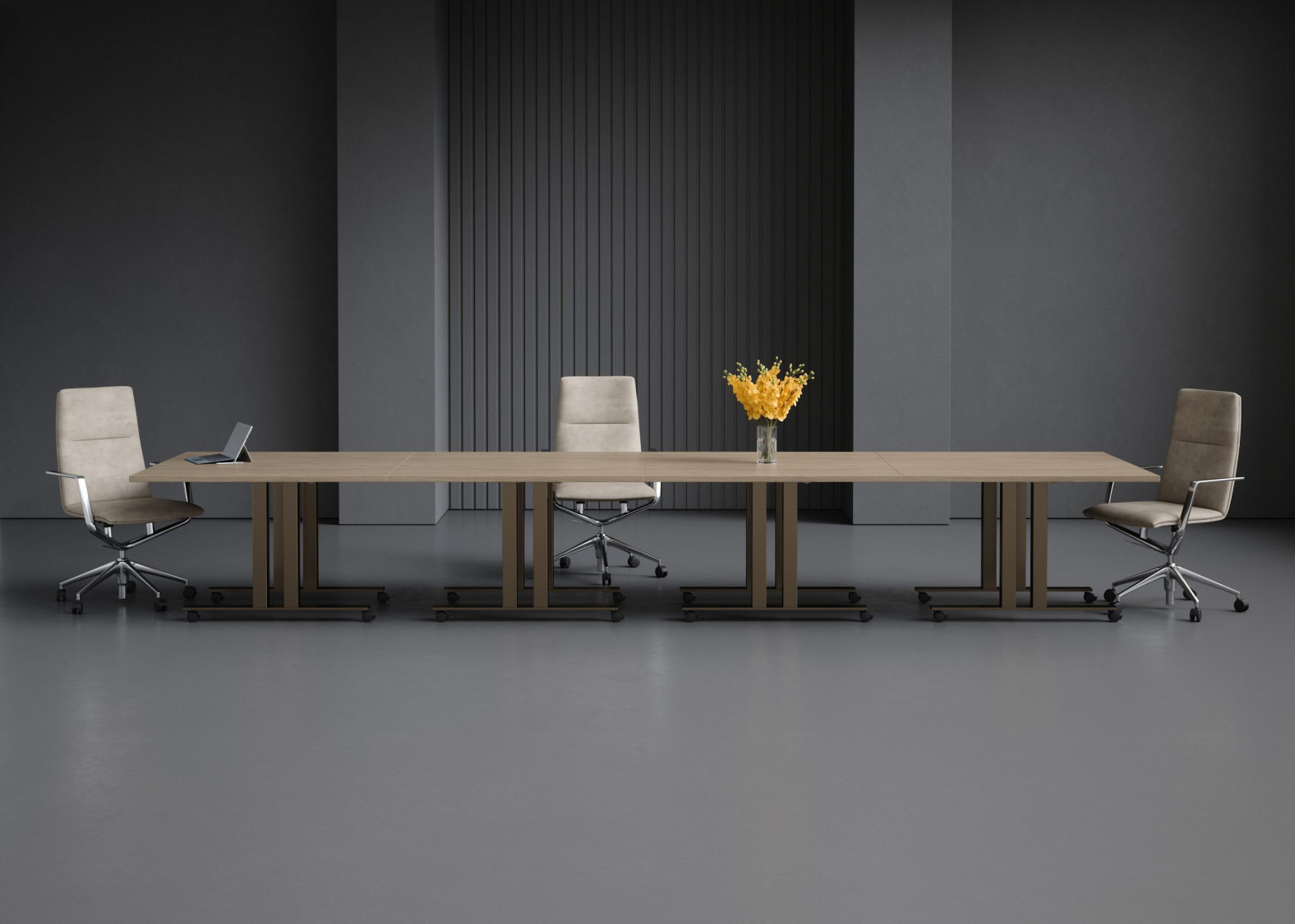
The tables nest together to support a variety of configurations, including presentation layouts, U-shaped meeting arrangements and classroom rows. When a room needs to open up, tabletops flip upright and roll into compact storage stacks. A quiet locking mechanism on the underside secures the surface in both its horizontal working position and vertical storage position.
For organizations trying to make more of every square foot, Voltear offers a straightforward proposition: the scale needed for serious collaboration, paired with the mobility required by fast-changing spaces.
The Nevers Voltear collection is now available. Learn more >
|
|  www.officing.com www.officing.com
|
|
|
|
Green Hides introduces Stardust, a premium hair‑on‑hide leather treated with a subtle metallic dusting that adds a refined, light‑catching sheen while preserving the natural texture and unique variations of each hide. Designed for upscale hospitality, workplace, and residential interiors, Stardust combines innovative foil‑transfer finishing with authentic leather character, offering a sustainable luxury material that is both glamorous and uniquely individual. Learn more >
|
|  www.officing.com www.officing.com
|
|
|
|
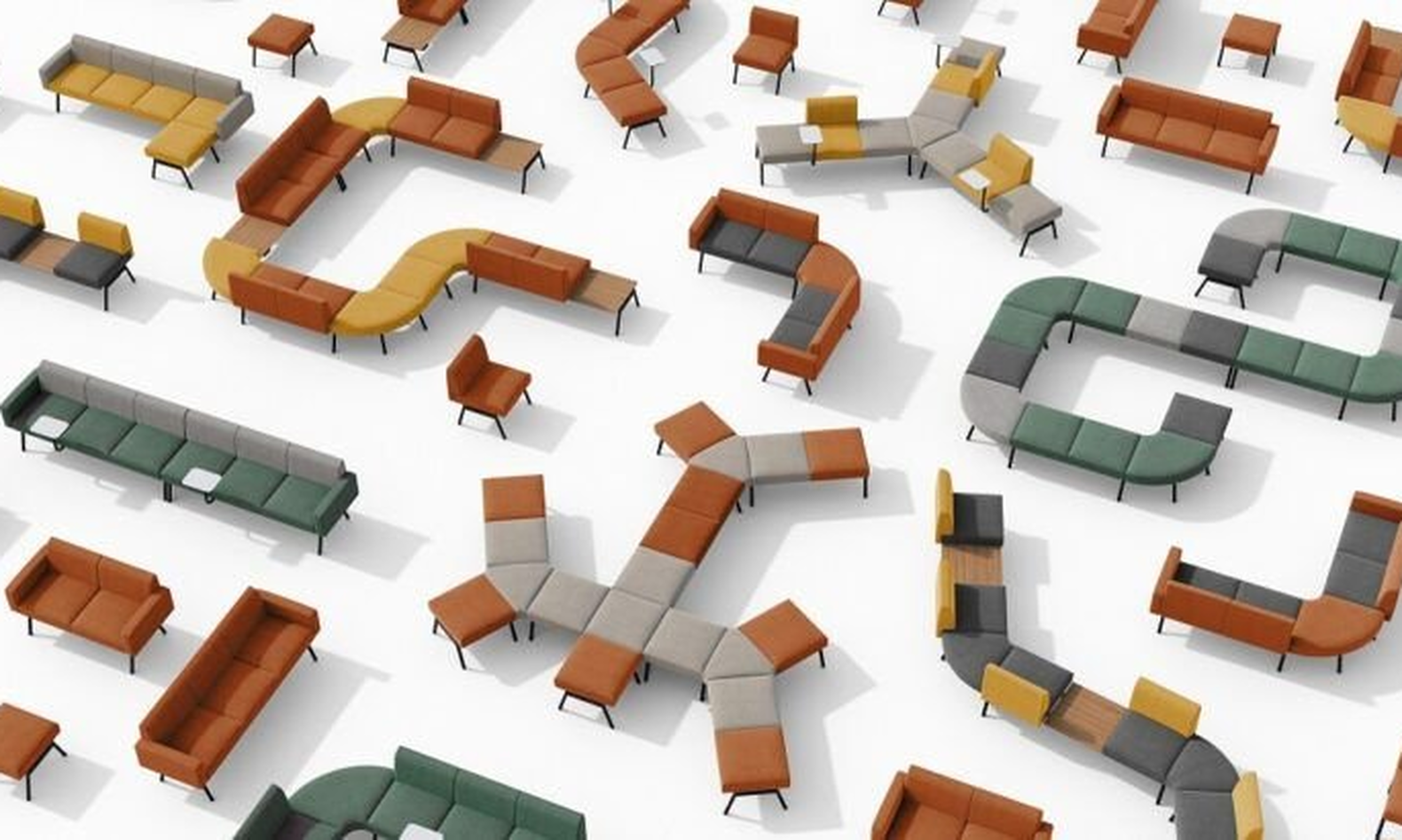
LD Seating expands its modular seating range with two new systems—Pod and Nido Bench—offering flexible, configurable solutions for offices, hotels, healthcare, and public interiors. Designed by Dorigo Design and Orlandini Design, the collections feature interchangeable poufs, benches, optional backrests, armrests, tables, and power outlets, emphasizing comfort, accessibility, and sustainability. Both systems are produced in LD Seating’s Boskovice facility, meet Crib 5 fire‑safety standards, and are supported by an upgraded online configurator for rapid layout planning.
|
|  www.officing.com www.officing.com
|
|
|
|
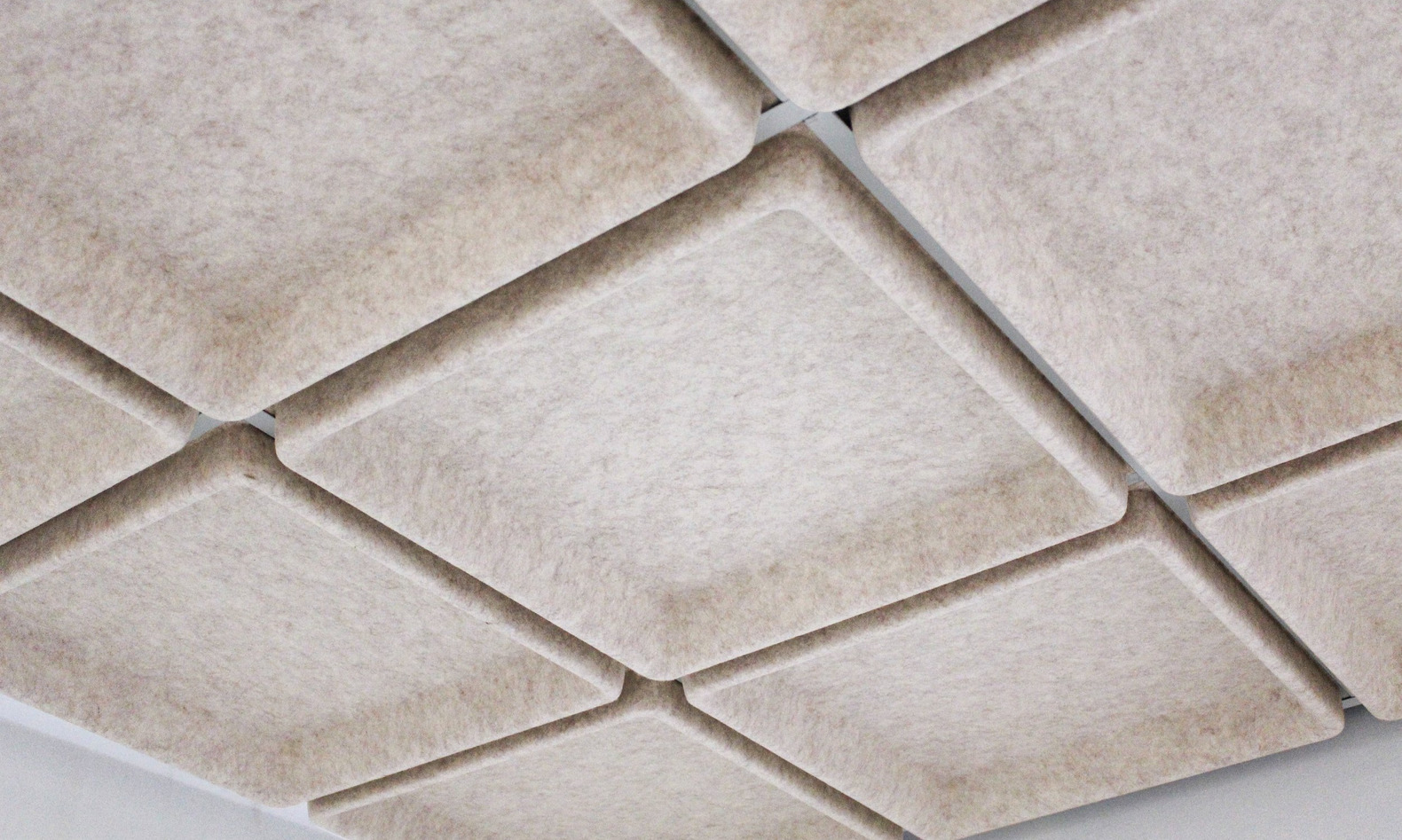
Unika Vaev, in partnership with Instyle, introduces two sustainable finishes for its Ecoustic® Versa ceiling tiles—Solid Core, containing up to 60% recycled PET, and Bio Hemp, made from 100% bio‑based material—offering designers enhanced flexibility while maintaining high acoustic performance and me
|
|  www.officing.com www.officing.com
|
|
|
|
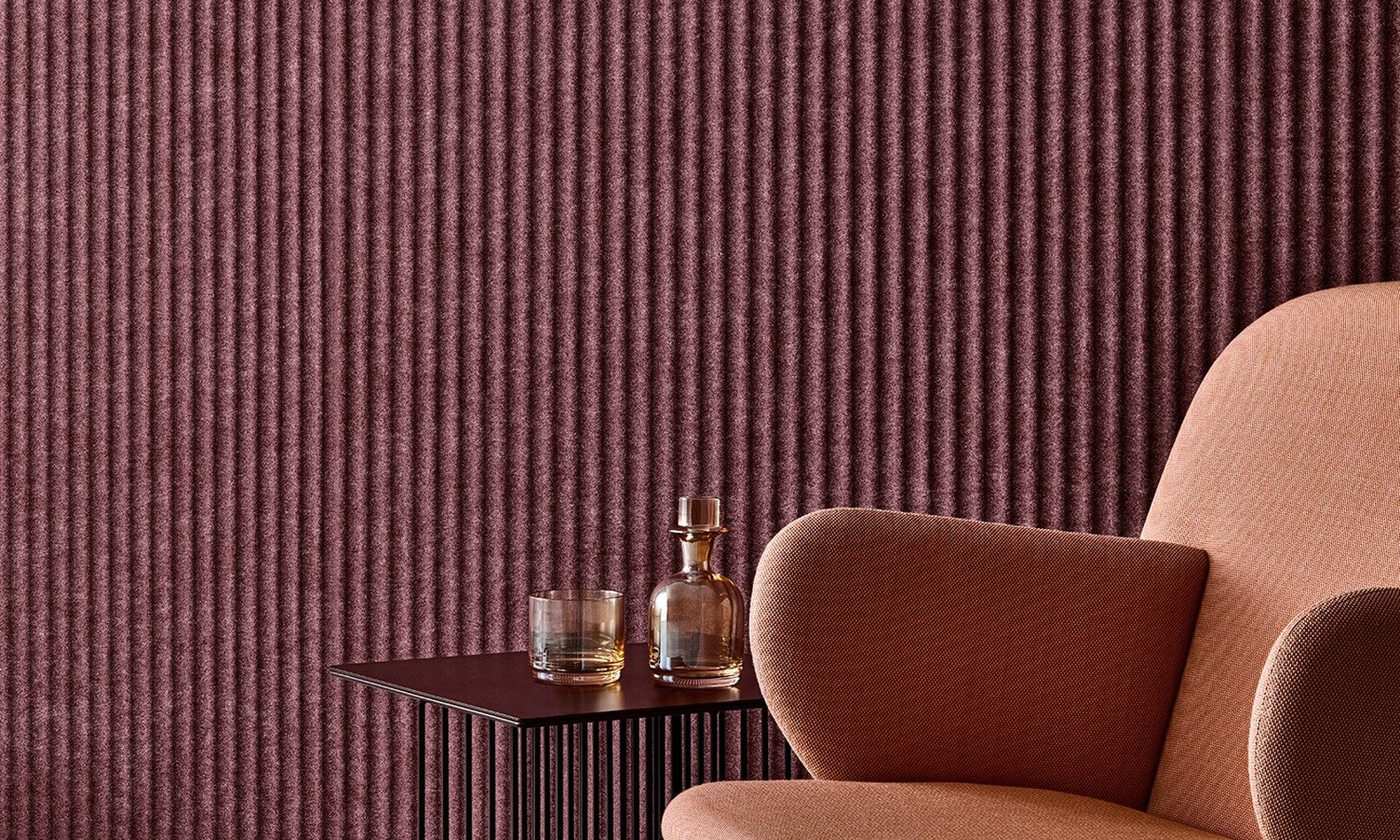
Kirei has launched four new acoustic panels—Column, Curtain, Nalu, and Umi—designed by Woven Image for commercial interiors. Column and Curtain are 9‑ft tall 3D‑formed panels with high NRC ratings (0.65 and 0.60) and eight colorways each. Nalu and Umi are embossed panels offering organic, water‑inspired textures, available in 19 and 25 colorways respectively, and can reach up to 0.75 NRC with acoustic backing. All panels contain 50 % post‑consumer recycled PET, carry a Declare Label, are Red List Free, and meet CDPH VOC standards.
|
|  www.officing.com www.officing.com
|
|
|
|
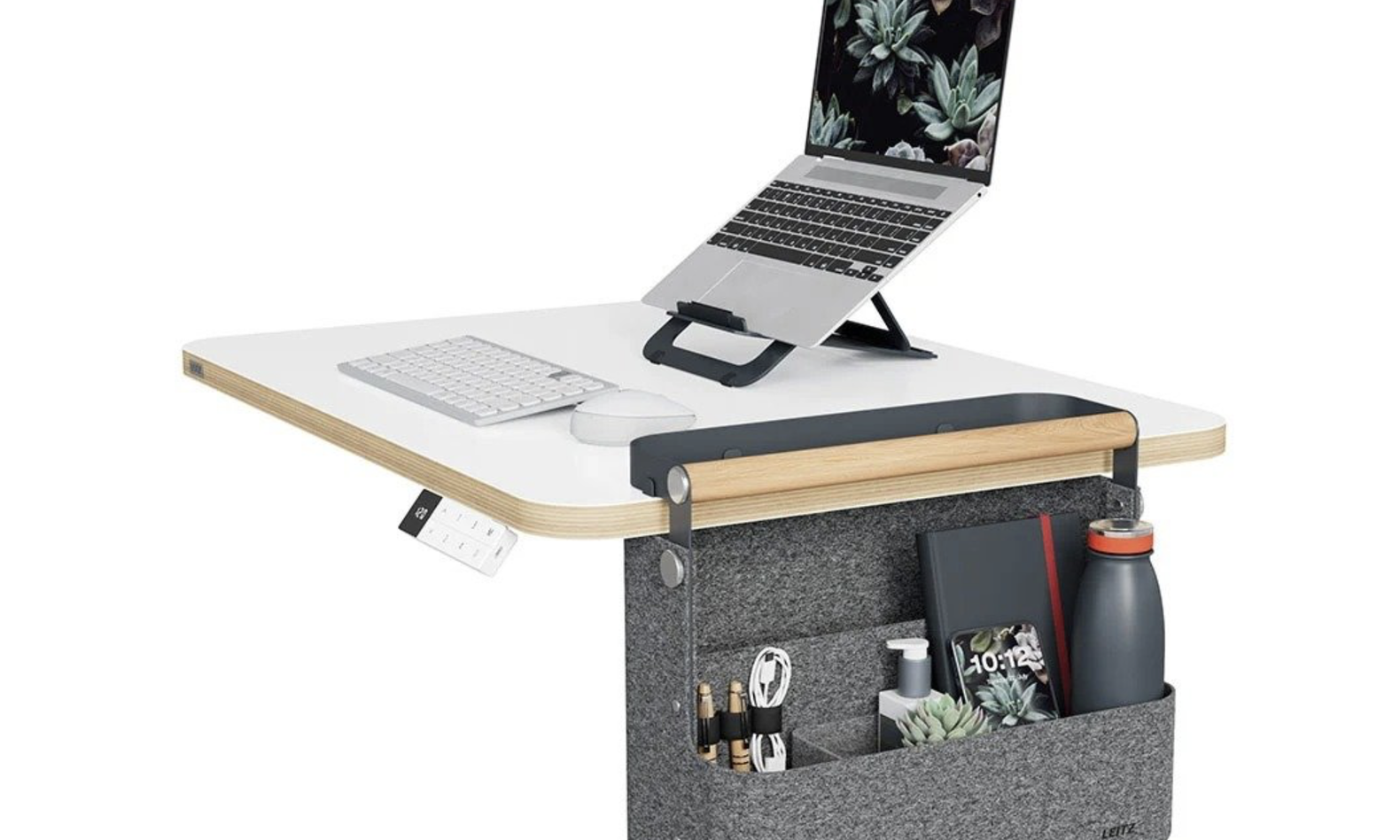
The Leitz Portable Desk Organizer, a thermofelt hanging caddy designed for hot‑desking environments, lets users store personal items in a locker and quickly attach the organizer to a desk when needed; its adjustable mechanism accommodates various desk thicknesses, and its recycled‑plastic material offers a sustainable, heat‑formed felt solution for modern, flexible workspaces.
|
|  www.core77.com www.core77.com
|
|
|
|
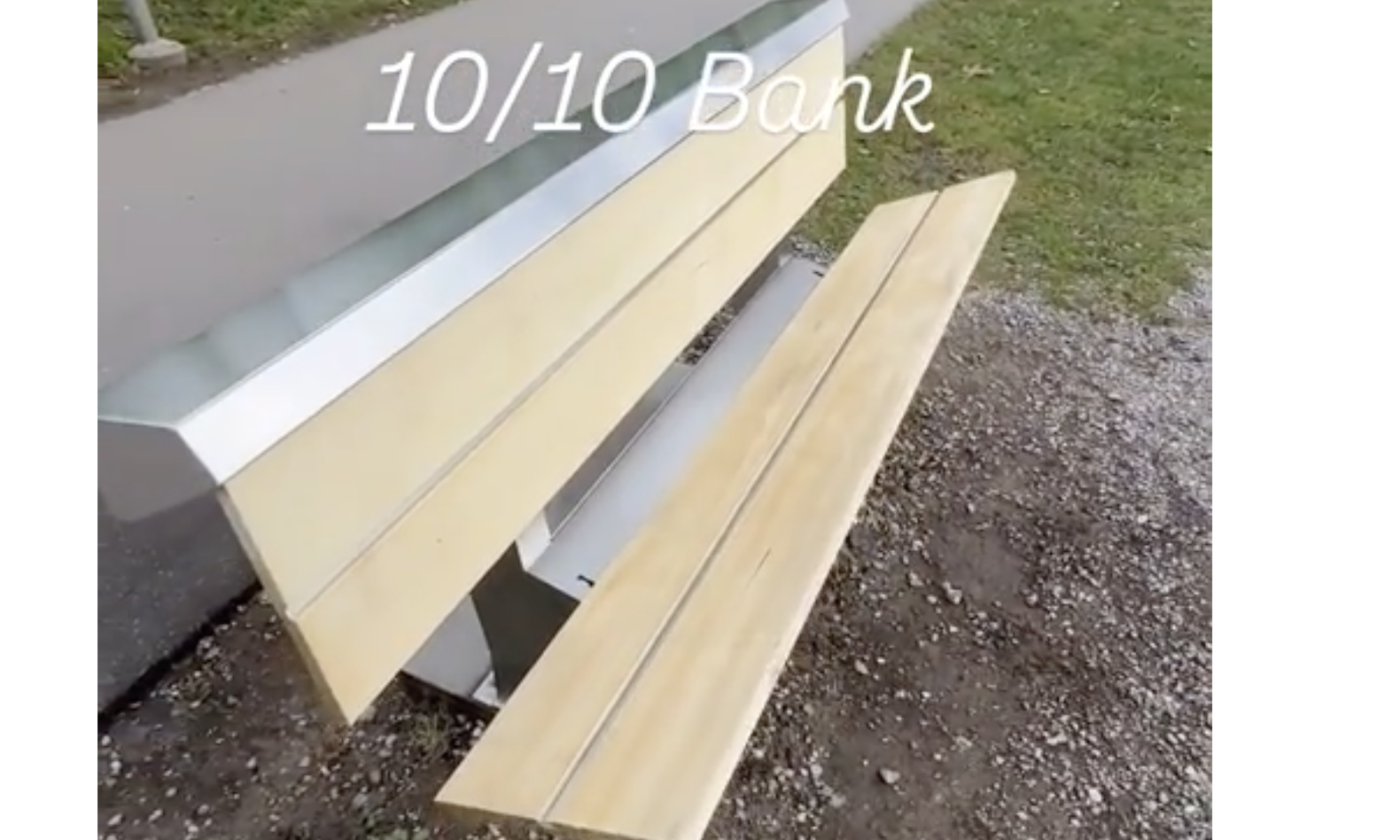
Public benches in Lausanne, Switzerland, feature internal springs that keep the wooden seats pressed together under a small metal roof, automatically folding to stay dry in rain and keep bird droppings off. When a person sits, their weight opens the bench, and the design allows easy cleaning of the roof, offering a low‑maintenance, weather‑proof seating solution.
|
|  www.core77.com www.core77.com
|
|
|
|
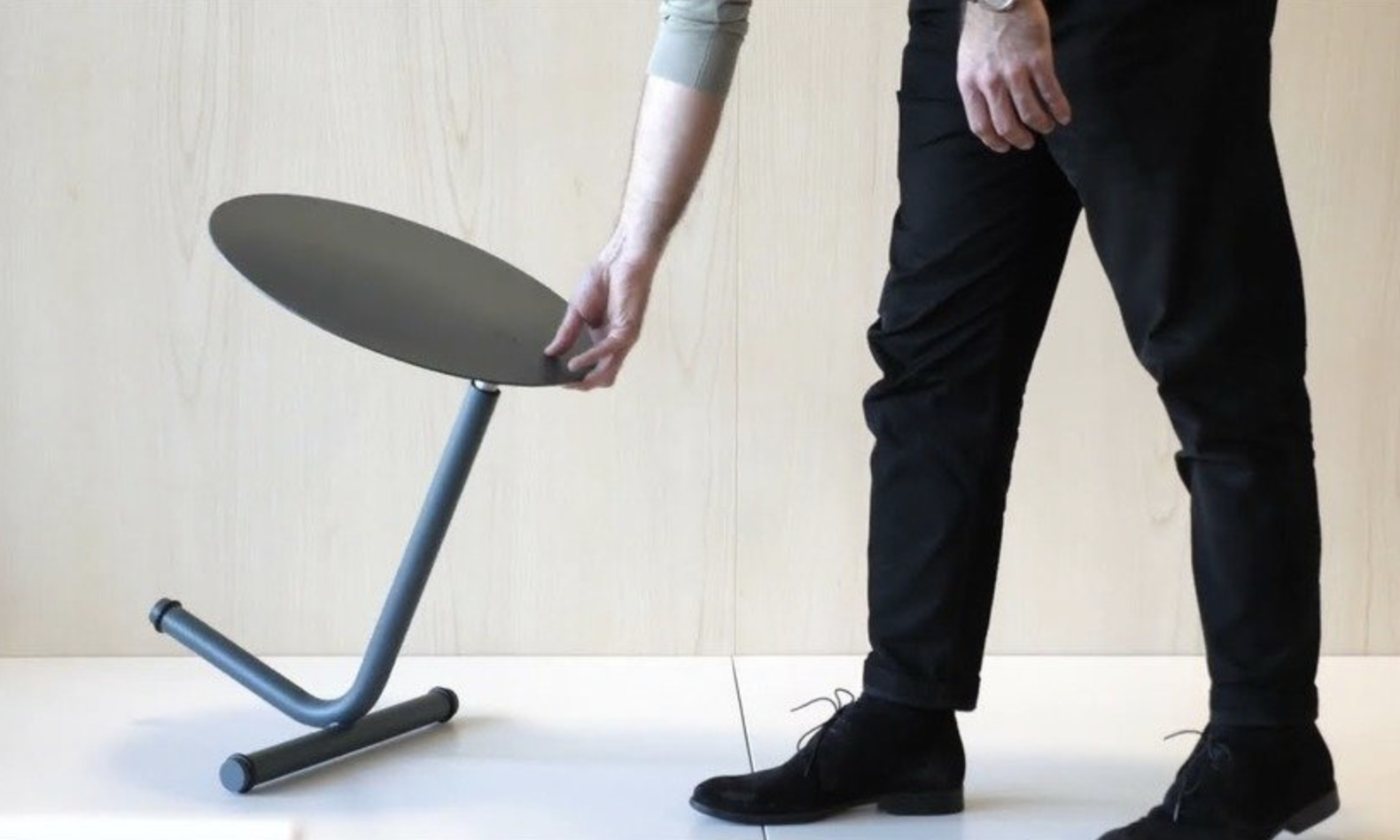
A sleek, height-adjustable side table designed by Mattias Stenberg features an offset leg with low‑friction glides, a flush button for height control, and interchangeable tops in glass, wood, or powder‑coated metal, available from Swedish brand Materia.
|
|  www.core77.com www.core77.com
|
|
|
|
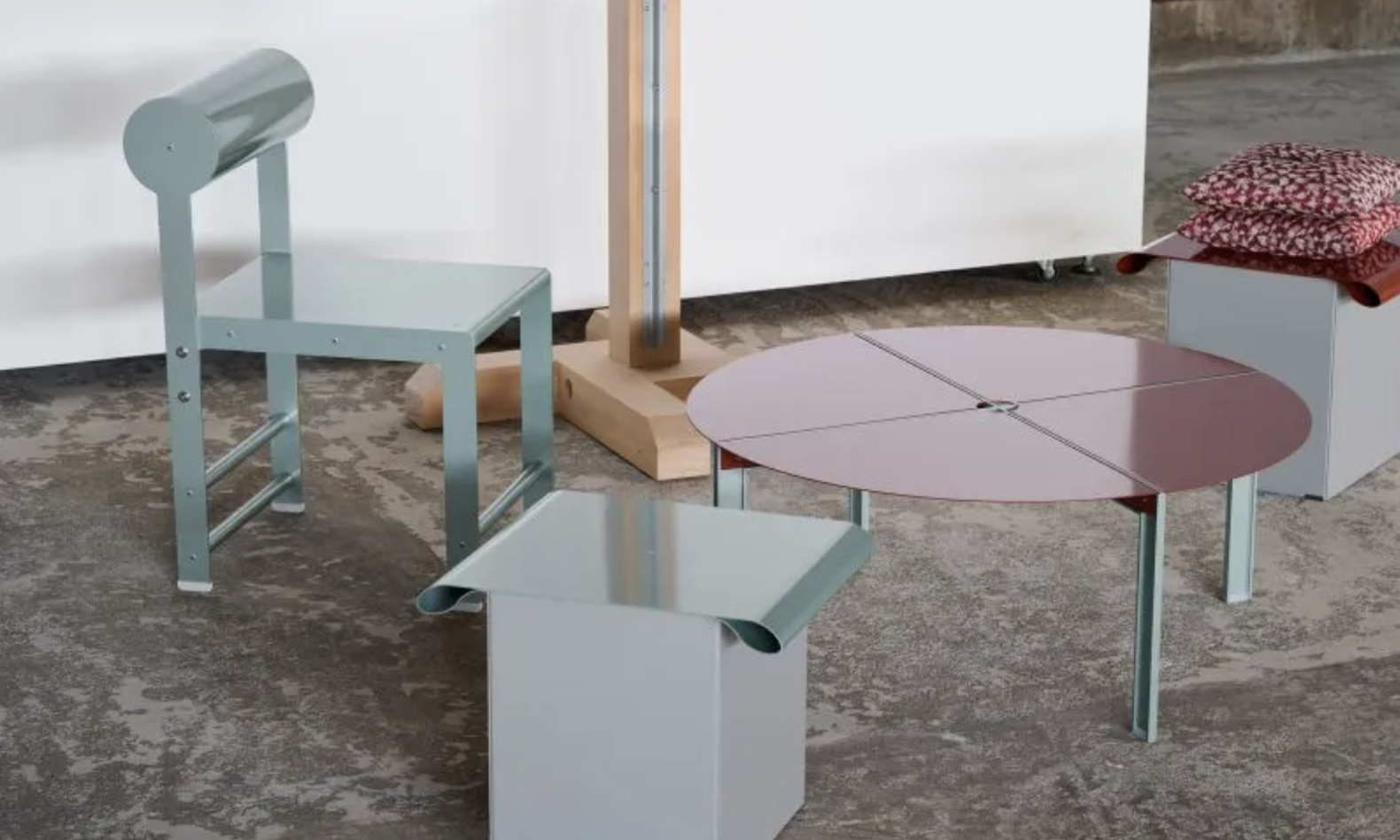
Waka Waka’s Ribbon collection transforms colored sheet metal into fluid, ribbon‑like furniture—chairs, tables, stools, and accessories—using simple geometric shapes and vivid Edo‑inspired hues such as blue, yellow, pink and black. By embracing the industrial qualities of steel and aluminium, the studio adds warmth and nature‑like fluidity to the cold material, showcasing the pieces in exhibitions across Japan and planning shows in Los Angeles and other cities.
|
|  www.dezeen.com www.dezeen.com
|
|
|
|
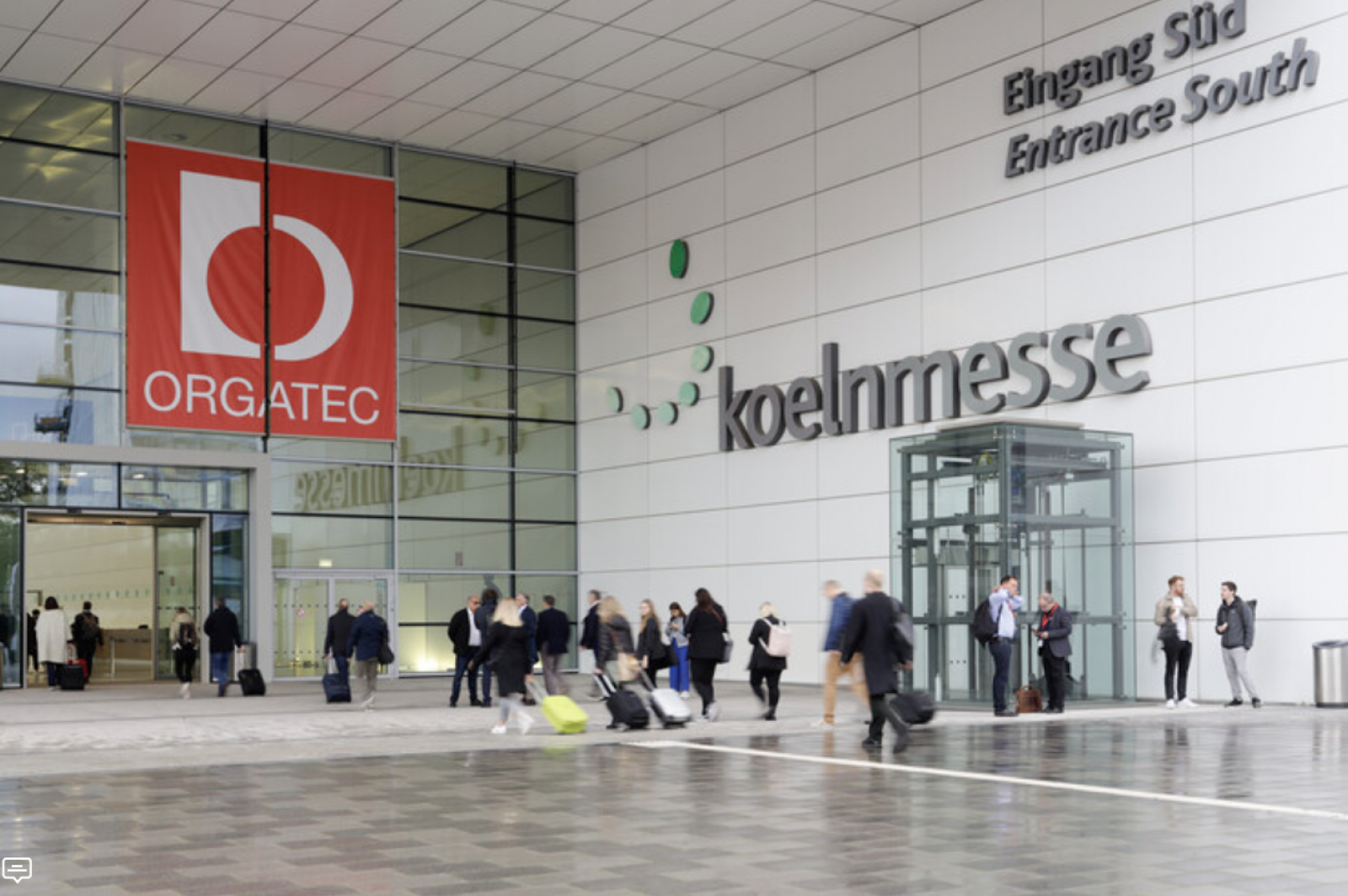
Orgatec 2026
October 27-30, 2026 | Cologne, Germany
ORGATEC is the global industry meeting point for everyone who is rethinking and shaping the worlds of work and contract. Every two years, leading brands, experts, and an international trade audience come together in Cologne. Under the guiding theme "From rooms to relationships: designing spaces in an ever-changing world", the focus is on people – and on how spaces in times of change are redefined.
ORGATEC 2026 is a chance to see how the future of work is taking shape—from hybrid and AI-enabled workplaces to healthier, more flexible, and sustainable commercial spaces. Attendees can explore leading international brands, discover European products and concepts not yet widely available in North America, and gain practical insight through talks, guided tours, and interactive programming. It’s also a valuable setting to meet global manufacturers, architects, designers, and workplace decision-makers in one place.
|
| |
|
|
|
NeoCon 2027 / DesignDays 2027
June 13-16, 2027 | Chicago, IL
NeoCon has served as the world’s leading platform and most important event of the year for the commercial design industry since 1969. A launch pad for innovation—NeoCon offers ideas and introductions that shape the built environment today and into the future. For 2027 NeoCon is officially a 4-day event beginning on Sunday, June 13, 2027.
|
|
|
|
|
|
The Workspace Design Show returns to London’s Business Design Centre on 24–25 February 2027 with the theme “The Human Experience of Work,” focusing on wellbeing, inclusion, sensory comfort, and emotional experience. The event will feature expanded exhibition space, product launches, immersive installations, and a program of talks on design trends, sustainability, and occupier insights, alongside the Workspace Design Awards recognizing impactful workplace projects.
|
|  workplaceinsight.net workplaceinsight.net
|
|
|
|
|
Trends in Commercial Projects
|
|
|
|
|
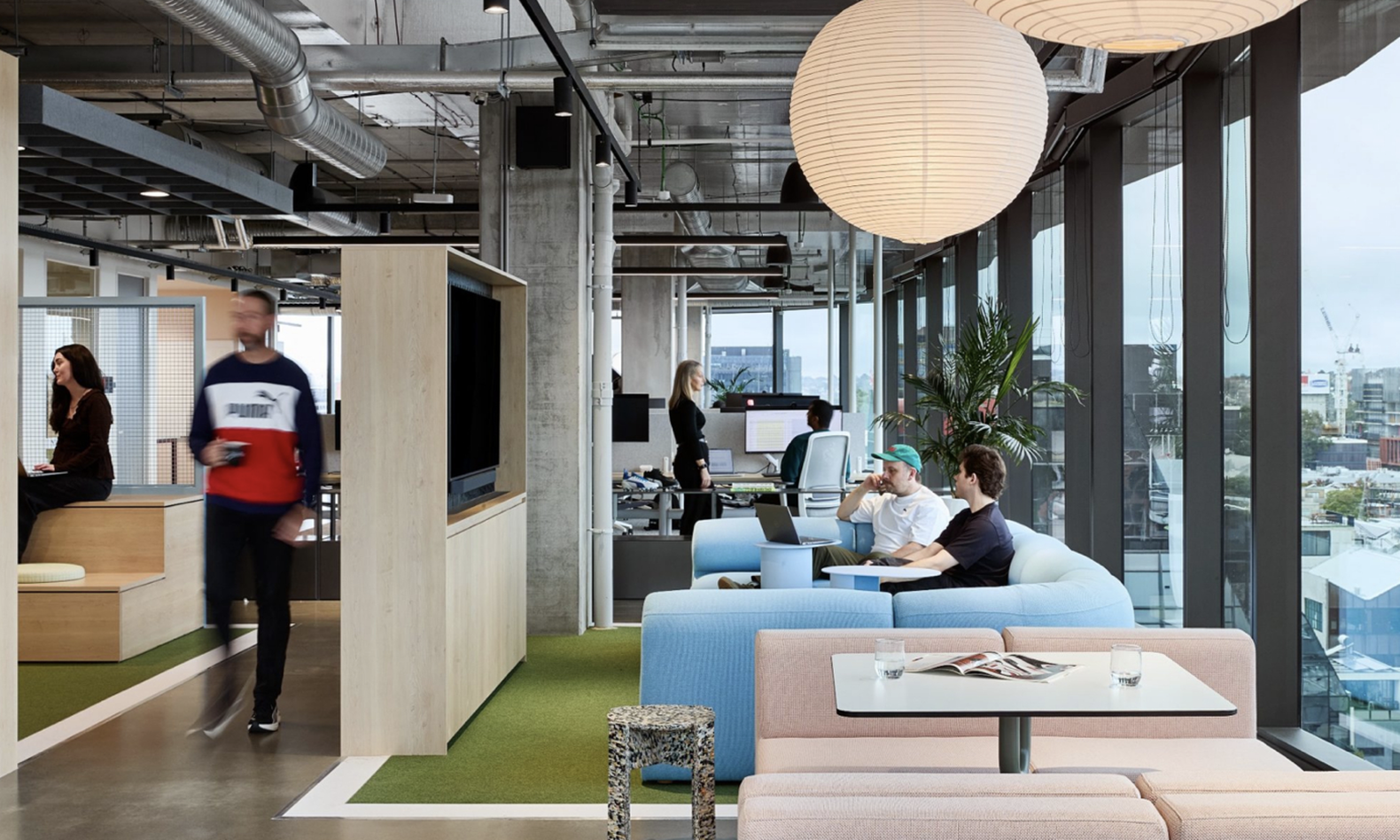
Axiom Workplaces transformed PUMA Oceania’s Melbourne office into an agile, performance‑focused hub that blends collaboration, wellbeing, and brand identity. The design replaces traditional departments with flexible neighbourhoods, adds varied work zones—including focus pods, quiet rooms, and AI‑enabled meeting spaces—and embeds PUMA’s energetic aesthetic through hospitality‑inspired elements, supporting employee health, inclusivity, and future scalability.
|
|  officesnapshots.com officesnapshots.com
|
|
|
|
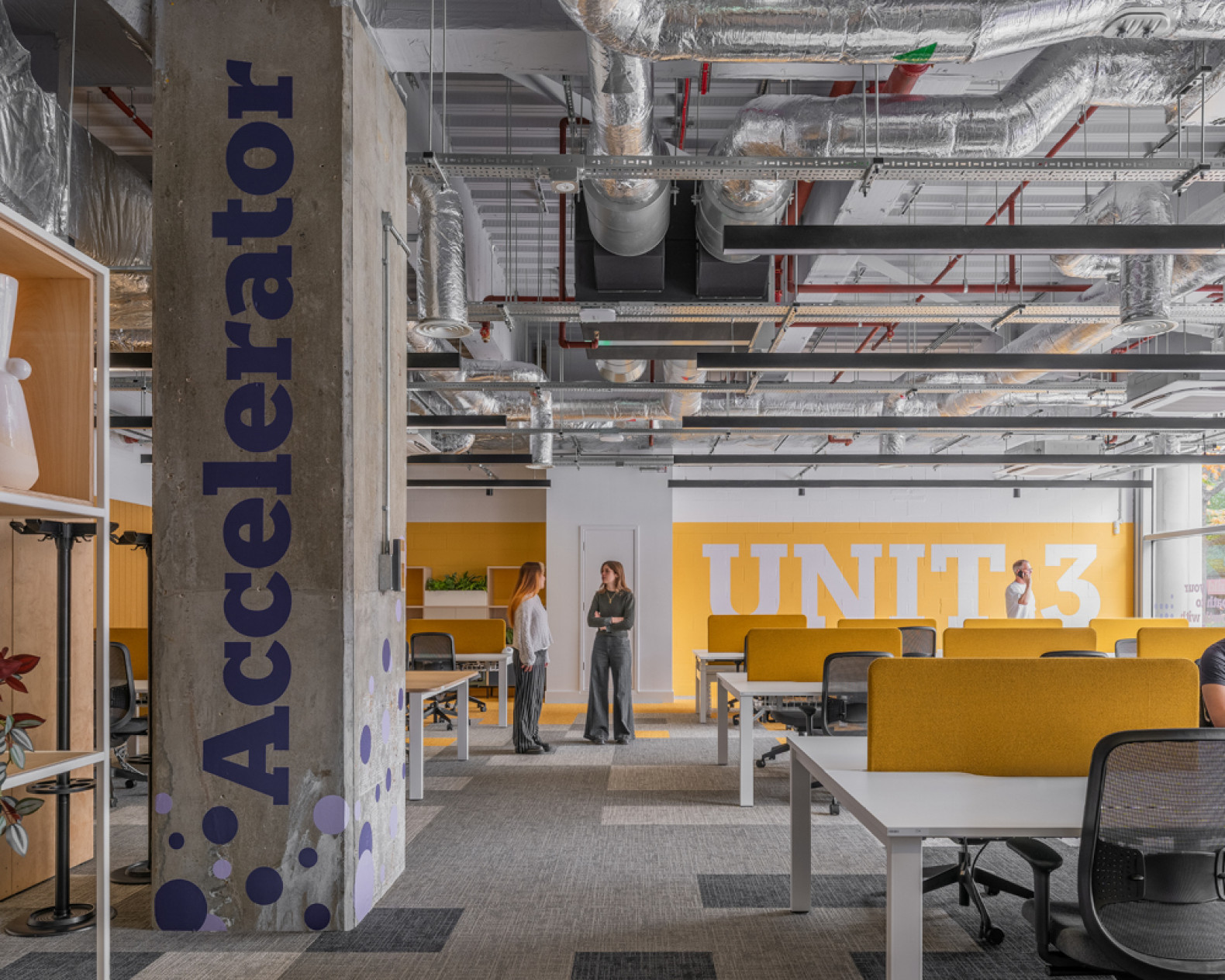
NatWest partnered with LOM architecture to transform three vacant Spitalfields shops into a 5,000 sq ft hub for startups, achieving a 91.2% recycle rate, repurposing furniture and flooring, and now supporting 1,200 members, 275 entrepreneurs, and awarding over £100,000 while fostering community partnerships and a volunteer programme.
|
|  www.mixinteriors.com www.mixinteriors.com
|
|
|
|
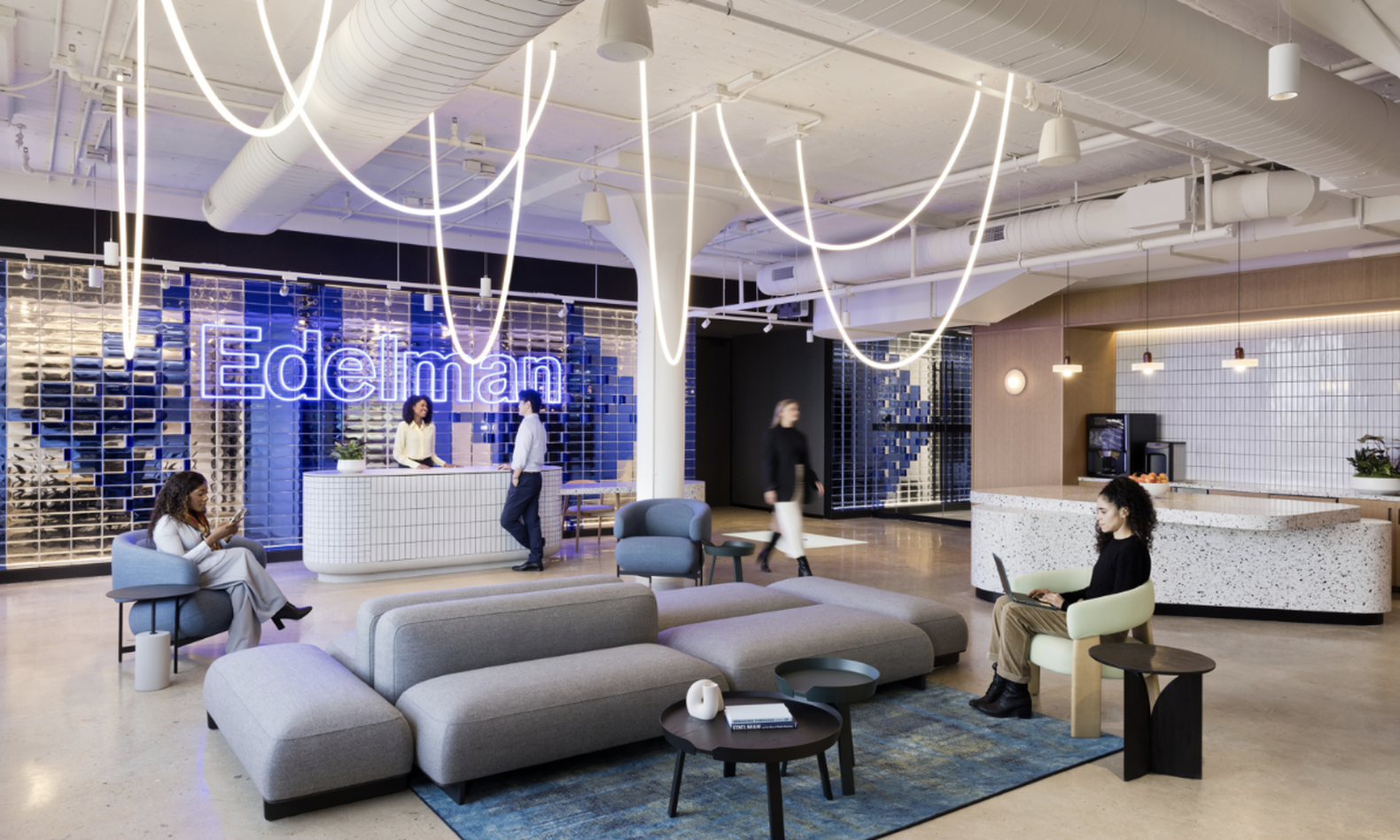
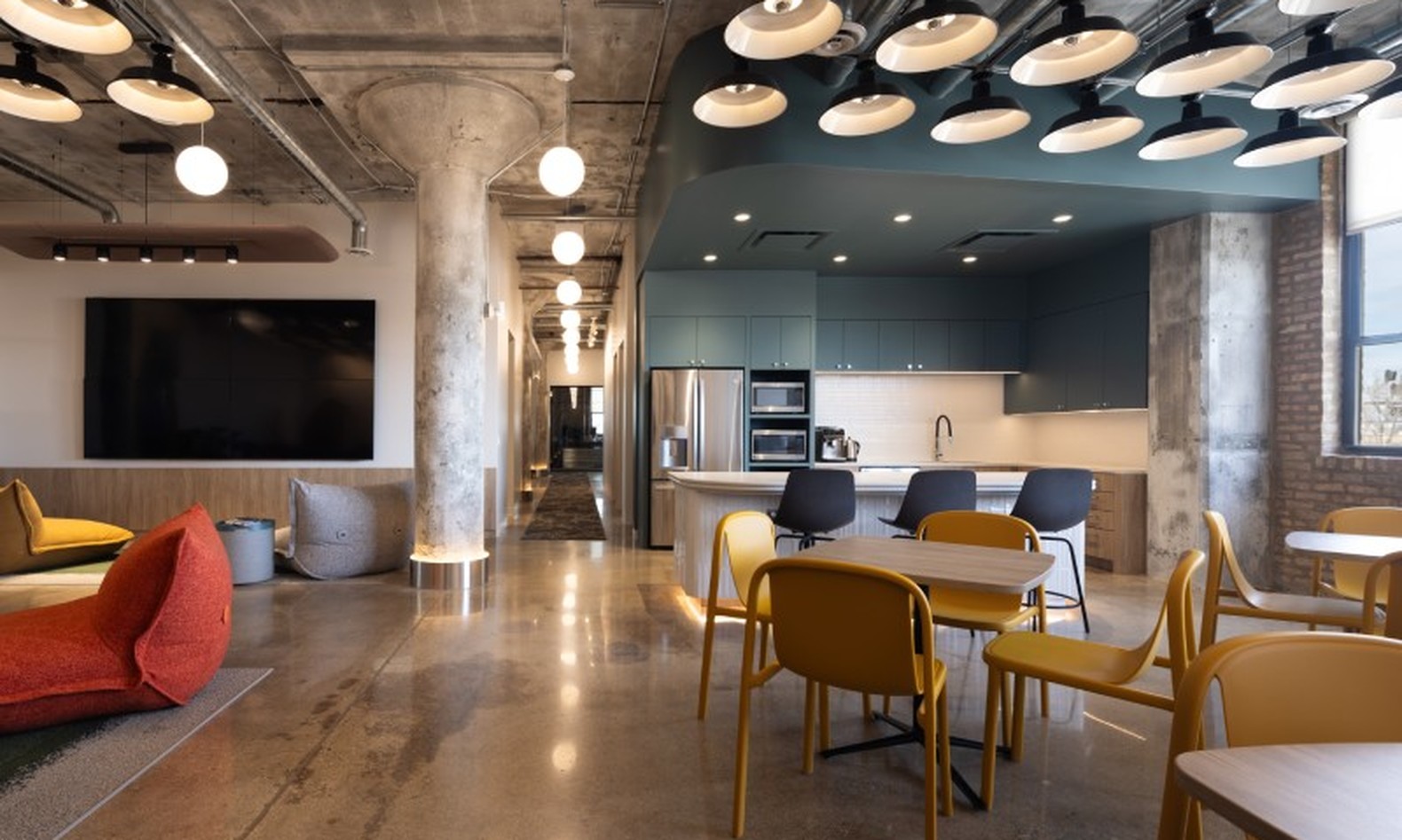
Gensler transformed Edelman’s New York headquarters by blending the building’s industrial heritage with the city’s vibrant cultural essence, creating a collaborative, flexible workplace across five floors. The redesign reimagines key areas—including a central café, production floor, and rooftop extension—using local design cues, modern materials, and thoughtful furnishings to foster creativity, teamwork, and a dynamic work environment.
|
|  officesnapshots.com officesnapshots.com
|
|
|
|
Pioneer Aero Supply’s new Chicago headquarters blends industrial character with a people‑first design, creating a 8,000‑square‑foot workplace that supports both focused work and collaboration. By prioritizing understanding of how employees operate, the design incorporates private offices, shared spaces like a café and wellness room, and subtle aviation‑inspired details, resulting in a vibrant, functional environment that reflects the company’s growth, culture, and future aspirations.
|
|  officeinsight.com officeinsight.com
|
|
|
|
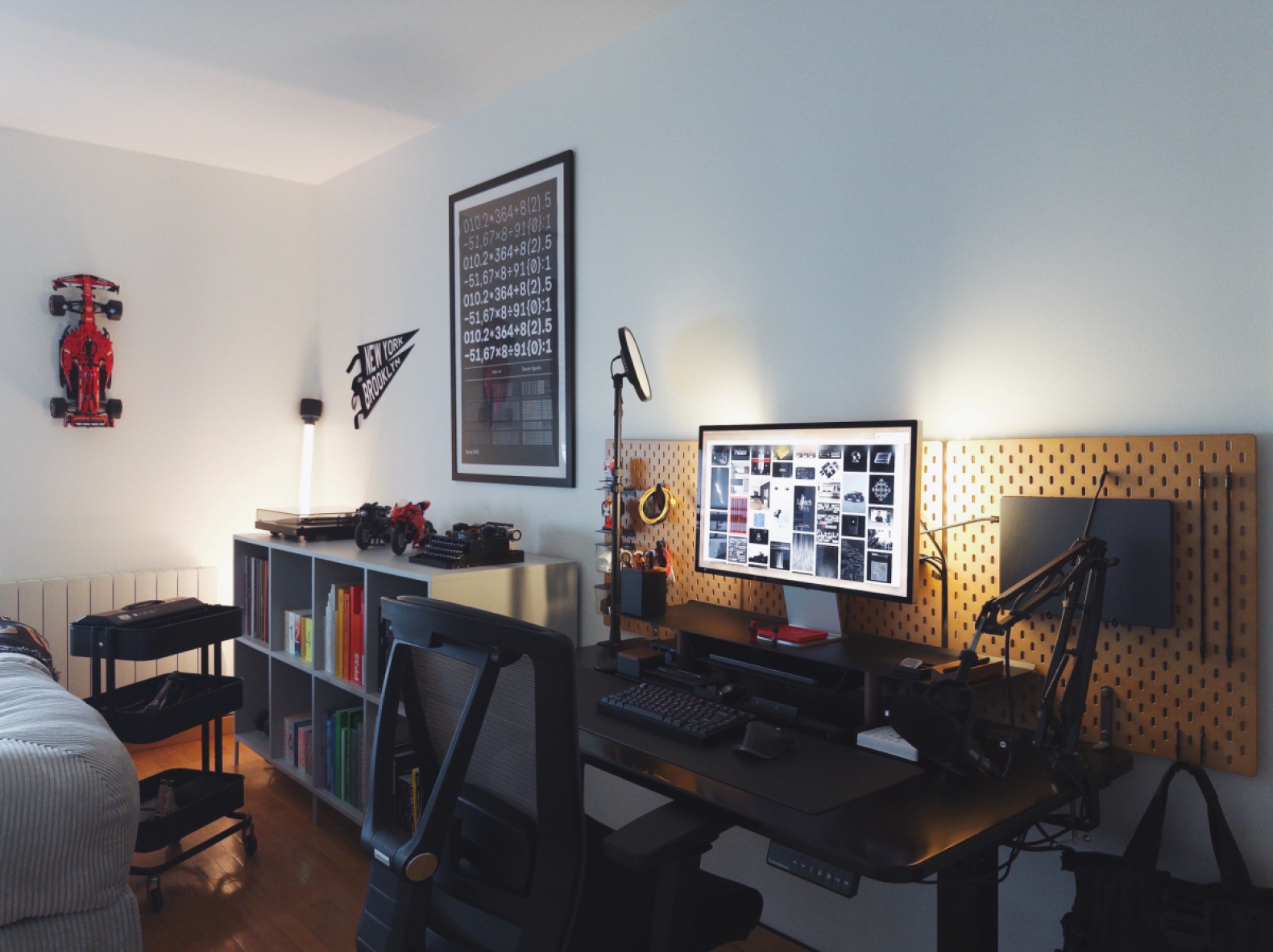
Yann‑Edern Gillet, a designer at Linear, shares his updated 2026 workspace, highlighting a new, brighter environment with a dark desk complemented by colorful accents, an expanded analog collection, and LEGO pieces. He emphasizes how his workflow now relies heavily on custom tools—such as a Figma plugin that syncs Linear’s theming variables and other mini‑tools built with agents—to streamline design, animation, and data handling, reducing manual handoffs across multiple applications.
|
|  workspaces.xyz workspaces.xyz
|
|
|
|
Cerenome Inc., a Houston-based CNS oncology company, expanded its Levit Green lease from 11,370 SF to 36,500 SF, adding a new laboratory and office on the fifth floor of Phase 1, with completion expected in Q4 2027, reflecting the flexible, turnkey growth environment offered by Hines’ life‑sciences campus.
|
|  www.bisnow.com www.bisnow.com
|
|
|
|
The Honest Co. is relocating its headquarters to The Bluffs at Playa Vista, signing a 10‑year, 38,000 SF lease that begins by May 1 2027. The lease starts at $3.50 per SF per month, escalates to about $9.22 per SF by the final year, and includes 10 months of free rent applied to the third year, valuing the deal at $33.4 M.
|
|  www.bisnow.com www.bisnow.com
|
|
|
|
|
Renson North America Announces Brandon Lucas as Southeast Regional Sales Director
|
|
Brandon Lucas has been appointed Southeast Regional Sales Director for Renson North America, bringing extensive sales, business development, and customer success experience to lead growth and partner relationships across the Southeast United States. Based in Louisville, Kentucky, Lucas will oversee sales development, strengthen partnerships, and enhance customer experiences, supporting Renson’s mission of delivering high‑quality, sustainable outdoor living solutions.
|
| |
|
|
|
|
Western New York’s Largest Interior Design Trade Show Returns
|
|
BuffCon, the 11th Annual BuffCon trade show organized by the Buffalo City Center of IIDA NY, will be held on September 23, 2026 from 4 PM to 8 PM at the Powerhouse in Buffalo. The event showcases the latest interior‑design trends, products, and technologies, offering designers, architects, contractors, manufacturers, and enthusiasts networking and inspiration opportunities. Tickets are free for IIDA NY members, $33.85 for non‑members, and $15 for students, with a 500‑attendee limit.
|
| |
|
|
|
A seasoned professional advises that giving two‑weeks’ notice is a courteous gesture, not a requirement, and emphasizes handling the transition responsibly—preparing thorough handover documents, communicating clearly, and maintaining professionalism—to protect one’s reputation while leaving the job on good terms.
|
| |
|
|
|
Manage and grow a national network of independent sales representatives across the US and Canada, driving revenue through commercial furniture dealers, architects, designers, and specification firms. Own the full sales cycle—strategy, pipeline management, forecasting, and contract negotiations—while conducting market analysis to spot trends and opportunities. Partner cross-functionally with Product, Marketing, Supply Chain, and Leadership to deliver strong customer solutions, and represent the company through presentations, training, trade shows, and industry events. Requires extensive travel throughout the US and Canada to build relationships and support the rep network in the field.
|
| See Job Opening > |
|
|
|
|
|