|
January 26, 2026 - Week 4
|
|
|
|
|
|
|
|
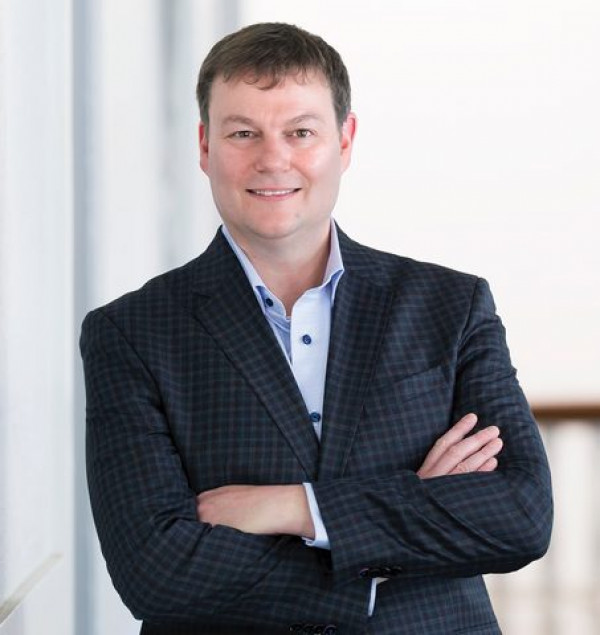
Monday, January 26 | Chemistry Department Seminar: Matt Francis, UC Berkeley
|
3:30-4:30 pm • Olin 149
Aldo DeBenedictis Distinguished Professor of Chemistry, UC Berkeley "Building New Fusion Proteins with Enzymatic Oxidative Coupling Reactions" Official/Unofficial BioThe uniquely diverse structures and functions of biomolecules offer many exciting opportunities for creating new materials with advanced properties. Using only a limited set of side chains and auxiliary groups, they have evolved unparalleled abilities to accelerate chemical transformations, facilitate the delivery of genetic cargo to targeted cells, bind specific analytes in complex mixtures, transduce energy, and generate elaborate three-dimensional structures through self-assembly. Over the years, our lab has sought to incorporate these capabilities into new materials for use in drug delivery, diagnostic imaging, solar energy collection, and water purification. To do this, however, we also needed to develop chemical strategies that can functionalize biomolecules with a wide range of synthetic functionalities. Learn more here.
|
|
|
|
|
- Animal Physiology Candidate Research Seminar - Olin 141, 3:30-4:30 pm
The fourth candidate for a tenure-track job in Animal Physiology will give a research seminar.
- Chemistry Department Seminar: Matt Francis, UC Berkeley - Olin 149, 3:30-4:30 pm
Aldo DeBenedictis Distinguished Professor of Chemistry, UC Berkeley "Building New Fusion Proteins with Enzymatic Oxidative Coupling Reactions" Official/Unofficial Bio The uniquely diverse structures and functions of biomolecules offer many exciting opportunities for creating new materials with advanced properties. Using only a limited set of side chains and auxiliary groups, they have evolved unparalleled abilities to accelerate chemical transformations, facilitate the delivery of genetic cargo to targeted cells, bind specific analytes in complex mixtures, transduce energy, and generate elaborate three-dimensional structures through self-assembly. Over the years, our lab has sought to incorporate these capabilities into new materials for use in drug delivery, diagnostic imaging, solar energy collection, and water purification. To do this, however, we also needed to develop chemical strategies that can functionalize biomolecules with a wide range of synthetic functionalities. Learn more here.
- Coe Wilderness Field Station Info Session - Leighton 236, 4:30-5:30 pm
Aenean ultrices porttitor posuere. In eget hendrerit magna. Pellentesque habitant morbi tristique senectus et netus et malesuada fames ac turpis egestas. Suspendisse potenti.
|
|
|
|
|
- CS Coffee Hour - Olin 306, 10-11 am
Come grab coffee, tea, and donuts, and take a break to hang out with CS professors, friends, and fellow students. Feel free to drop in at any point—whether you stay for a few minutes or the whole hour.
- Physics Table - Check Radiations Newsletter for location, noon - 1 pm
If you have any sort of interest in Physics or Astronomy, come join other folks who are, and enjoy a community lunch! We usually gather at the LDC at noon each Tuesday (check our newsletter Radiations for any exceptions). If you're off board or on a limited plan, let the cashier know you're there for Physics Table and we'll treat you to lunch!
- Biology Job Candidate Teaching Seminar - Hulings 316, noon-1 pm
A candidate for a tenure-track job in Animal Physiology will give a teaching demonstration.
- Math/Stats Colloquium: Kristin Heysse, Macalester College - CMC 206, 4-5 pm
Title: Enumerating Maximal Binary Triangles Abstract: Ever since we learned how to count, we’ve been asking questions about "how many?". This question is central to Combinatorics, a subfield of discrete mathematics that studies arrangements of objects. Arising out the study of voting theory, we’ll ask "how many" about particular sequences best visualized as binary triangles. We’ll borrow some ideas from partially ordered sets to tie these structures to other well-studied combinatorial families, present a Pascal’s-triangle like array for their enumeration, and dig into the results that prove their claimed recursions. We’ll end our discussion on a curious question of convolution, suggested by the OEIS, that we are still exploring. *Carleton community only.
|
|
|
|
|
- Chemistry Periodic Table - Anderson, Mohrig student gathering space, noon - 1 pm
Periodic Table will meet at noon in Anderson Hall on the 2nd floor/Mohrig Student Gathering Space. If you are off board, the department will cover your lunch. Go to the Schulze Cafe in the Daugherty Atrium and ask for the chemistry charge. Any questions, contact Danielle Morisette
- Biology Comps Presentations - Olin 141, noon-1 pm
Throughout weeks 4-9, we will be hosting comps presentation sessions. All are encouraged to come support the ‘26 comps class and learn about what they learned about on their comps journey! Attendance at the full session counts as seminar credit, and cookies will be served.
- Bits & Bytes hosts Summer Research Pitches - Anderson 329, 3:30-4:30 pm
|
|
|
|
|
- Geology Seminar: Julia Steenberg - Anderson 129, 3:30-4:30 pm
Pine Bend: Evidence for Minnesota's First Impact Structure. This presentation will highlight the recent findings of a buried impact crater in the southeast part of the Twin Cities metropolitan area, known as the Pine Bend Impact Crater. The crater lies within a predictable package of Paleozoic sedimentary rocks within the Twin Cities structural basin. Learn more here.
- Chemistry Department Seminar: Margie Mattmann '05 - Anderson 329, 3:30-4:30 pm
Associate Director of Business Transformation at Maravai LifeSciences "From the Bench to the Big Picture: A Chemist's Unplanned Path Through the Industry" Official/Unofficial Bio When I was an undergraduate chemistry major, I assumed my career would follow a fairly linear path: lab work, more lab work, and maybe, if things went well, a long-term research role. Instead, my professional life has been shaped by a series of unexpected turns, moments of discomfort, and decisions driven more by curiosity than certainty. In this seminar, I'll trace my path from Carleton Chemistry through graduate school, postdoctoral research, and into a range of industry roles spanning medicinal chemistry, manufacturing, operations, and enterprise-level program leadership. Learn more here.
|
|
|
|
|
- Biology Seminar: Betül Kaçar, Associate Professor of Bacteriology, University of Wisconsin, "Life’s Endless Forms: From Ancient Life to Alien Worlds" - Anderson 121, 3:30-4:30 pm
More info to come.
|
|
|
|
|
|
Campus Events and Resources
|
|
|
|
|
|
|
Perlman Art Museum
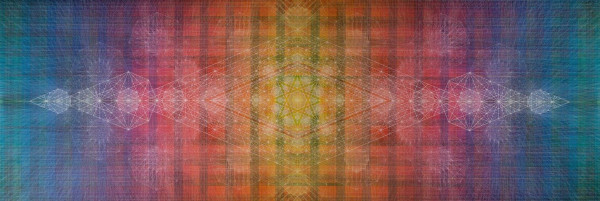
The Manifest, The Hidden explores the entanglement of Geometry and Islam in the practices of eleven contemporary artists based across the Middle East, North America, and Europe. While Geometry and Islam are often perceived as rigid systems, this exhibition invites audiences to see them anew as rich, expansive languages for expressing beauty and wonder.
Exhibition as Collaborative Teaching Project
This interdisciplinary exhibition is curated by Sara Cluggish (Museum Director), Kambiz GhaneaBassiri (Professor of Religion), Kamala GhaneaBassiri ’22 (candidate for master’s in Religion and Visual Arts at Yale Divinity School), and MurphyKate Montee (Assistant Professor of Mathematics).
|
|
|
|
|
|
Open to Carleton community
|
- Tuesday, January 27 | Whose Future?: AI and Bias, A Roundtable Event - Weitz 236, 4:30-6 pm
Technology companies are trying to sell us on a future where generative AI tools manage everything, from our work lives to our social interactions. But the hype around AI overlooks the many social and ethical issues that this technology raises. If we want to decide what future we want to live in, we need to explore the issues that fall outside the AI hype, so we can each make informed decisions about how AI should fit into our lives.
Our second event focuses on the problem of AI and Bias. Three Carleton faculty members will discuss the ways their discipline helps them to understand the persistent issues of bias in AI technologies. Then, we’ll turn the evening over to small group discussions where faculty, staff, and students can share their points of view.
Featured Speakers:
Claudio Gómez-Gonzáles, Assistant Professor of Mathematics
Sneha Narayan, Assistant Professor of Computer Science
Alfred Montero, Director of Public Policy and Frank B. Kellogg Professor of Political Science
- Thursday, February 5 | Inclusion in STEM Lunch on “Inclusion and AI” - Hulings 316, noon-1 pm
Are you interested in inclusion in STEM at Carleton? Are you a student or faculty/staff member involved in a STEM department? Do you enjoy free food (pizza)? The student organization Gender Minorities in Math and Stats (GeMMS) is hosting a pizza lunch to build community for Carls in STEM. We would like to particularly encourage participation from folks who hold an identity that has historically been marginalized in STEM.
After setting aside time for everyone to get to know each other and eat (free!) lunch, we hope to facilitate an informal conversation within small groups, where we will have semi-structured conversations about inclusion in STEM, specifically on inclusion and AI. At the end of this event, we will provide an anonymous way to share feedback and recommendations for how to make STEM at Carleton more inclusive. Though we would love to see everyone there, space is limited. RSVP here by Sunday, February 1.
- Wednesday, February 18 | Guest Lecture: Remote Sensing, Land Change & Biodiversity with Dr. Xavier Haro-Carrión - Hasenstab 002, 11:10 am-12:20 pm
Dr. Xavier Haro-Carrión is a land change scientist and assistant professor at Macalester College. Come learn about how he uses remote sensing to study vegetation, land cover, and biodiversity in Ecuador and the Neotropics to contribute to a better understanding of land change processes in rapidly changing environments. Dr. Haro-Carrión will visit Carleton to share his research during Dr. Karissa Pepin's Remote Sensing of the Environment class. Please RSVP here by noon on Monday, February 2
|
|
|
|
|
- Wednesday, January 28 | LinkedIn 101: Building Your Profile - Anderson 121, 4:30-5:30 pm
Join the Career Center team for top strategies for building your LinkedIn profile or looking to enhance your existing one. This workshop will be an active session- bring your laptop or device to make the most of your time.
- Wednesday, January 28 | MAPS Workshop: Finding Internships and Jobs for Pre-Med Students - Anderson 121, 5:30-6:30 pm
This event is hosted by MAPS (Minority Association of Pre-Med Students) and the Carleton Career Center. This workshop is for students interested in finding summer internships or gap year jobs in clinical, health science, and medical research roles before attending medical school. This program is open to freshman, sophomores, juniors, and seniors. This workshop will teach students best practices for searching for jobs and internships using online resources. Attendees will also be provided with resources and job boards specific to health science and medical careers, as well as networking tools and program recommendations specific to minority students and students of color.
- Friday, January 30 | Resume Review Rush - Johnson House, Career Center, 1-4 pm
Are you getting ready to apply for an internship, job, or summer funding?
Receive one-on-one guidance and feedback on your resume or cover letter from a student career assistant (SCA) or a professional career coach at Resume Review Rush. Drop in for a quick, 15-minute review anytime during the event, and we'll guide you through formatting, structure, and highlighting your experiences and skills.
Bring a printed copy of your document and your computer so you can apply the tips and feedback you receive right away. This is a great opportunity to get your resume approved as "Success Ready" before applying for your summer experience or doing your job search.
|
|
|
|
|
- Tuesday, January 27 | How We Used to Read - Weitz 236, 11:45 am-1 pm
Phones, tablets, laptops, audiobooks: Has new technology ruined our students’ ability to read? Didn’t reading used to be more focused? Two scholars of medieval and nineteenth and twentieth-century literature will consider how we used to read and how we read now. With Alison Byerly, President, George Shuffelton, Helen F. Lewis Professor of English
- Tuesday, January 27 | Coffee Hour for Peer-Assisted Learning Supervisors - Schulze Cafe, 2-3 pm
If you supervise students who provide peer-assisted learning, join Melanie Cashin, ASC; Amy Hutchinson, Language Center; Rebecca Terry, MSSC; and Lin Su Winton, QRC, for coffee and conversation. To learn about future events, join the Teaching with Students Community of Practice Google group.
- Tuesday, January 27 | Ed Tech Tea — Sustainability, Ethics, and AI - Anderson 121, 3:30-4:30 pm
Generative AI is raising a lot of questions about sustainability, energy consumption, bias, copyright, human labor, and other ethically motivated topics. This Ed Tech Tea will cover how to stay abreast of all these issues!
|
|
|
|
|
|
|
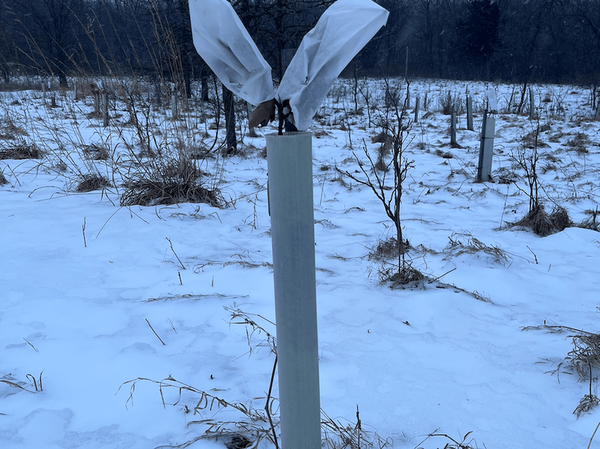
Oak sapling in winter, protected with a tube and leaf bags. Photo by Max Posner ’27.
|
|
|
|
|
During New Student Week, you probably planted a tree sapling somewhere in the Arb. You may have given it a name, noted its location, and hoped to visit it many years later. But have you ever wondered how it manages to get through its first winter—facing snow, wind, and freezing temperatures?
The first few winters after a sapling is planted are crucial to its long-term survival, especially in Minnesota’s cold, dry climate. Newly planted trees lack established root systems, have low energy reserves, and are more vulnerable to winter desiccation and cold injury. Repeated freezing and thawing causes soil to expand and contract, which can push saplings out of the ground (frost heaving).
Over time, trees become more resilient, developing deeper roots, stronger bark, and larger energy reserves. If a sapling can make it through the first few winters successfully, it’s likely to endure many more for the rest of its life. Read to learn more from Cole Student Naturalist Max Posner ‘27.
|
|
|
|
|
Dan Maxbauer, assistant professor of geology, published a paper with several alumni in a special section on carbon dioxide removal in the journal Frontiers in Climate. Alumni co-authors include Ella Milliken ’22, Jaren Yambing ’22, Emma Watson ’23, Rachel Gregg ’25, and Liza Swanson ’25. The study evaluates the effectiveness of mineral weathering as a strategy for carbon dioxide removal in croplands during a three-year field experiment conducted at Carleton.
Alex Knodell, professor of classics and director of archaeology, has received a collaborative convening grant, co-funded by the National Endowment for the Humanities (NEH) and the Hellenic Foundation for Research & Innovation (HFRI). Knodell and his collaborator Nena Galanidou, professor of prehistoric archaeology at the University of Crete, will host an international conference, bringing together researchers from the United States, Greece, and elsewhere to develop new methodological and comparative frameworks for small-island studies.
Emily Seru, associate director of academic civic engagement and scholarship, has been selected as part of Campus Compact's Mid-Career Learning Community cohort for 2026–27. These individuals were selected for their engagement in important, unique civic and community engagement work at their respective institutions. The Mid-Career Learning Community is an opportunity to collaborate, share learning, and network as they grow into senior leadership roles.
|
|
|
|
|
Visit Carleton Integrated Math and Science for additional news and research opportunities in Biology, Chemistry, Computer Science, Environmental Studies, Geology, Mathematics & Statistics, Neuroscience, Physics & Astronomy, and Psychology.
|
This Week in Science is produced by the Center for Integrated Math and Science. For questions about the newsletter, please contact Jesse Lewis.
|
|
|
|
|
|
|