|
|
|
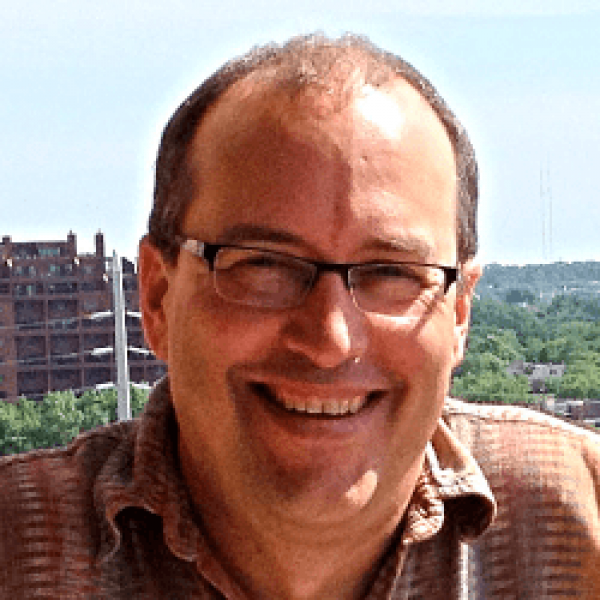
Thursday, January 8 | Bits & Bytes with Jeff Ondich on "Coding With the Brakes Off: Lessons Learned by an AI-Assisted Programmer"
|
3:30-4:30 pm • Anderson 329
Like many computer programmers, I am trying to understand the implications of generative AI programming assistants like Claude Code and Cursor. Last summer, I experimented with coding assistants on toy software projects, with mixed results. Over winter break, I upped the stakes by using Claude Code and Gemini on larger projects that I actually cared about. Learn more here.
|
|
|
|
|
- Physics Table - Check Radiations Newsletter for location, noon - 1 pm
If you have any sort of interest in Physics or Astronomy, come join other folks who are, and enjoy a community lunch! We usually gather at the LDC at noon each Tuesday (check our newsletter Radiations for any exceptions). If you're off board or on a limited plan, let the cashier know you're there for Physics Table and we'll treat you to lunch!
|
|
|
|
|
- Chemistry Periodic Table - Anderson, Mohrig student gathering space, noon - 1 pm
Periodic Table will meet at noon in Anderson Hall on the 2nd floor/Mohrig Student Gathering Space. If you are off board, the department will cover your lunch. Go to the Schulze Cafe in the Daugherty Atrium and ask for the chemistry charge. Any questions, contact Danielle Morisette
- Bits & Bytes with Jeff Ondich on "Coding With the Brakes Off: Lessons Learned by an AI-Assisted Programmer" - Anderson 329, 3:30-4:30 pm
Like many computer programmers, I am trying to understand the implications of generative AI programming assistants like Claude Code and Cursor. Last summer, I experimented with coding assistants on toy software projects, with mixed results. Over winter break, I upped the stakes by using Claude Code and Gemini on larger projects that I actually cared about. Learn more here.
|
|
|
|
|
- Chemistry Department Seminar: Research Recruiting Part 2 - On-Campus - 3:30-4:30 pm
Interested in doing Chemistry research on campus this summer? We will discuss on-campus summer research opportunities with chemistry faculty as well as application procedures. Everyone is welcome — this discussion is designed for students at any stage in their study of chemistry. Learn more here.
|
|
|
|
|
- Sebastian Schreiber, Professor of Evolution and Ecology, University of California, Davis, “When do environmental rhythms alter ecological outcomes?” - Olin 141, 3:30-4:30 pm
We live in a world where environmental conditions are constantly changing: some years are warmer than others, some days are wetter than other days. It is well-known that this environmental variation can result in population declines or mediate coexistence between competing species. However, it is less well-known how the rhythm of this environmental variation impacts ecological outcomes. In this talk, Professor Schreiber will show that the temporal structure of environmental fluctuations—not just their magnitude—can fundamentally alter ecological outcomes. For competing species, positive autocorrelation in environmental conditions can promote coexistence while negative autocorrelations can generate alternative stable states. For structured populations, the tempo and mode of environmental change (random versus periodic) can determine whether populations persist or go extinct. Together, these results suggest that understanding when and how environments fluctuate may be just as important as understanding that they fluctuate.
|
|
|
|
|
|
Campus Events and Resources
|
|
|
|
|
- Tuesday, January 6 | 1:1 Mock Interview for Software Jobs with Austin Dahl ’88 - noon-1 pm
Do you have an upcoming technical interview or hope to soon? Not sure how to prepare for it? Austin Dahl ('88) spent over 25 years in software development and management at a variety of start-ups and big companies, mostly in the Seattle area. He has interviewed and hired several hundred software engineers and initiated internship programs at two companies. For the past 4 years, he has been volunteering at MinT, a mentorship program for CS professionals and overlooked CS students. Learn more here.
- Tuesday, January 6 | Student Financial Literacy Series: Understanding My Health Insurance - 5:45-7 pm
Have you ever found yourself unsure of or confused by health insurance in the United States? You are not alone! Join us for an informative workshop to learn everything you need to know about navigating the world of health insurance. We will demystify key terminology, help you understand your health insurance choices, and equip you with tools to make informed decisions about your health coverage.
- Thursday, January 8 | How to Find an Internship, Research, or Other Summer Opportunity - Anderson 036, noon-1 pm
Are you ready for summer? Join the Career Center for an interactive workshop on finding a summer internship, research experience, or other opportunity to build your skills and gain experience. Learn more here.
|
|
|
|
|
- Tuesday, January 6 | Ed Tech Tea — Saving Time with Moodle - Libe 306, 3:30-4:30 pm
The first winter Ed Tech Tea focuses on the many time-saving tools available in Moodle. Learn how to quickly edit dates across your course site, how to get a quick overview of what your students have completed, and how to use rubrics to streamline your grading.
|
|
|
|
|
Chloé Fandel, assistant professor of geology, has received a subaward for a project led by Peter Kang, associate professor of earth and environmental sciences at the University of Minnesota. Funded by the 2025 Environment and Natural Resources Trust Fund (ENRTF) of the Legislative-Citizen Commission on Minnesota Resources (LCCMR), “Predicting Contaminant Movement in Minnesota’s Fractured Aquifers” aims to develop an accessible software program that will enable users to predict the travel time of contaminants in aquifers.
Julia Strand, professor of psychology, along with Violet Brown ’17, visiting assistant professor of psychology, presented speech research done with Janna Wennberg ’19 and Naseem Dillman-Hasso ’20 at the Annual Meeting of the Psychonomic Society in Denver, Colorado. Strand also gave an invited talk, "Minimizing Mistakes in Psychological Research," for an online series organized by the German Word Nerd Network.
Dr. Karen Brakke ’85, Dr. Beth Morling ’90, and Dr. Regan A. R. Gurung ’91 have all received the Charles L. Brewer Distinguished Teaching of Psychology Award, which recognizes “a significant career of contributions of a psychologist who has a proven track record as an exceptional teacher of psychology.” Brakke, Morling, and Gurung were all taught by Dr. Neil Lutsky, who has taught psychology at Carleton since 1974 and received the same award in 2011. Learn more about the award recipients here.
Kim Hildahl, director of TRIO/Student Support Services, is stepping into a year-long role as Legislation and Education Committee co-chair for the Education Opportunity Association (EOA), where she will monitor federal, state, and local policies that impact TRIO and guide the association’s coordinated advocacy efforts. She will lead updates to the Policy & Procedure Manual, strengthen collaboration with state committee chairs, and support the delivery of training sessions that prepare members for key events such as COE’s Policy Seminar and Legislative Conference.
|
|
|
|
|
Visit Carleton Integrated Math and Science for additional news and research opportunities in Biology, Chemistry, Computer Science, Environmental Studies, Geology, Mathematics & Statistics, Neuroscience, Physics & Astronomy, and Psychology.
|
This Week in Science is produced by the Center for Integrated Math and Science. For questions about the newsletter, please contact Jesse Lewis.
|
|
|
|
|
|
|