In this issue… the office market’s reset deepens as construction hits a 14‑year low and landlords lean harder on concessions, while architecture demand stays soft with the ABI slipping to 48.3 (below 50) even as new project inquiries rise. City-by-city signals diverge: Chicago’s downtown pipeline drops to zero, Miami tightens with surging rents, and Boston wrestles with too much obsolete inventory—fueling a record 2027 wave of office‑to‑residential conversions. Capital markets stay choppy as CRE sales fall with higher yields, and workplace uncertainty grows around AI’s impact on jobs and space needs and companies’ push for better utilization data. Industry moves include Workrite’s leadership refresh and partnership expansion to sharpen its future-of-work strategy. HNI draws scrutiny for maintaining its dividend despite a Q1 loss, with analysts probing weak workplace-furnishings demand, cost controls, and growth assumptions. Trends span art-filled offices and integrated interior systems, plus a wide slate of new workplace and education products.
|
| |
|
|
|
By the Numbers
The 2027 office‑to‑residential conversion pipeline is set to become the largest on record, with about 92 projects slated for completion, representing roughly 19,000 new apartments across 28 states and 40 cities. While only around a quarter of these projects are already under construction and an estimated 25 % may slip or be cancelled, the remaining deliveries will still far exceed any previous year, concentrating a massive supply of downtown housing in markets such as New York, Chicago, Boston, and Philadelphia. This surge tests the viability of conversion as a scalable housing strategy, highlights the risks tied to large, multi‑owner projects and complex financing, and will shape how cities and developers approach adaptive reuse in the post‑pandemic era.
|
| Read more > |
|
|
|
U.S. jobless claims fell to 209,000, indicating labor market resilience despite rising business costs and ongoing geopolitical tensions that are inflating energy prices and supply chain disruptions. While the labor market remains stable for now, higher input costs and inflation pressures could eventually slow hiring, with rising Treasury yields pushing mortgage rates higher and further straining the housing market.
|
| |
|
|
|
“Work has changed dramatically over the years, but one thing has remained true; people perform better when workplaces are designed around how they naturally move and function.”
-Scott McPartlin, President of Workrite
|
| |
|
|
|
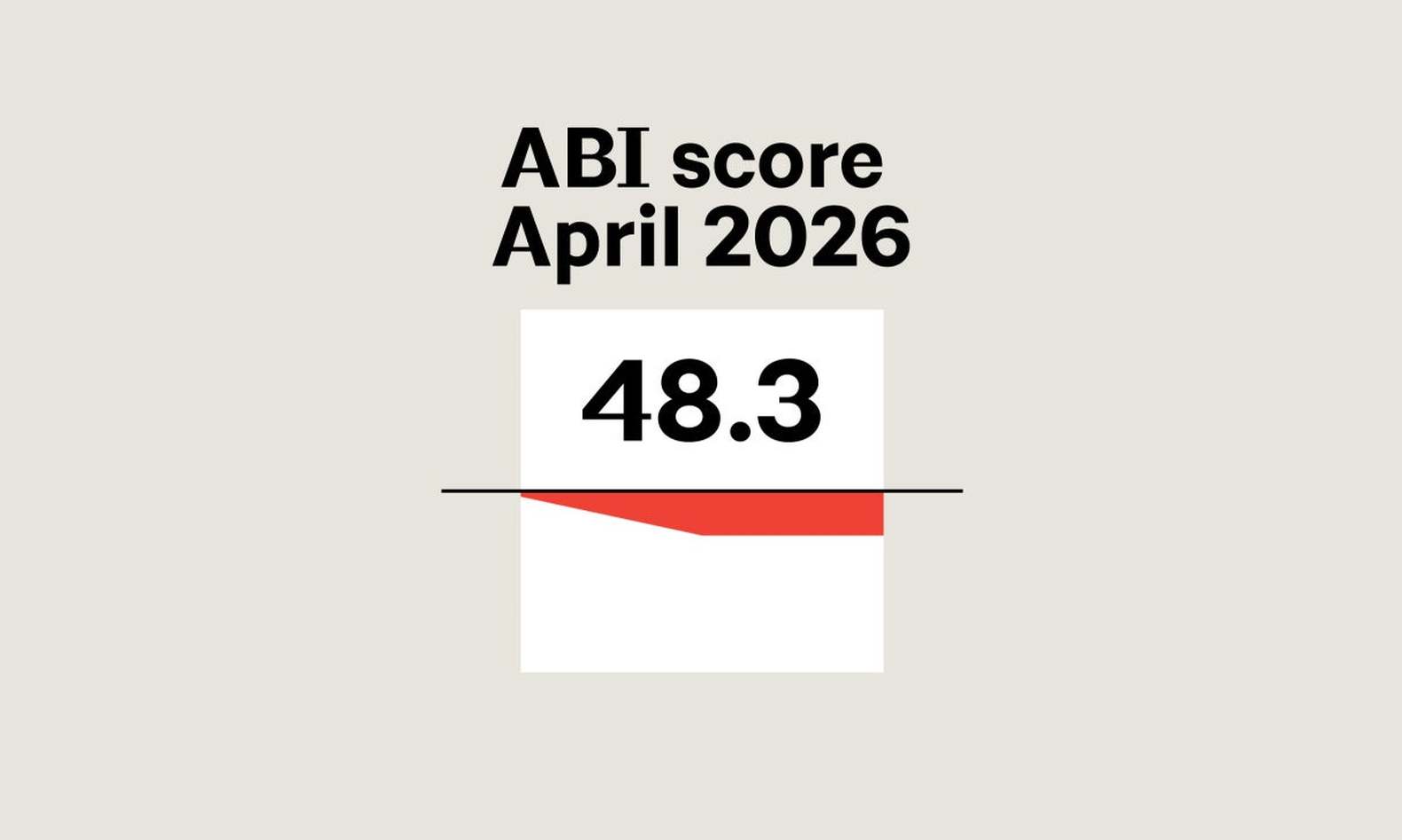
The latest numbers from the American Institute of Architects and Deltek are unlikely to calm nerves across the contract furnishings industry. The April Architecture Billings Index (ABI) slipped to 48.3 from 49.8 in March, marking yet another month in which billings failed to cross the critical 50-point threshold that signals growth. In fact, architecture firm billings nationally have not posted sustained expansion since January 2023, an increasingly troubling statistic for office furniture manufacturers, dealers, and suppliers that rely heavily on the architectural pipeline to generate future project activity.
For the contract furnishings sector, the ABI has long served as an early-warning system. When architecture firms slow down, furniture specifications, workplace renovations, tenant improvements, and major office buildouts often follow several quarters later. The continued weakness in commercial and industrial billings is particularly concerning because that segment has historically driven a significant portion of workplace furniture demand. While institutional and multifamily residential practices showed modest growth in April, firms focused on commercial and industrial projects continued to report declining activity for the sixth consecutive month.
The data also suggests that broader macroeconomic instability may now be fully filtering into the design and workplace sectors. Ongoing geopolitical tensions tied to the Iran conflict and the closure of the Strait of Hormuz have continued pushing energy costs higher, contributing to persistent inflation and weakening business confidence. Rising operating costs, elevated borrowing expenses, and uncertainty around corporate expansion plans are creating an environment where many companies appear reluctant to commit to large-scale office projects or workplace investments.
For office furniture manufacturers already battling soft demand, tariff uncertainty, hybrid work confusion, and sluggish occupancy rates, the continued ABI weakness could signal a longer and more painful recovery cycle than many anticipated entering 2026. Several major manufacturers had hoped the second half of the year would bring a meaningful rebound in corporate spending tied to return-to-office initiatives and workspace modernization projects. Instead, the ABI numbers imply that the pipeline feeding those opportunities remains under pressure.
The regional breakdown offered little encouragement. Firms in every region of the country reported soft conditions in April, with the South — previously viewed as one of the stronger growth markets — weakening further after showing signs of stabilization earlier this year. Only firms in the West appeared somewhat less pessimistic, although they too remained in contraction territory.
One potentially bright spot for larger architecture firms has been international work. Firms with overseas projects reported that international billings accounted for an average of 6.5% of gross billings, with many firms seeing activity increase modestly over the past year. Projects in East Asia, Canada, the Middle East, and India were among the most commonly cited international markets. However, relatively few firms participate in international work at all, and many respondents cited the logistical headaches, complexity, and lack of expertise involved in pursuing overseas opportunities.
That international activity could become increasingly important for larger workplace and contract furnishings manufacturers as domestic commercial demand remains inconsistent. Several U.S.-based manufacturers, such as Humanscale, have already been expanding sales efforts internationally in an attempt to offset weaker North American project pipelines and hedge against tariff-related uncertainty.
Still, the broader message from the April ABI report remains difficult to ignore: architecture firms are continuing to tread water, and until billings return to sustained growth territory, the contract furnishings industry may continue facing a frustrating environment marked by delayed projects, cautious customers, and uneven demand.
|
|  www.aia.org www.aia.org
|
|
|
|
|
Workrite Ergonomics Signals New Growth Push with Expanded Rep Network and NeoCon Showroom Debut
|
|
Workrite Ergonomics is positioning itself for a new phase of growth as the longtime ergonomic workplace manufacturer announced a broad brand evolution that includes new leadership momentum, expanded independent rep partnerships, fresh product introductions, and a redesigned showroom presence at The Merchandise Mart ahead of NeoCon 2026.
The California-based company said the initiative marks what it describes as a “transformative new chapter” focused on movement, adaptability, and employee wellness at a time when workplace ergonomics and flexibility continue to gain renewed attention across the contract furnishings industry. The company’s updated showroom, known as Showroom 333, will debut under the theme “Same Brand. New Direction.” and is intended to showcase solutions designed around healthier and more adaptable work environments.
As part of the expansion effort, Workrite has significantly broadened its independent rep network through partnerships with Good Lines, Sheridan Contract, Frey Gaede, Integrity Contract Office, K2 Contract Studio, Tailored Spaces, and Architectural Harmony. The move comes as manufacturers continue to intensify efforts to strengthen regional dealer and specification relationships amid an increasingly competitive workplace market.
Scott McPartlin, president of Workrite and nephew of company founder Ray Henricksen, said the company’s next phase is focused on building upon the brand’s longstanding reputation in ergonomics while modernizing its market approach. “This next chapter is about building on everything that made Workrite respected in the first place while bringing new energy, fresh thinking, and renewed momentum to the brand,” McPartlin said in the announcement.
Long before ergonomics became one of the defining conversations in workplace design, Workrite had already built much of its business around movement-based workplace solutions and adjustable workstations. The company now appears to be leaning heavily into that legacy as organizations across commercial office, healthcare, and education sectors increasingly prioritize employee wellness, performance, and workplace flexibility.
The renewed investment also reflects a broader shift taking place across the contract furnishings industry as manufacturers attempt to align products more closely with hybrid work patterns, employee comfort, and long-term wellness initiatives. While much of the office industry narrative over the last several years has centered around downsizing and uncertainty, companies tied to ergonomics and movement continue to position themselves as beneficiaries of evolving workplace expectations.
|
| |
|
|
|
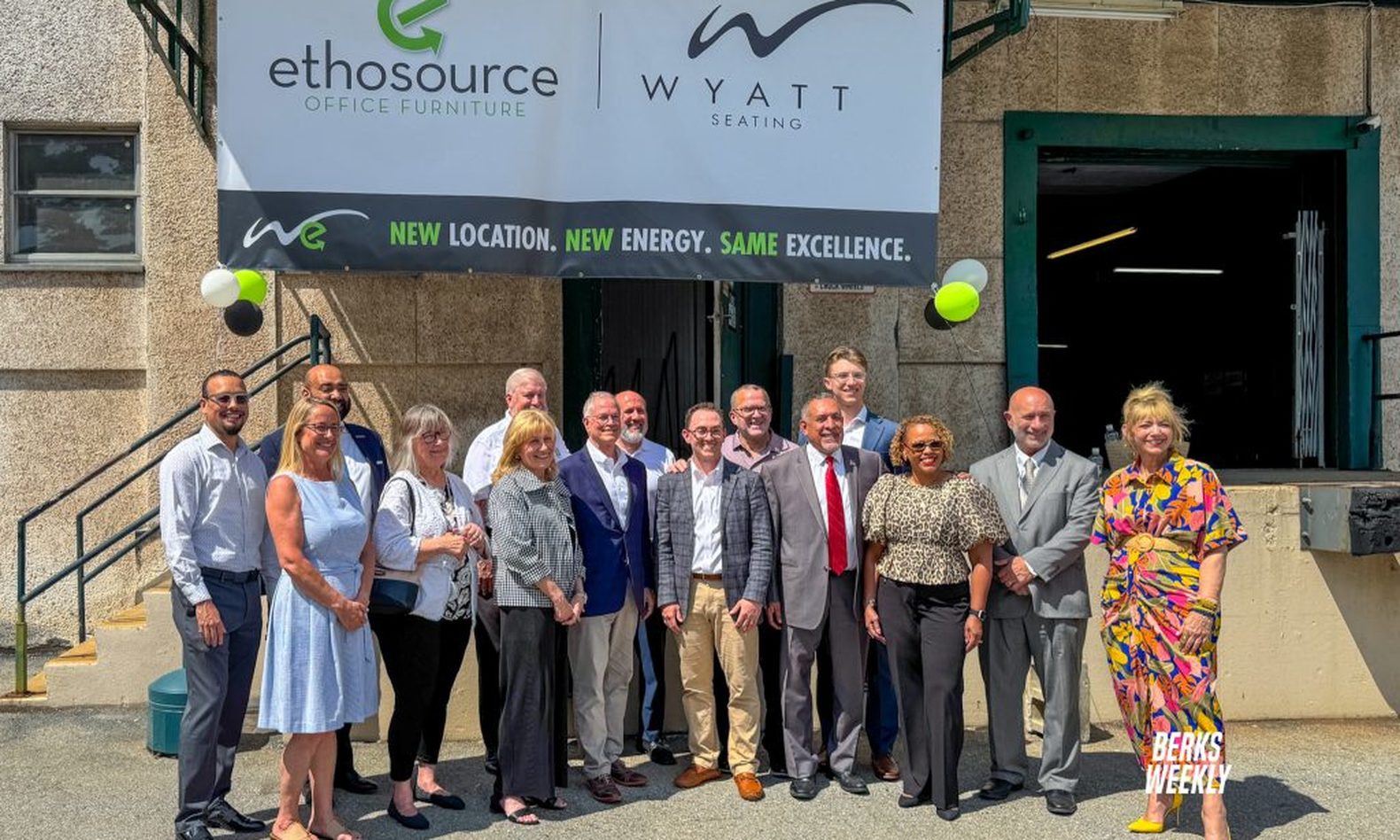
EthoSource and Wyatt Seating are betting big on the future of Reading, Pennsylvania, announcing a $6.5 million redevelopment project that will convert a long-vacant industrial property into a new manufacturing, operations, and office hub for the growing companies. The project will redevelop a 109,000-square-foot factory and office building at 2047 Kutztown Road, a property city officials said had remained vacant for years. Operations are expected to begin in fall 2026 as the companies consolidate and expand operations currently based in Morgantown and Wyomissing.
The investment represents another signal that smaller and mid-sized office furniture and seating manufacturers continue to see opportunity in reshoring operations, expanding domestic manufacturing footprints, and revitalizing legacy industrial buildings. EthoSource, which began 25 years ago as a small warehouse operation, has evolved into a national office furniture dealer and remanufacturer, while Wyatt Seating, launched in 2017, has been expanding its presence in the office seating category. Together, the companies currently employ roughly 60 full-time workers, many of whom live in Reading, with leadership indicating the move is expected to support additional hiring and long-term growth.
“Today, we’re planting our roots right here,” said John Gallen, president of EthoSource and Wyatt Seating, during the announcement ceremony. Gallen said the companies saw “potential in the building, potential in our neighborhood, and potential in the city,” framing the redevelopment as both a business investment and a commitment to Reading’s economic future. Nat Gallen added that the move continues a multigenerational family connection to the city and represents “the beginning of the next generation for our businesses, for my family, and for commerce in the city of Reading.”
Local and state officials used the announcement to highlight Reading’s broader economic recovery efforts and the importance of bringing manufacturing activity back into urban industrial corridors.
|
| |
|
|
|
HNI’s Q1 2026 results showed revenue of $1.35 billion, missing estimates by 2%, while adjusted EPS of $0.34 beat expectations by 18.3% and adjusted EBITDA of $78.2 million fell short by 17.9%. Management attributed the miss to weak demand in workplace furnishings amid geopolitical and macro‑economic uncertainty, though small‑ and medium‑customer segments and the residential building products line showed modest growth. Analysts focused on order trends, rising transportation and energy costs, cost‑management measures, the impact of Middle East conflict, and demand in non‑office verticals. Management highlighted price surcharges, redeployment of ERP resources, and positive trends in health, education, and government segments as mitigating factors.
|
|  finance.yahoo.com finance.yahoo.com
|
|
|
|
HNI Corp announced a quarterly dividend of $0.35 per share despite reporting a $38.8 million net loss on $1.35 billion sales in Q1 2026. The company aims for 2026 net‑sales growth while maintaining shareholder payouts, but faces challenges from weaker demand, margin pressure, and reliance on price increases rather than genuine demand. Management projects $8.1 billion revenue and $563.3 million earnings by 2029, requiring roughly 42% annual revenue growth. Analysts’ fair‑value estimates for HNI range widely, highlighting uncertainty around the sustainability of the dividend and future profitability.
|
|  simplywall.st simplywall.st
|
|
|
|
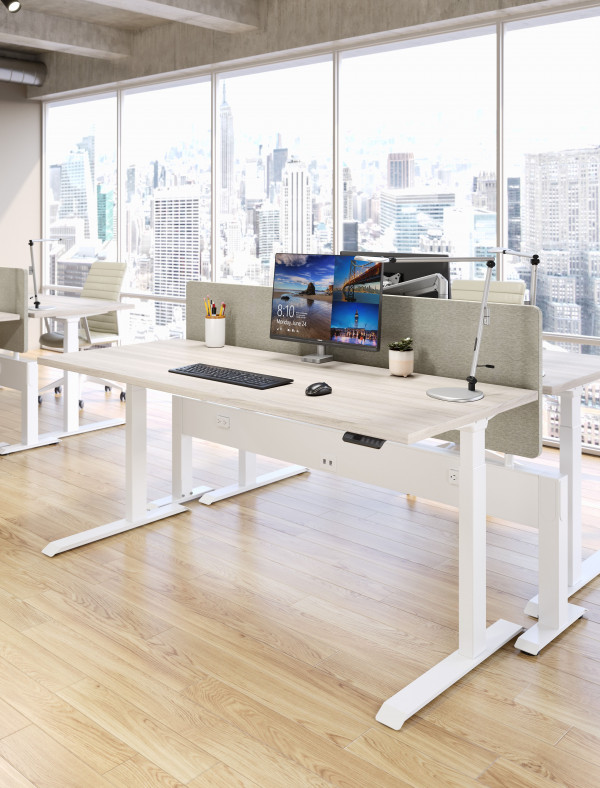
The ergonomic furniture market is poised for rapid growth, with forecasts projecting an increase from $25.3 billion in 2026 to $45.8 billion by 2035, driven by hybrid work models, health awareness, and AI‑enabled workplace technologies. Key segments such as ergonomic chairs and height‑adjustable desks are expanding, supported by demand for posture‑monitoring solutions, while North America remains the largest market and Asia‑Pacific leads the fastest growth despite challenges from material costs, supply chain issues, and geopolitical tensions.
|
|  www.interiordaily.com www.interiordaily.com
|
|
|
|
The office market is poised for a renaissance in 2026 as companies bring employees back to work, driving demand for modern, amenitized spaces and prompting significant investment; price declines of up to 40% and strong transaction growth have attracted new capital from private credit firms, while high‑performing hubs like Austin, Dallas, San Francisco, and Atlanta lead the surge, even as older locations lag behind.
After years of relentlessly negative headlines about empty offices and collapsing demand, the narrative surrounding the workplace may finally be beginning to shift. For an office furniture industry that has spent much of the post-pandemic period waiting for clarity, the possibility of renewed office investment — even if concentrated in select markets — could represent some of the most encouraging news the sector has seen in quite some time.
|
|  propmodo.com propmodo.com
|
|
|
|
Office construction has dropped to its lowest level in 14 years, with only 17.2 million sq ft under development and projected completions of 13.6 million sq ft in 2026, well below long‑term averages. Despite this slowdown, demand is improving: net absorption reached 4.5 million sq ft in Q1 2026, vacancy fell slightly to 20.2%, and leasing volume grew 7.5% year‑over‑year. However, landlords are relying heavily on tenant‑improvement concessions—about 75% higher than pre‑pandemic levels—to secure deals, while rent growth remains modest, with asking rents up 2.6% but real rents under pressure.
|
|  www.globest.com www.globest.com
|
|
|
|
AI adoption is adding uncertainty to office demand, with scenarios ranging from large‑scale workforce displacement that could sharply lower space needs, to modest productivity gains that keep headcounts stable, or a disruptive outcome where heavy AI investment fails and triggers layoffs and prolonged weak labor conditions. Recent tech layoffs at companies like Meta, Cloudflare, Block and PayPal illustrate how firms are reallocating capital toward AI, suggesting that automation will increasingly shape office space requirements as routine roles are reduced.
|
|  www.globest.com www.globest.com
|
|
|
|
Chicago’s downtown office construction pipeline has hit zero for the first time since 2012, with no new projects expected until at least 2030, due to higher debt costs, rising construction expenses, and increased equity premiums. This scarcity has driven vacancy rates up to a record 26.7%, lowered leasing activity, and prompted conversions of office space to residential use, while existing newer office buildings see high occupancy and tenants are adjusting work‑day schedules, signaling a shift toward tighter office supply and a longer timeline for new development.
|
|  www.bisnow.com www.bisnow.com
|
|
|
|
Miami’s office vacancy has tightened to a record‑low 12.5%, making it the tightest market in the nation after Manhattan, while rents have surged to $58.41 per square foot, far above the national average. Strong demand is driven by a robust financial sector, a growing tech presence, major tenant expansions such as Amazon’s lease, new headquarters relocations, and expanding coworking space, even as concerns about AI’s impact on office work loom over the market.
|
|  www.bisnow.com www.bisnow.com
|
|
|
|
Commercial real estate sales dropped 33% year‑over‑year to $24.7 billion in April, marking the first decline since June and reversing the 27% growth seen in Q1. Higher Treasury yields, now around 4.6%, have pushed borrowing costs up and dampened deal activity, especially in multifamily, hotels and office sectors, while senior housing and healthcare managed modest growth. Lenders remain active, but the large amount of debt maturing this year and elevated yields are creating pressure across the market.
|
|  www.bisnow.com www.bisnow.com
|
|
|
|
Boston’s office market faces a surplus of outdated space, with 43 million sq ft of underutilized office area, while demand remains strong for high‑quality Class‑A buildings. Vacancy rose to 18.5% in Q1, but most sub‑markets held steady or improved. Class‑A space captured 76.6% of deal volume, commanding premiums over lower‑grade spaces. Major leases include JPMorgan’s 250 K sf at South Station Tower and TD Bank’s 39 K sf expansion at International Place. Developers are demolishing or converting obsolete properties, adding nearly 1,800 residential units through office‑to‑residential projects, and repurposing suburban office parks for housing. This mix of active leasing, premium demand, and adaptive reuse is shaping a healthier office landscape despite the excess inventory.
|
|  www.bisnow.com www.bisnow.com
|
|
|
|
AI startups are driving a surge in flexible office demand in London, accounting for 34% of tech office take‑up in 2025, up from 4% a decade ago. Research shows most AI firms favor flexible workspaces for rapid scaling and talent attraction, with many later moving to larger traditional offices, while overall flex space now represents about 12% of Central London’s market and is expected to remain strong throughout 2026.
|
|  allwork.space allwork.space
|
|
|
|
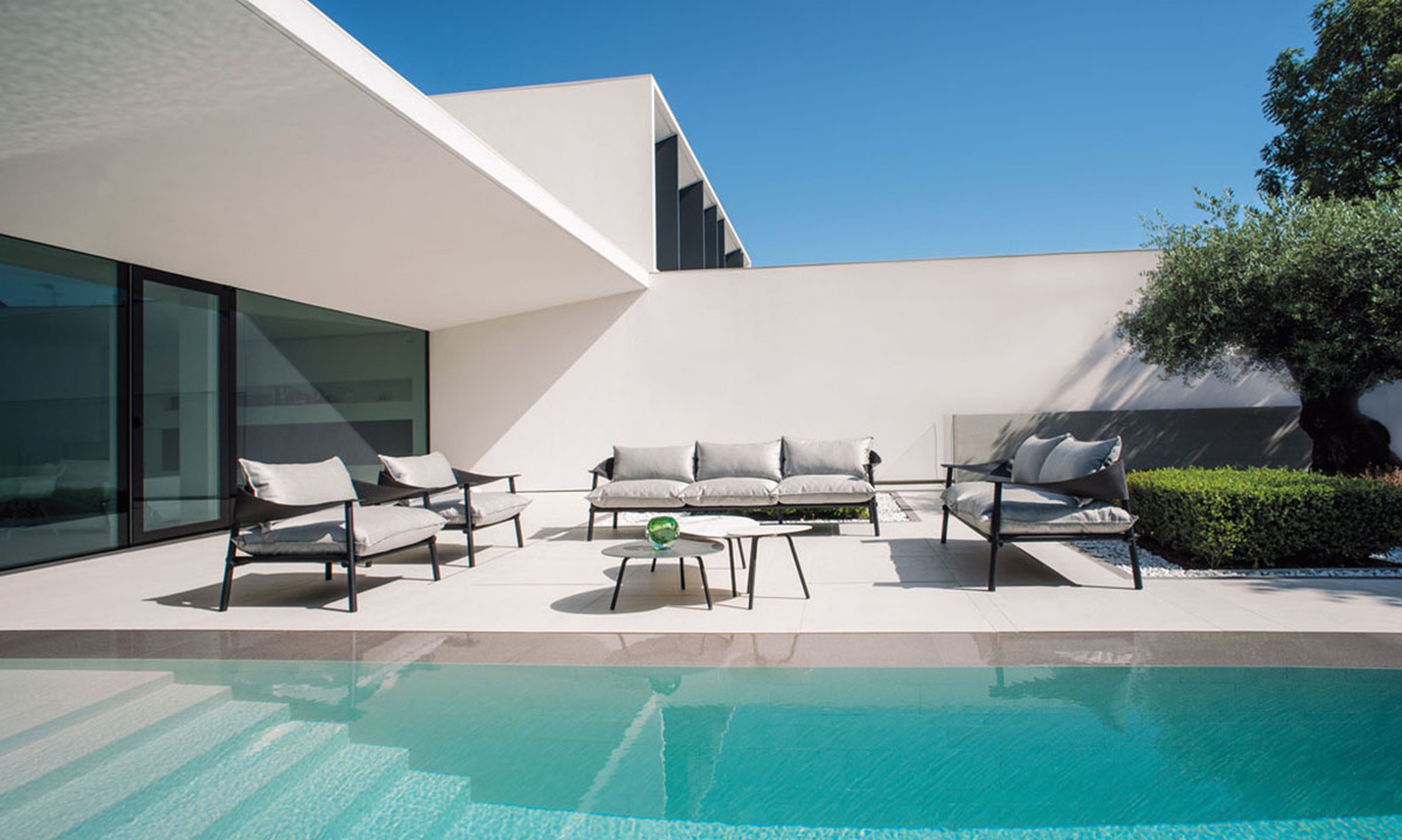
Emu Group celebrates 75 years by blending its metalworking heritage with modern technology to create durable, sustainable outdoor collections that prioritize performance, design sensitivity, and the integration of indoor‑outdoor living. The brand’s Made‑in‑Italy approach combines industrial expertise, collaborations with international designers, and a focus on longevity, resulting in versatile, lightweight furniture that forms cohesive, welcoming environments rather than isolated pieces.
|
|  www.internimagazine.com www.internimagazine.com
|
|
|
|
U.S. coworking growth is tightly linked to startup activity, with the fastest expansion occurring in metros where startups are scaling, such as San Francisco, New York, Los Angeles, Boston, and Seattle. Data from WeWork, Yardi Research, and StartupBlink show a 17% year‑over‑year increase in coworking locations, a 96% retention or expansion rate among active startup members, and significant team size growth, while emerging hubs like Philadelphia, Chicago, Austin, and San Diego also see rapid increases in space and occupancy, highlighting flexible workspaces as a core part of startup infrastructure across major and secondary innovation markets.
|
|  allwork.space allwork.space
|
|
|
|
U.S. office vacancy fell to 17.6% in April while asking rents slipped 1.3%, with Miami and Manhattan showing the lowest vacancies. Flexible workspaces are gaining traction as AI creates uncertainty about future space needs. Major city sales remain strong, led by Manhattan’s $2.9 billion, while new construction stays limited, covering only 0.4% of existing stock. Development activity is focused in Boston, Manhattan, and Dallas, and regional markets continue to diverge in rent levels and vacancy rates.
|
|  allwork.space allwork.space
|
|
|
|
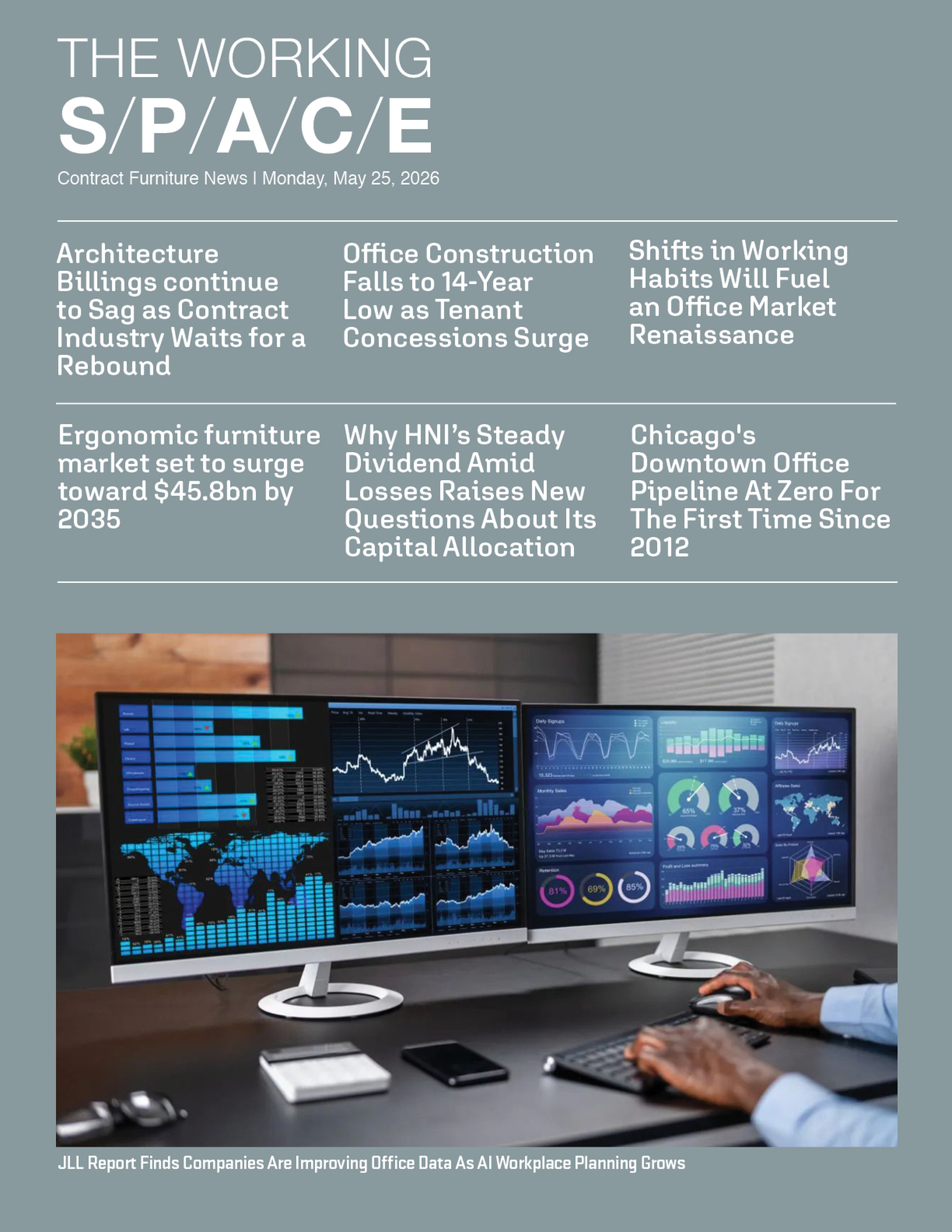
Corporate real estate teams are prioritising accurate workplace data, with space data accuracy now the second‑most important focus after portfolio optimization, driven by AI, hybrid work and utilization pressures. While AI interest is high, most firms are still researching or have not begun implementation, citing privacy, cost and compatibility concerns. Hybrid policies are becoming less flexible, with 62 % of organizations enforcing fixed in‑office days and global office utilization rising to 56 % in 2026. Companies are shifting from assigned desks to shared spaces, increasing the need for detailed space‑level data, and extending data‑driven planning to technical environments such as labs and data centers. Formal data governance programs are emerging as a competitive advantage, enabling more predictive, data‑focused occupancy planning.
|
|  allwork.space allwork.space
|
|
|
|
Law firms now dominate premium office leasing, representing 21.7% of leases above $100 per square foot and driving a “flight to quality” by securing top‑tier spaces in major gateway cities, with the strongest expansion activity in Washington, D.C., New York, and Chicago. Major firms such as Freshfields, Sullivan & Cromwell, Milbank, Simpson Thacher & Bartlett, and Covington & Burling are leading large deals, including a 475,000‑square‑foot renewal by Cleary Gottlieb Steen & Hamilton in New York’s Financial District and a near 200,000‑square‑foot relocation by White & Case in Washington, D.C. This trend highlights continued consolidation into trophy assets despite broader office market challenges.
|
|  www.globest.com www.globest.com
|
|
|
|
Young workers are increasingly anxious and angry about AI, fearing job losses as companies like Standard Chartered, Meta, Amazon, and Block cut thousands of positions and replace roles with AI; surveys show nearly half view AI risks as outweighing benefits, while only a small minority see it positively. Executives acknowledge these concerns but present AI adoption as inevitable, leading to heightened tension and pushback across industries and regions.
|
|  allwork.space allwork.space
|
|
|
|
Residential coworking has shifted from a marketing perk to essential infrastructure, with success now measured by consistent usage, operational efficiency, and reliable technology. Micro‑shifting work patterns demand flexible, self‑serve amenities like easy printing and coffee, while high vacancy rates and tight margins make performance and cost justification critical for property owners.
|
|  allwork.space allwork.space
|
|
|
|
Office landlords are increasingly investing large sums—ranging from $200 K to millions—into art installations and curated spaces to attract and retain tenants post‑pandemic, believing that enriched environments boost productivity, lower stress, and inspire employees. These investments, often justified by higher occupancy rates, lower vacancy in premium buildings, and substantial lease revenues, are becoming a strategic part of real‑estate development, with developers and corporations alike using art to create compelling, community‑focused workplaces that appeal to a younger, experience‑driven workforce.
|
|  www.bisnow.com www.bisnow.com
|
|
|
|
The Collective, led by founder Lucy Abraham, promotes an integrated design approach that unites acoustics, lighting, ceilings, and furnishings into cohesive interior solutions. Emphasizing sustainability, they use recycled materials, circular‑economy practices, and in‑house R&D to create customizable products such as acoustic panels, writable glass, and fabric‑wrapped acoustics, aiming to streamline project delivery and enhance wellbeing in modern workspaces.
|
|  www.mixinteriors.com www.mixinteriors.com
|
|
|
|
|
Actiu - Setting a New Bar for Sustainable Manufacturing
|
|
A 58-year-old Spanish manufacturer arrives at NeoCon with B-Corp certification, LEED and WELL Platinum credentials, and a market that increasingly asks for receipts.
For most of the last decade, the contract furniture industry has moved fitfully toward a more rigorous accounting of what it produces and how, as sustainability requirements find their way into RFPs. Specifiers defend material choices, documentation packets grow thicker, and the gap between marketing language and verified performance is difficult to ignore.
Into that landscape steps Actiu, the Castalla, Spain-based contract furniture manufacturer, making its formal entry into the United States this June with a debut at NeoCon 2026. For a brand that has spent 58 years building one of the most decorated manufacturing operations in the European contract industry, the U.S. move is less a launch than a release that brings to North America a portfolio, a manufacturing platform, and a set of credentials that have, until now, been difficult to find.
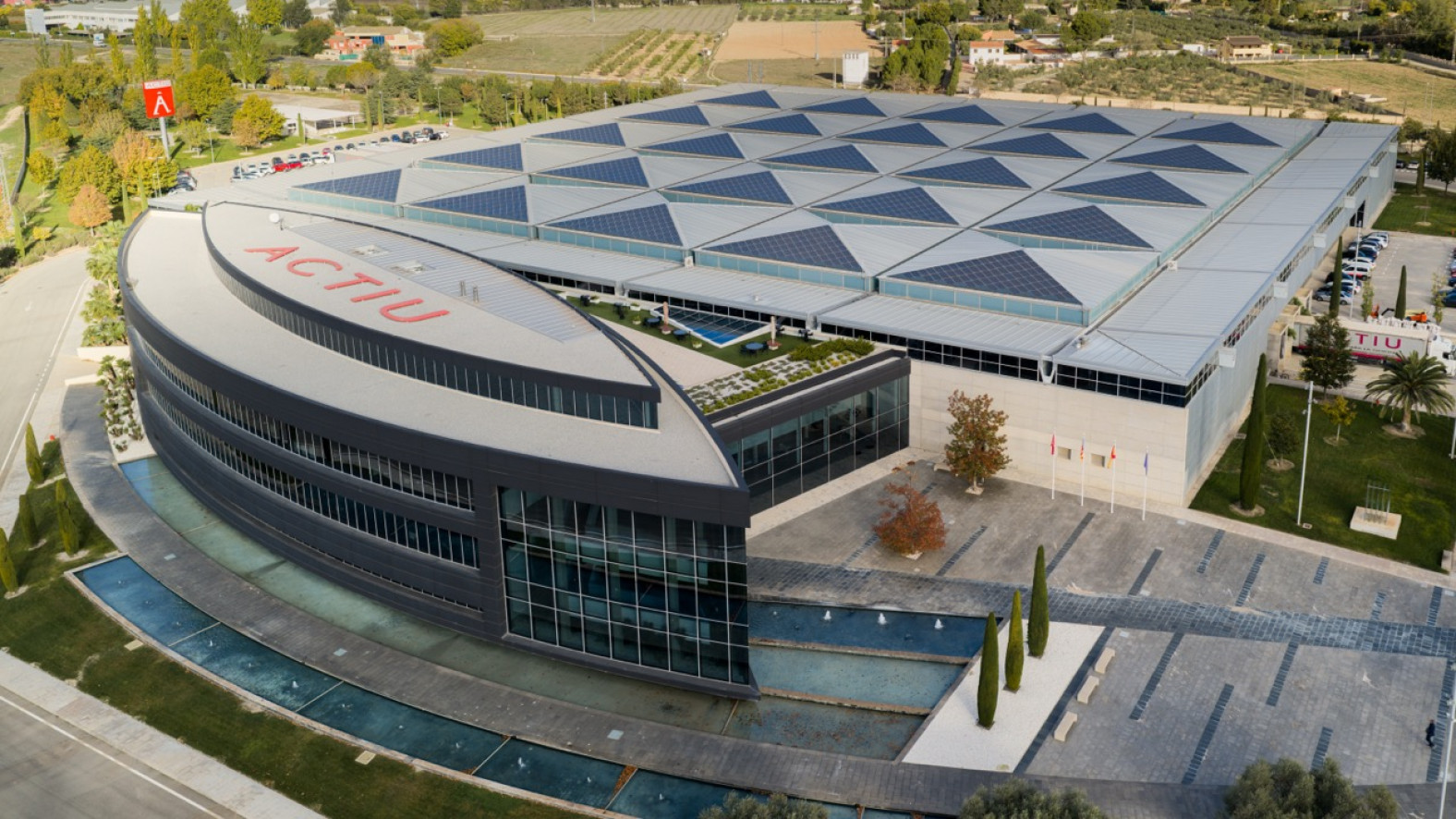
What sets Actiu apart in a market saturated with sustainability stories is the combination and the verification. The company's 37-acre campus in Castalla holds both LEED v4.1 Platinum and WELL v2 Platinum certifications, making it one of the few industrial companies worldwide to have achieved both. It is also where every Actiu product is manufactured, end-to-end. Vertical integration is a structural condition at Actiu, not a marketing line: raw materials enter the campus, finished product leaves it, and the company controls design, engineering, fabrication, and finishing under one roof. That is why Actiu can hand a specifier a documentation packet for a LEED v4 or WELL v2 submittal that reflects the entire supply chain, not just the final product.
In addition to operational certifications, Actiu holds B-Corp status, one of a small number of contract furniture manufacturers globally to do so. B-Corp evaluates a company across governance, workers, community, and environment, and the assessment is ongoing rather than a one-time event. For U.S. specifiers used to evaluating one product at a time, it offers something different: an independently verified picture of the company that made the product.
The portfolio Actiu is bringing to NeoCon reflects six decades of building one of Europe's most consistent contract design languages, developed with studios including Alegre Design, NACAR Design, Ramos Bassols, Ramón Esteve Estudio, and estudi{H}ac. The work has been recognized with Spain's National Design Award, the German Design Award, the iF Design Award, and the Red Dot Design Award.
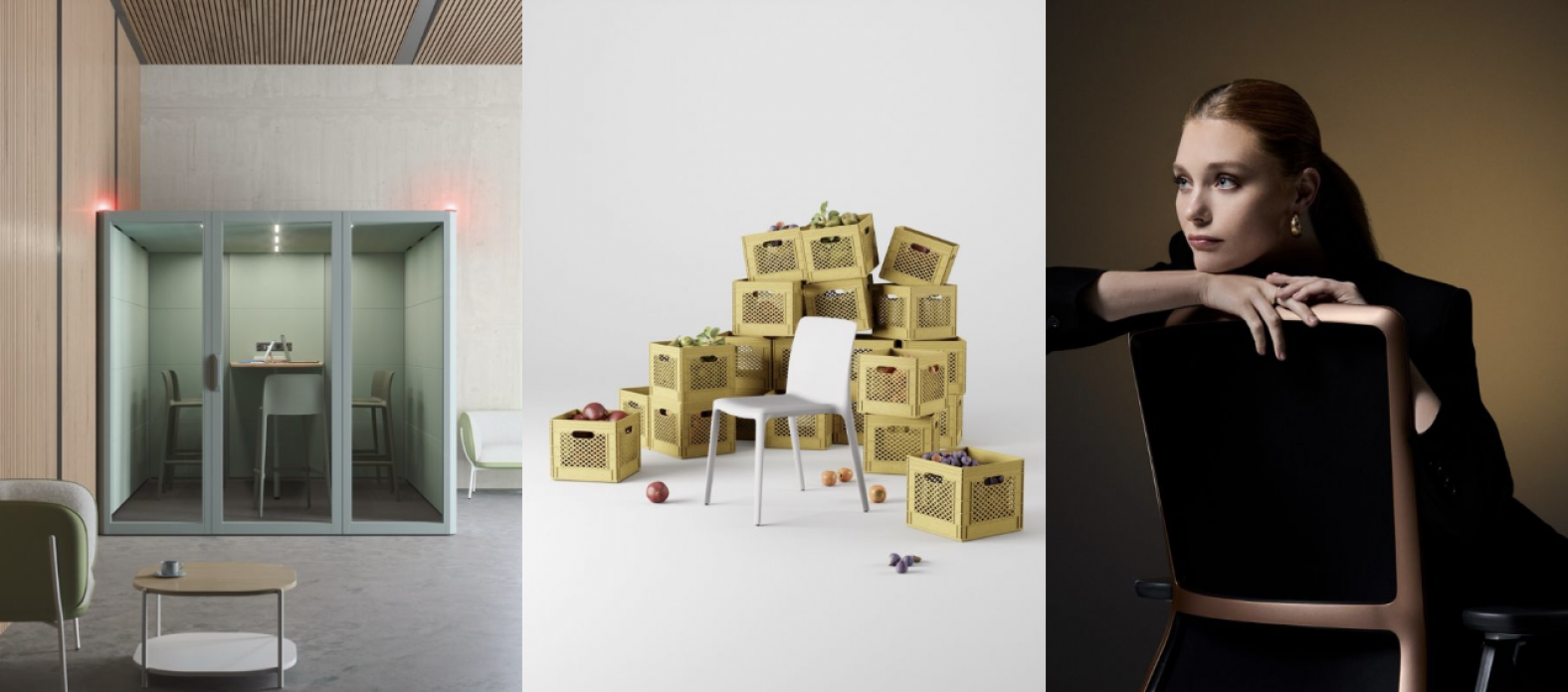
Two recently awarded products at NeoCon are Qyos and Meetia. Qyos, an acoustic cabin developed by the in-house Actiu Team, is a 2025 German Design Award winner. Available in five sizes with full glazing, integrated ventilation, connectivity, ADA compliance, seismic certifications, and LED lighting, it gives workers spatial refuge without the visual weight of a full partition wall. Meetia, a soft-seating collection designed by Ramón Esteve Estudio, took both the iF Design Award and the German Design Award in 2025; a perimeter tube structure defines its profile, bringing an architectural vocabulary to the meeting environment.
Across the catalog, Actiu's design language is unified by a phrase the company describes as a brief, not a tagline: Feel Good. Work Better. The proposition is that the physical environment, every chair, every acoustic panel, every table, is part of the wellness equation, and that organizations investing in health apps and benefits platforms while specifying generic furniture are missing the most consistent eight-hour interaction any worker has with their workplace. The TNK 500 Aurea task chair pairs a synchronized full-body ergonomic response with a mechanism that moves with the user rather than against them. The design premise is that fatigue is a cumulative condition, and that the chair's job is to absorb it.
When Vicent Berbegal founded the company in 1968, he named it Actiu, the Valencian word for 'active' and 'dynamic forward movement.' That aspiration has grown into a 500-person, family-owned operation reaching more than 90 markets, still recognizable as the pioneering company he started. Berbegal, its visionary founder, was named European Entrepreneur of the Year in 2017.
NeoCon 2026 marks the first time American specifiers, dealers, and design teams will see the collection on U.S. soil in a showroom designed to express the Feel Good. Work Better. philosophy. For a U.S. contract industry asking harder questions about what sustainability really means, Actiu's answer arrives in Chicago this June.
Actiu makes its NeoCon 2026 debut at the Merchandise Mart, Floor 11, Suite 107, Chicago. For specification support, sample requests, or to schedule a lunch-and-learn or showroom visit, contact Ryan Featherston, US Sales Manager, at ryan.featherston@actiu.com, or visit actiu.com.
|
| |
|
|
|
The Stanford Doerr School of Sustainability’s Accelerator connects faculty-led project teams with funding, mentorship, and external expertise to develop scalable solutions across energy, carbon removal, industry, and agriculture. Active initiatives include a soil additive that captures CO₂, a wastewater treatment that eliminates nitrous‑oxide emissions, and grid‑optimization technology for data centers. Companies can partner with these projects, purchase carbon credits, or join Stanford’s affiliate programs to collaborate on commercializing the innovations.
|
|  trellis.net trellis.net
|
|
|
|
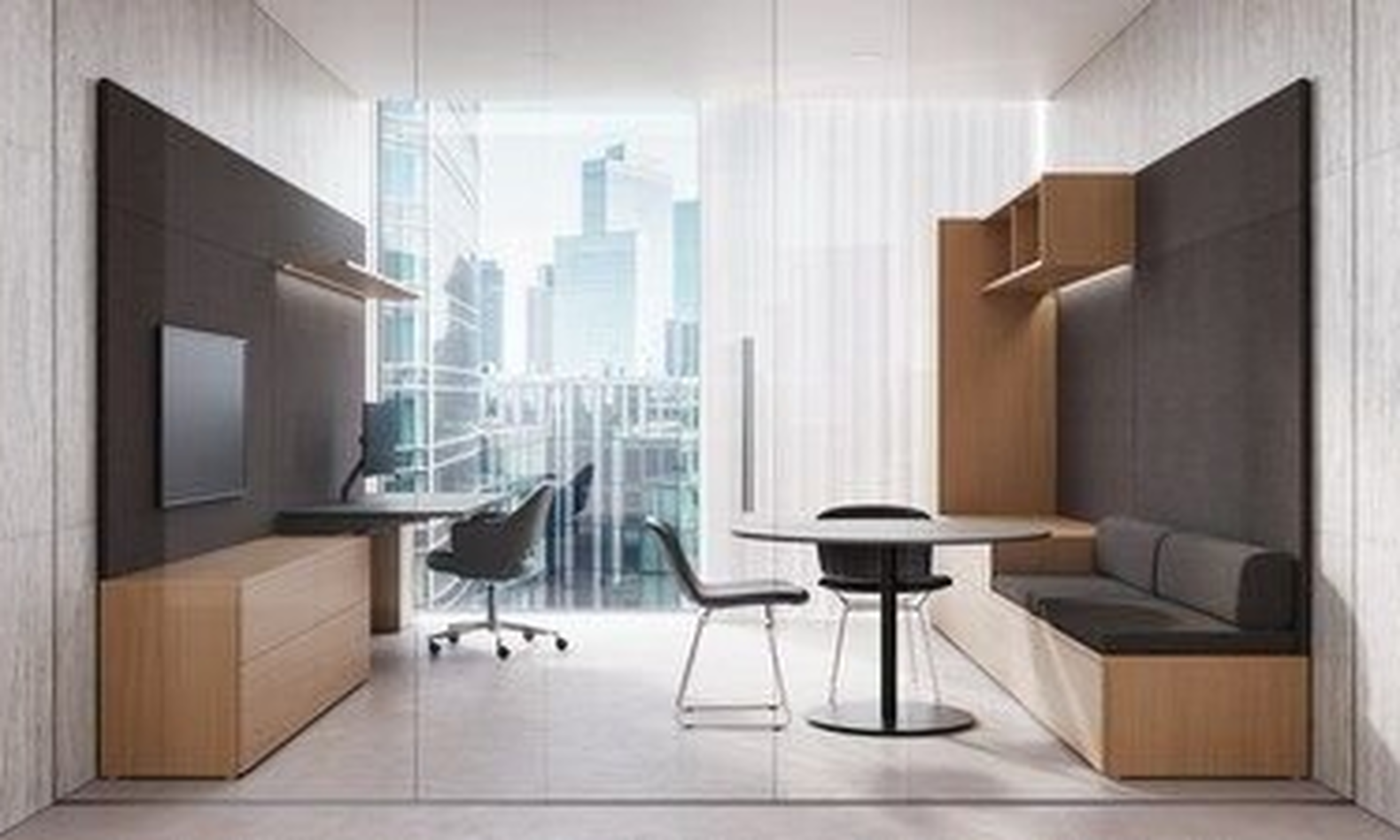
Knoll introduces Konzert, a versatile private office system designed by Paolo Dell'Elce, offering modular panels, tables, seating, and storage with extensive material, color, and finish options. Launched at Clerkenwell Design Week 2026, the system emphasizes flexible, total‑design solutions for architects and designers, allowing customized configurations and integrated lighting. It is now available in Europe and the Middle East through certified dealers.
|
|  www.officing.com www.officing.com
|
|
|
|
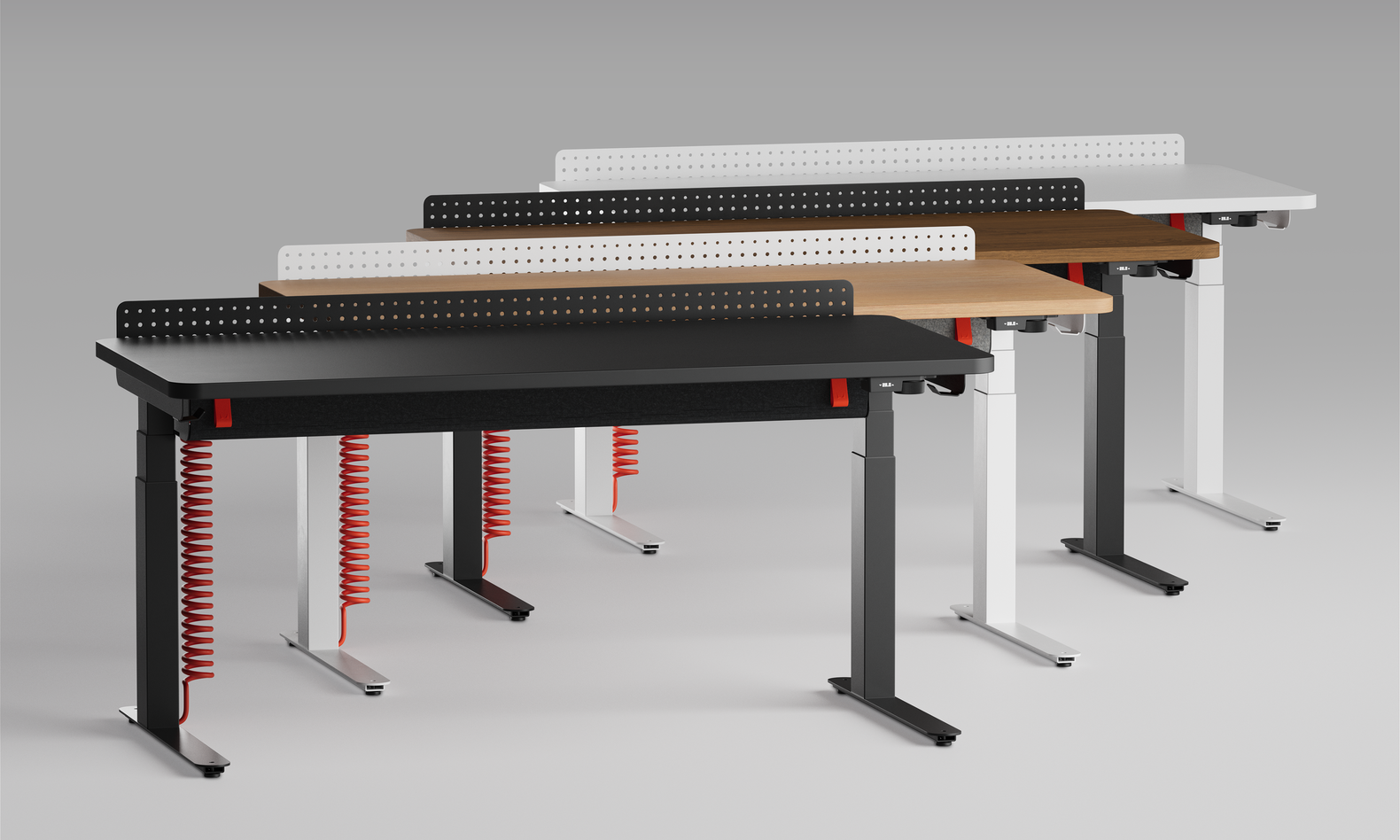
Herman Miller Gaming introduces the Coyl Gaming Desk, a modular, fully customizable workstation featuring a rotary‑dial height control, built‑in hooks, and optional accessories such as controller holders, phone docks, shelves, and planters, designed to enhance performance, ergonomics, and personalization for gamers, creators, and professionals.
|
|  www.officing.com www.officing.com
|
|
|
|
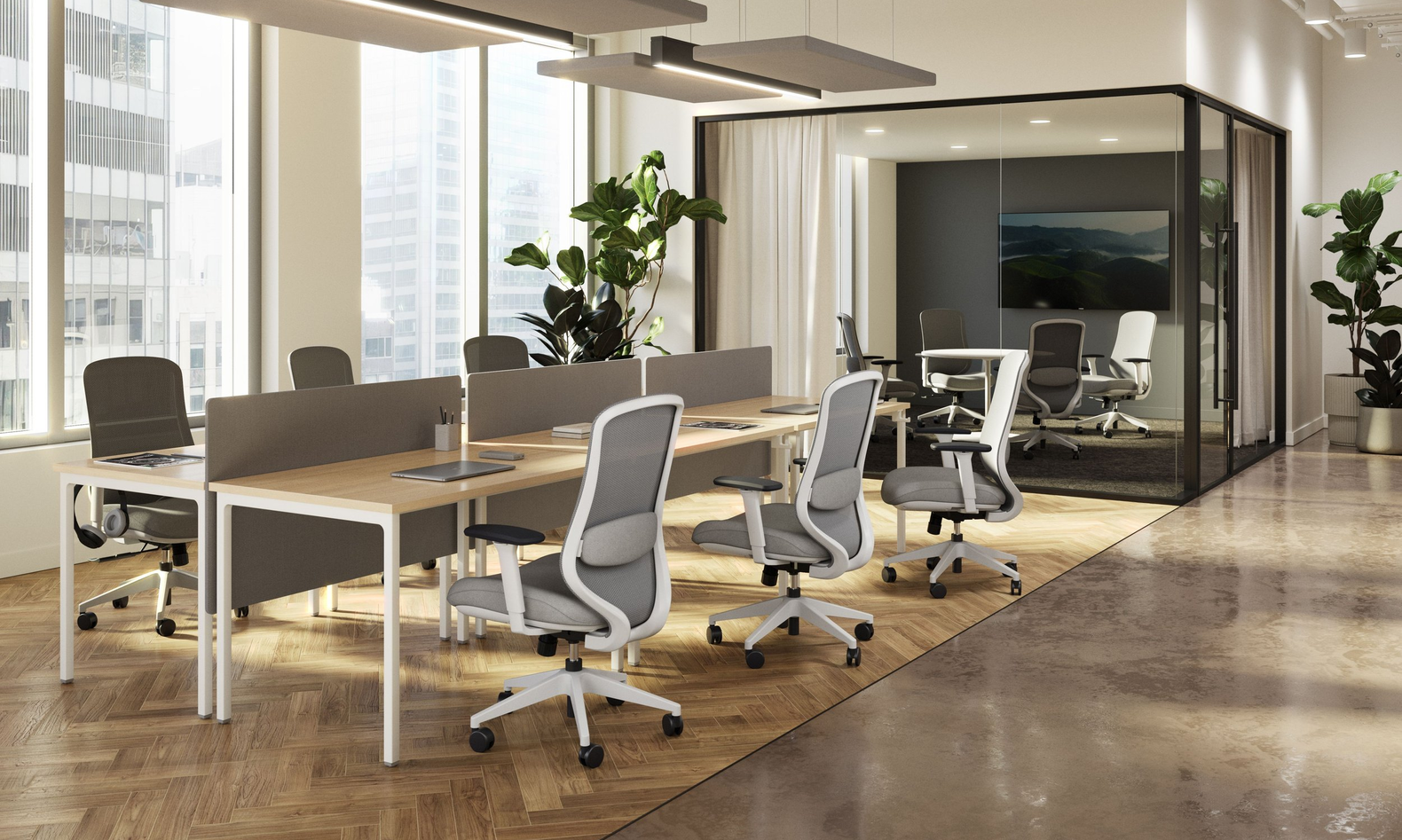
Lex from 9to5 Seating features a breathable mesh back, upholstered seat, synchro tilt with tension control, optional seat‑depth and lumbar adjustments, 4D arms, a durable nylon base, and four mesh colors with black or light‑gray frames, offering flexible comfort and high value for modern workspaces.
|
|  www.officing.com www.officing.com
|
|
|
|
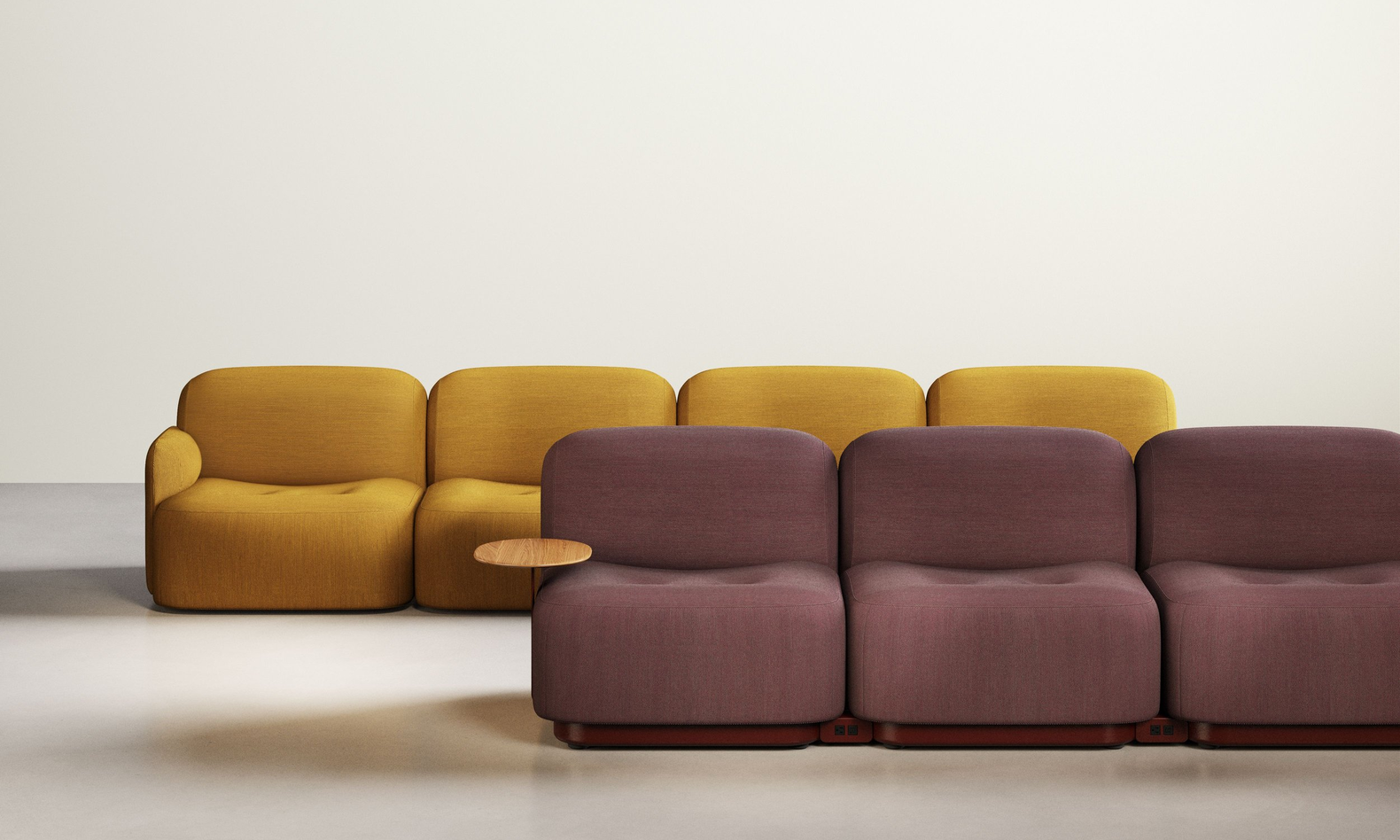
SoftBrick is a modular lounge system created with Italian designers LucidiPevere, offering configurable seat shapes, dual height options, and a powder‑coat finished plinth base, making it suitable for residential‑style seating in hospitality, workplaces, and public spaces while emphasizing comfort and architectural versatility.
|
|  www.officing.com www.officing.com
|
|
|
|
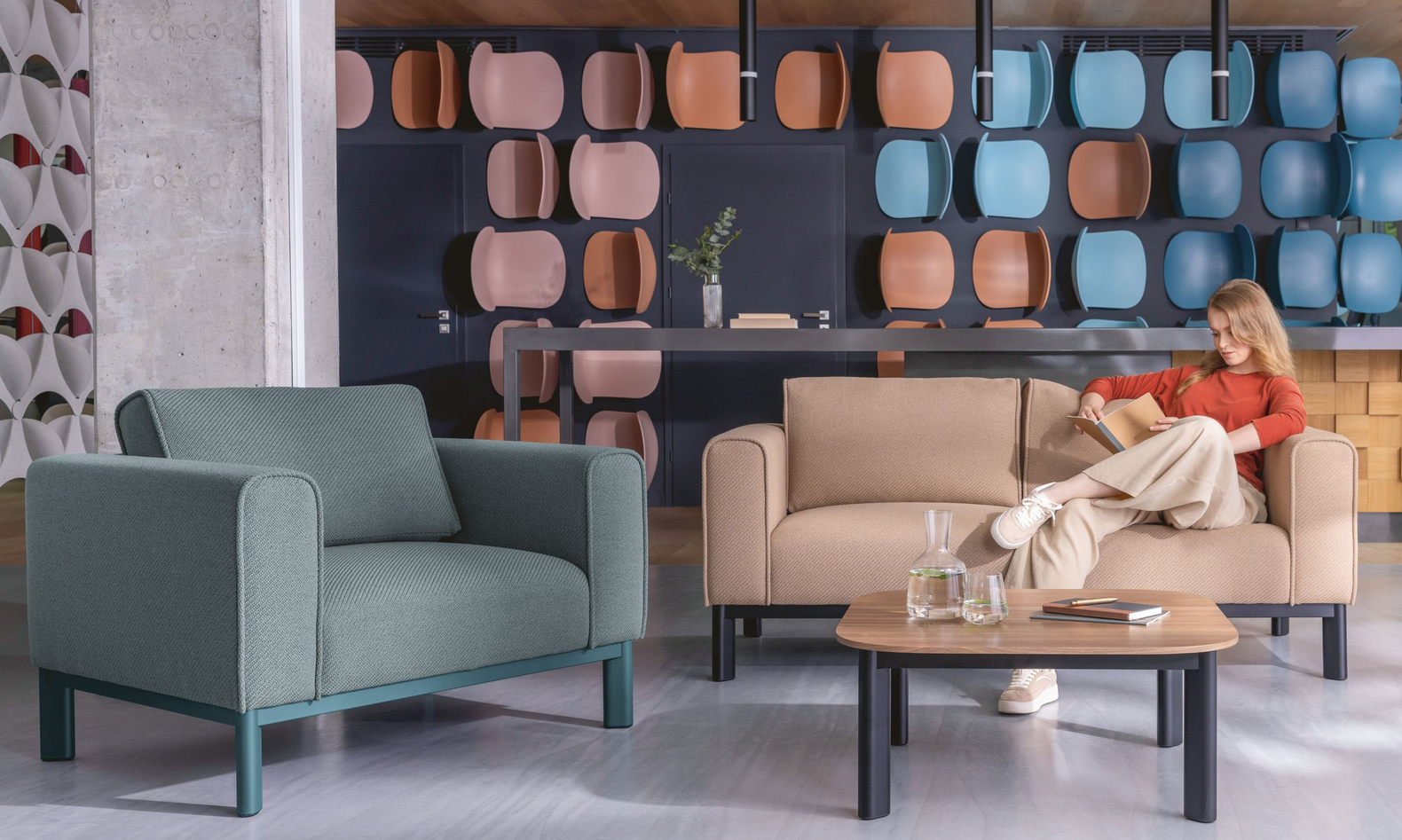
Decenta is a lounge collection that blends residential warmth with contract‑grade durability, offering minimalist chairs, two‑ and three‑seat sofas, and coffee tables designed by Maja Ganszyniec. Featuring a multi‑layer filling system with SkyFill™ fibre for deep comfort and ergonomic support, the line is built for professional and hospitality environments and will launch in the U.S. through Via Seating in Fall 2026.
|
|  www.officing.com www.officing.com
|
|
|
|
Rela is an ergonomic task chair created with architect Claudio Bellini, featuring a sleek, architectural design and an integrated flex system that provides responsive support while maintaining a clean, minimal profile. The chair offers versatile customization options, including three back‑height settings, various arm configurations, standard or ruched upholstery, 24 powder‑coat finishes, and multiple cylinder colors, making it suitable for both workplace and residential environments.
|
|  www.officing.com www.officing.com
|
|
|
|
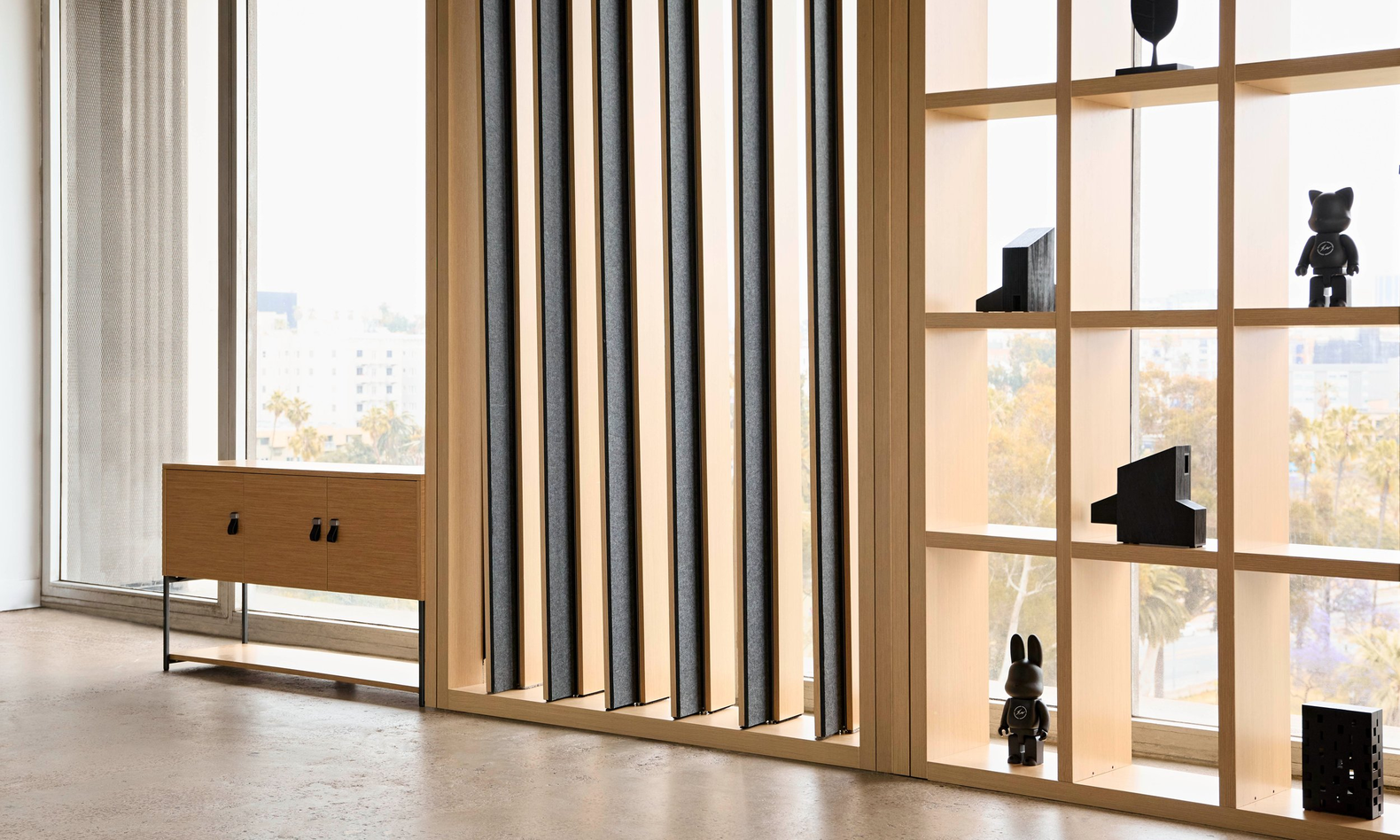
Teknion introduces Ligna, a modular millwork system that combines premium wood aesthetics with flexible, pre‑engineered partitioning for modern workplaces. The system offers a wide range of finishes, configurable widths, heights, and accessories such as louvers and shelving, enabling designers to create adaptable zones that balance collaboration and focus while reducing waste and simplifying installation.
|
|  www.officing.com www.officing.com
|
|
|
|
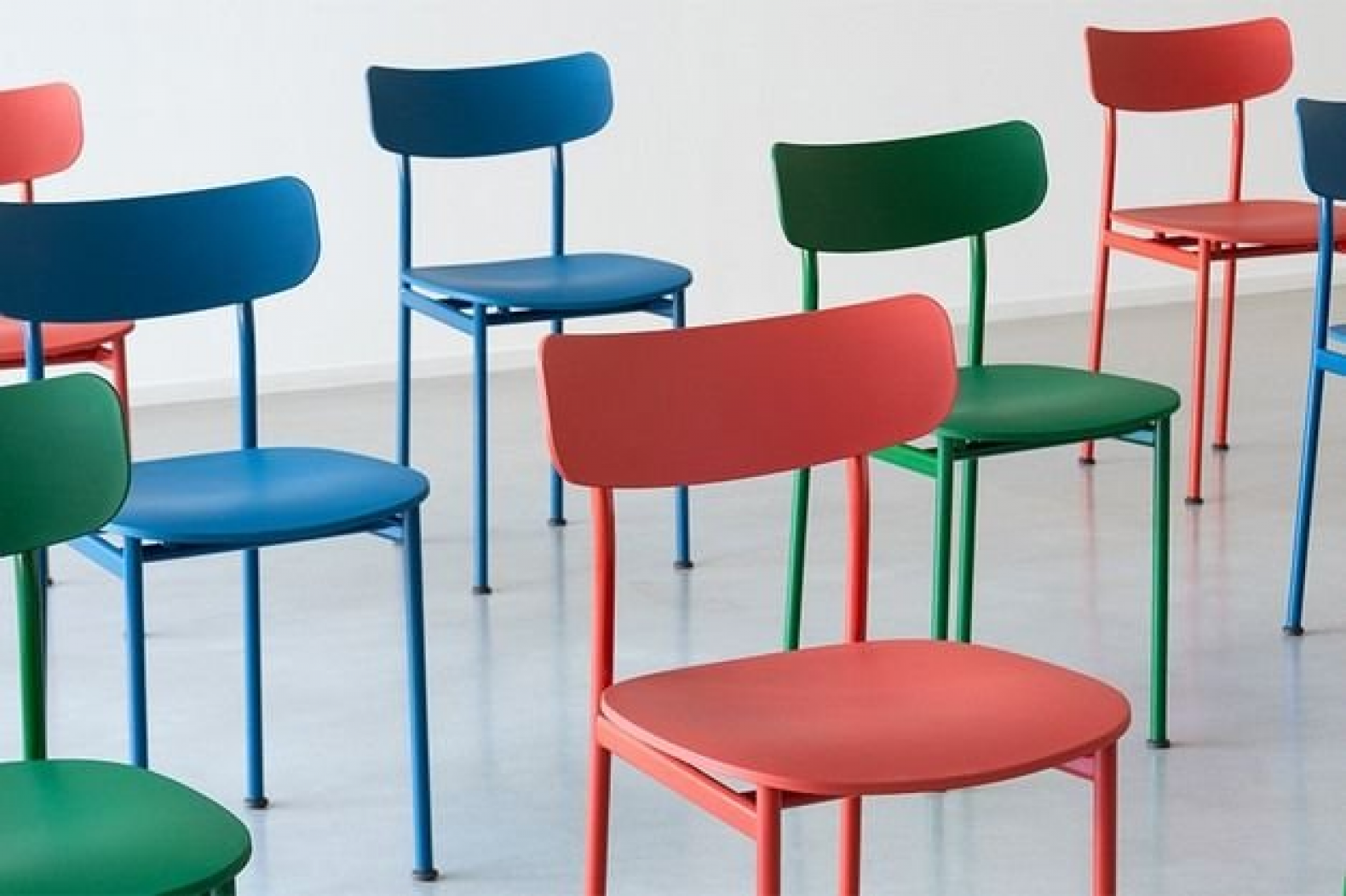
Magis launches the Motta collection, a lightweight seating and table line designed by Jasper Morrison, featuring slim steel frames, recycled polypropylene or upholstered seats, and coordinated color options, suitable for residential and contract spaces and showcased at Milan Design Week 2026.
|
|  www.officing.com www.officing.com
|
|
|
|
NaughtOne introduced the Lotti café chair, designed with Keiji Takeuchi, featuring a circular aesthetic, easy disassembly, sustainable materials, and a customizable colour palette. Alongside Lotti, the Pullman Modular Seating system was unveiled as a flexible spatial solution for cafés, lounges, and collaborative work environments, offering both open‑plan organization and private zones. Both products emphasize simplicity, durability, and user‑focused design, and will be available through authorized MillerKnoll dealers starting July 2026.
|
|  www.officing.com www.officing.com
|
|
|
|
The JS . Thonet collection has been expanded with two new designs—a minimalist S 1070 table, reinterpreting Glen Oliver Löw’s 2004 tubular‑steel design, and the historic S 411 lounge chair from 1932—both offered in Serious and Nordic lines and featuring refined metal finishes, monochrome or two‑tone options, and optional footstools. These additions continue the collaboration between Jil Sander and Thonet, blending the designer’s sleek aesthetic with Thonet’s iconic steel craftsmanship to enrich the collection’s range of understated luxury furniture.
|
|  www.interiordaily.com www.interiordaily.com
|
|
|
|
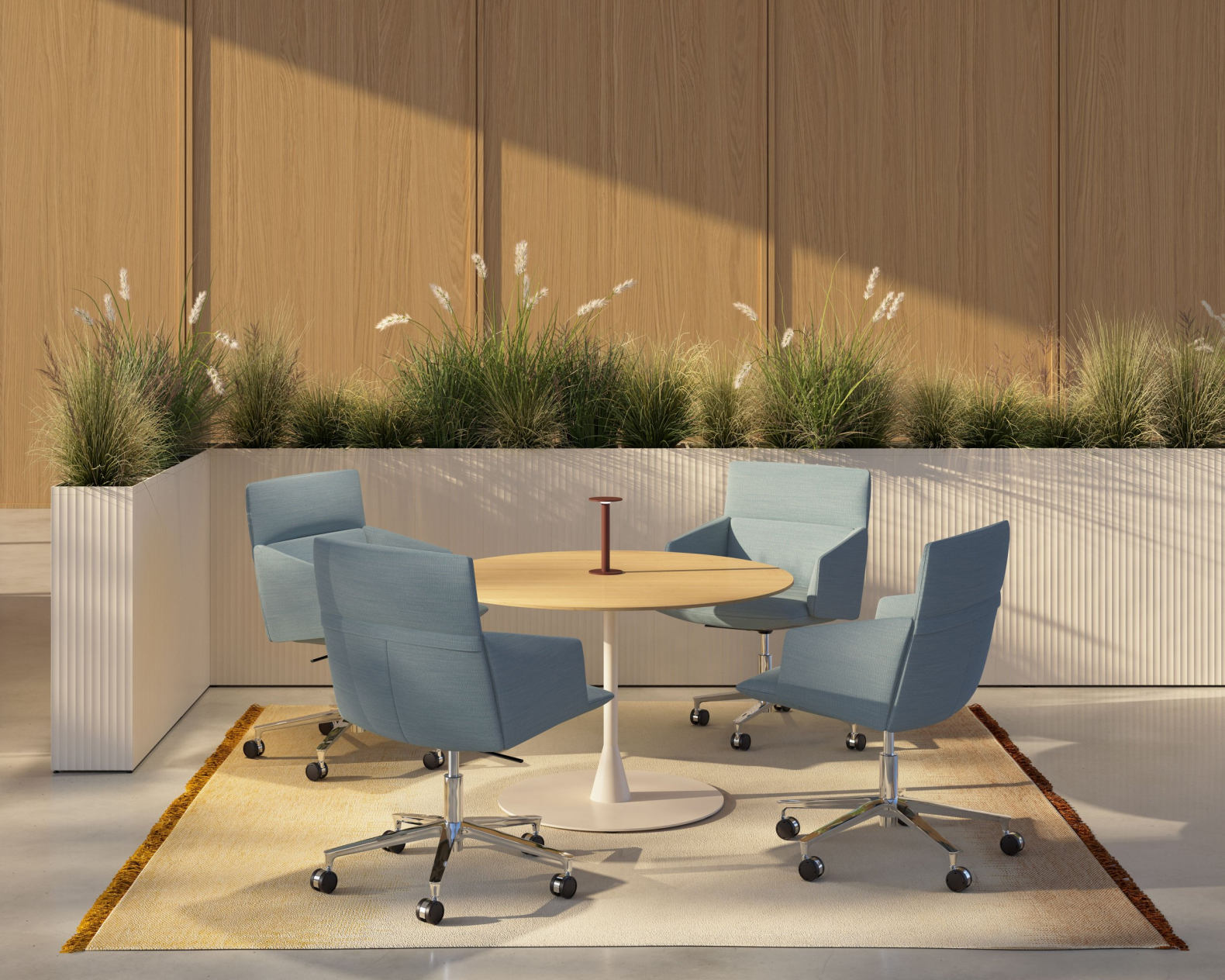
Via Seating’s Breya line provides adaptable commercial seating that unifies design across task, guest, and nesting applications, offering mid‑ and high‑back options with plastic or upholstered backs, fixed‑arm or armless styles, and various base configurations—including swivel, four‑leg, and nesting bases with casters or glides—for flexible, space‑saving solutions in high‑traffic, dynamic environments.
|
|  www.officing.com www.officing.com
|
|
|
|
Allsteel launches Flourish, a design-forward collaborative chair featuring a petaled back, customizable wood and metal bases, and extensive upholstery options, engineered to meet high ergonomic standards and adaptable for various workplace settings; the product will debut in June at Fulton Market Design Days.
|
|  www.officing.com www.officing.com
|
|
|
|
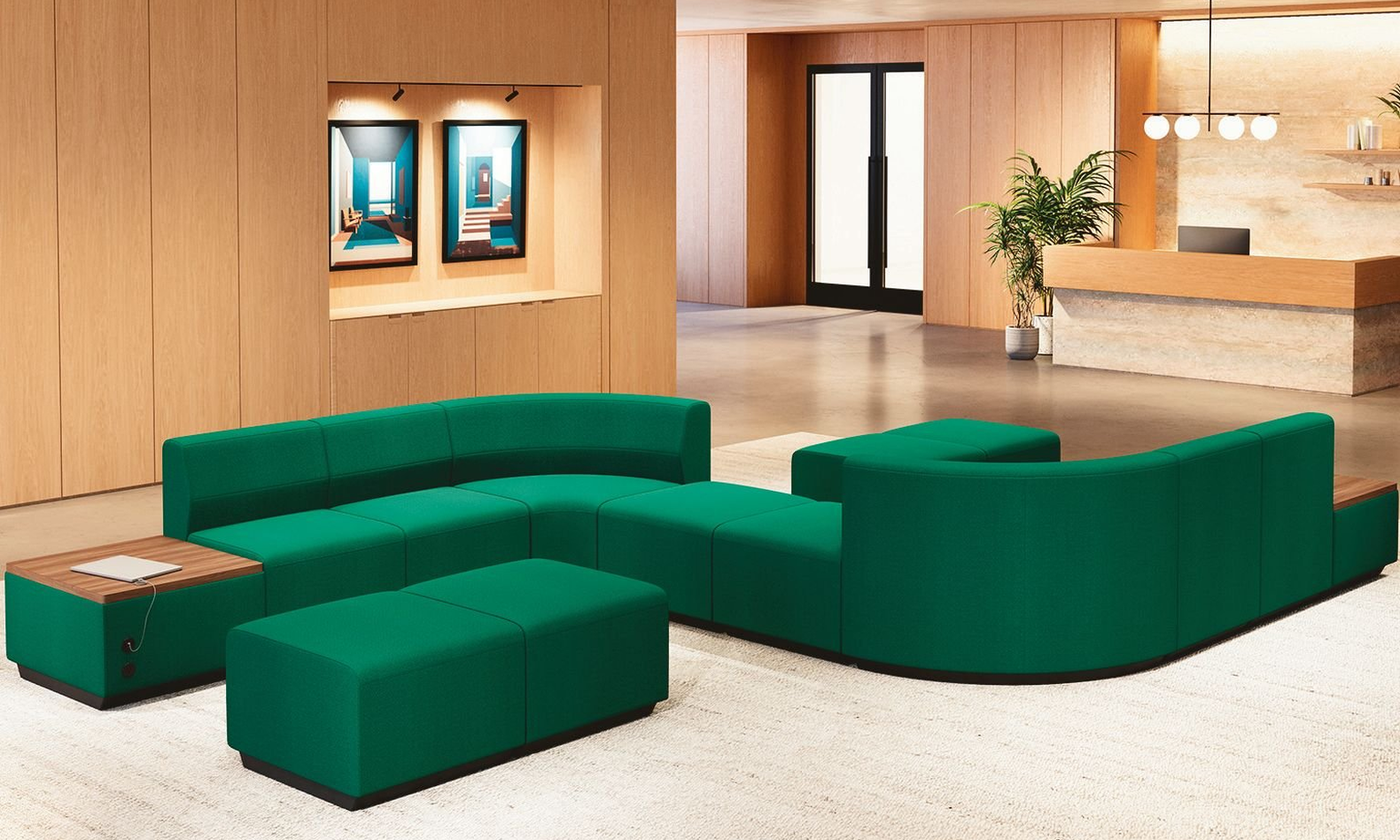
A modular lounge system offering flexible, space‑efficient configurations with new two‑seat units, integrated lumbar support, task‑height seating, and built‑in power and USB ports; straight and curved modules (26″ W × 28″ D, 18″ seat height) enable runs, banquettes, back‑to‑back islands, and serpentine layouts for both high‑traffic hubs and quiet workspaces.
|
|  www.officing.com www.officing.com
|
|
|
|
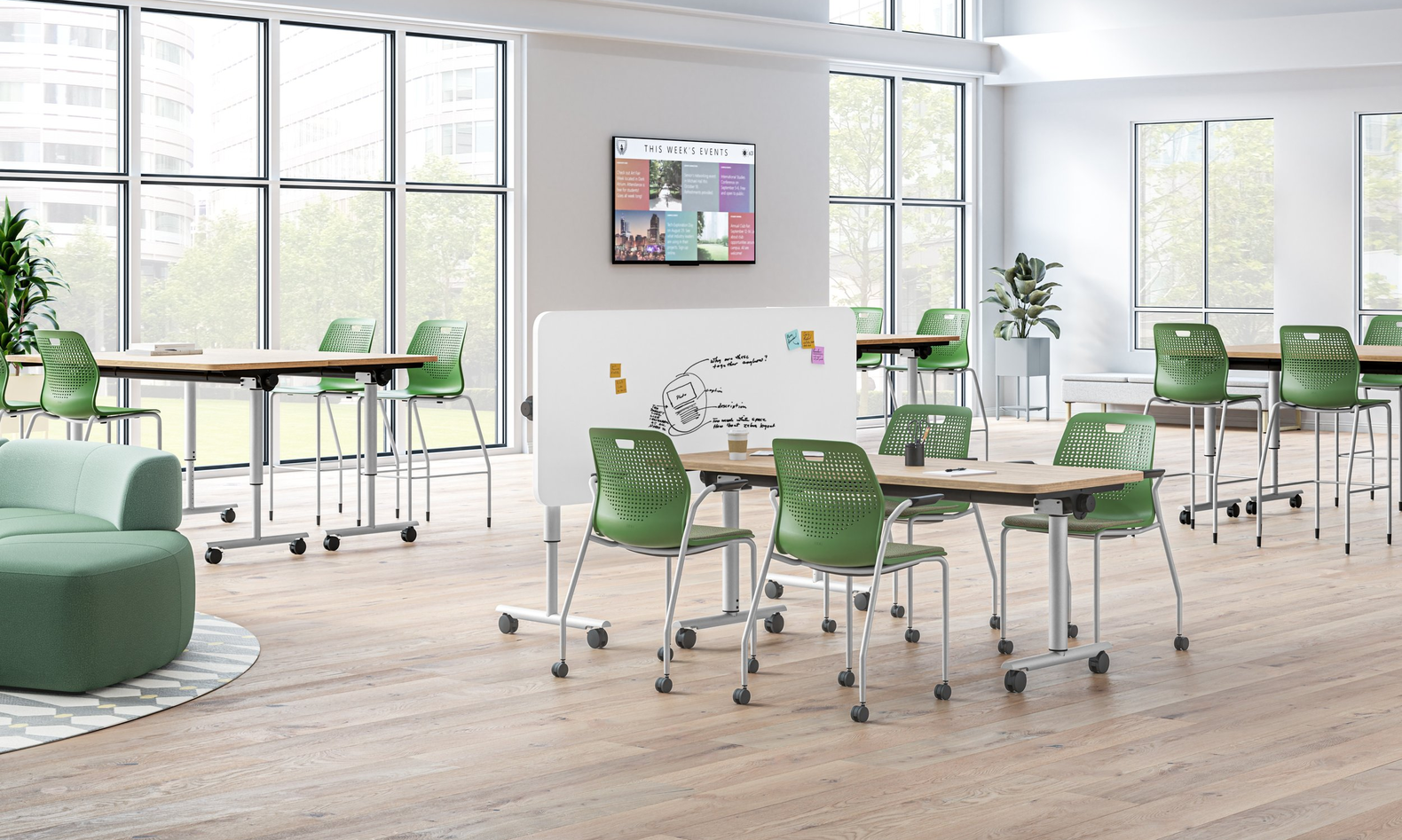
The HON Company has launched Field Trip, a versatile, height‑adjustable mobile table with flip‑top writable surfaces that can serve as workstations, whiteboards, or space dividers. Designed with safety and accessibility in mind, it features smooth mobility, quiet locking casters, and a side‑dial mechanism for easy configuration. The system supports seated, standing, and tiered learning arrangements, allowing educators to create flexible classroom zones that promote student inclusion, visibility, and engagement. Field Trip will be showcased during Fulton Market Design Days.
|
|  www.officing.com www.officing.com
|
|
|
|
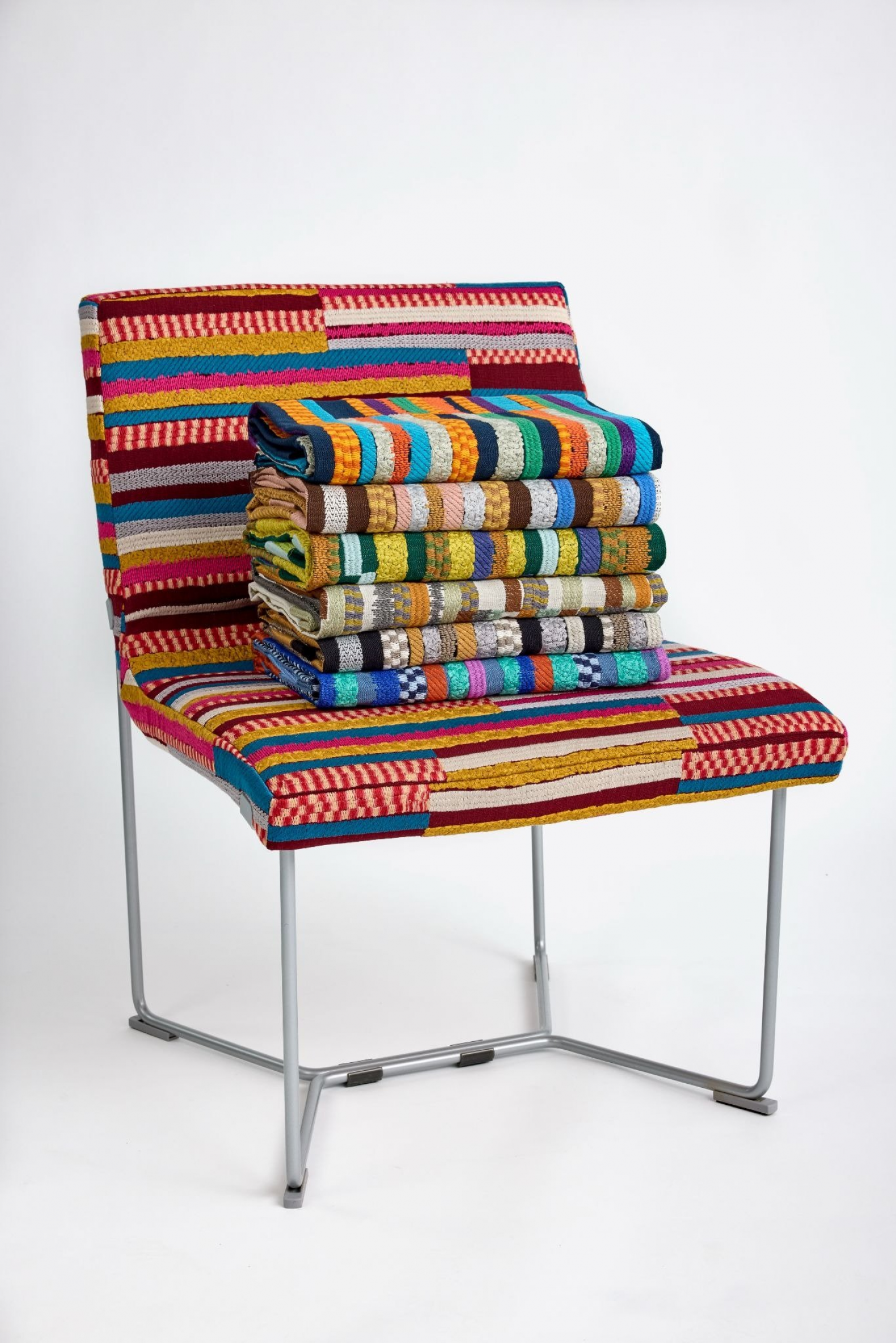
Craft Work, the new Luum Textiles collection directed by Dorothy Cosonas, introduces six sustainable, performance‑driven products-three upholsteries (Gigi, Roam, Dori), a multipurpose textile (Haze), a woven wallcovering (Etch), and a drapery (Calm)-created with six skilled mills worldwide using recycled polyester, Trevira® CS polyester, and eco‑friendly processes, offering diverse colorways inspired by art, fashion, and nature for commercial interior applications.
|
|  www.officing.com www.officing.com
|
|
|
|
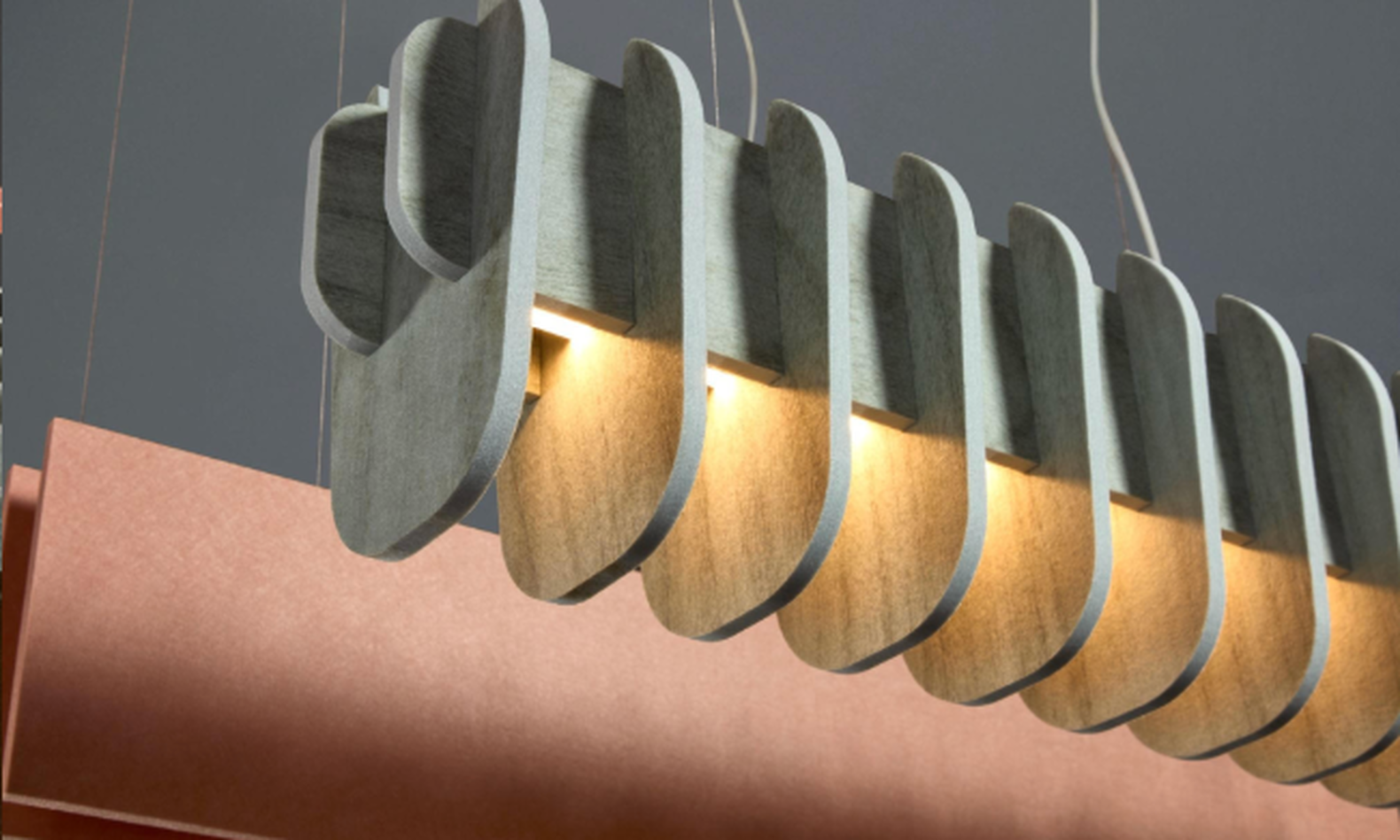
Kirei introduces two new Lit Collection products-HyperFly Clouds and HyperFly Baffles-featuring wing‑inspired geometry that combine acoustic performance with integrated lighting options, customizable colors, and easy installation for modern commercial interiors.
|
|  www.officing.com www.officing.com
|
|
|
|
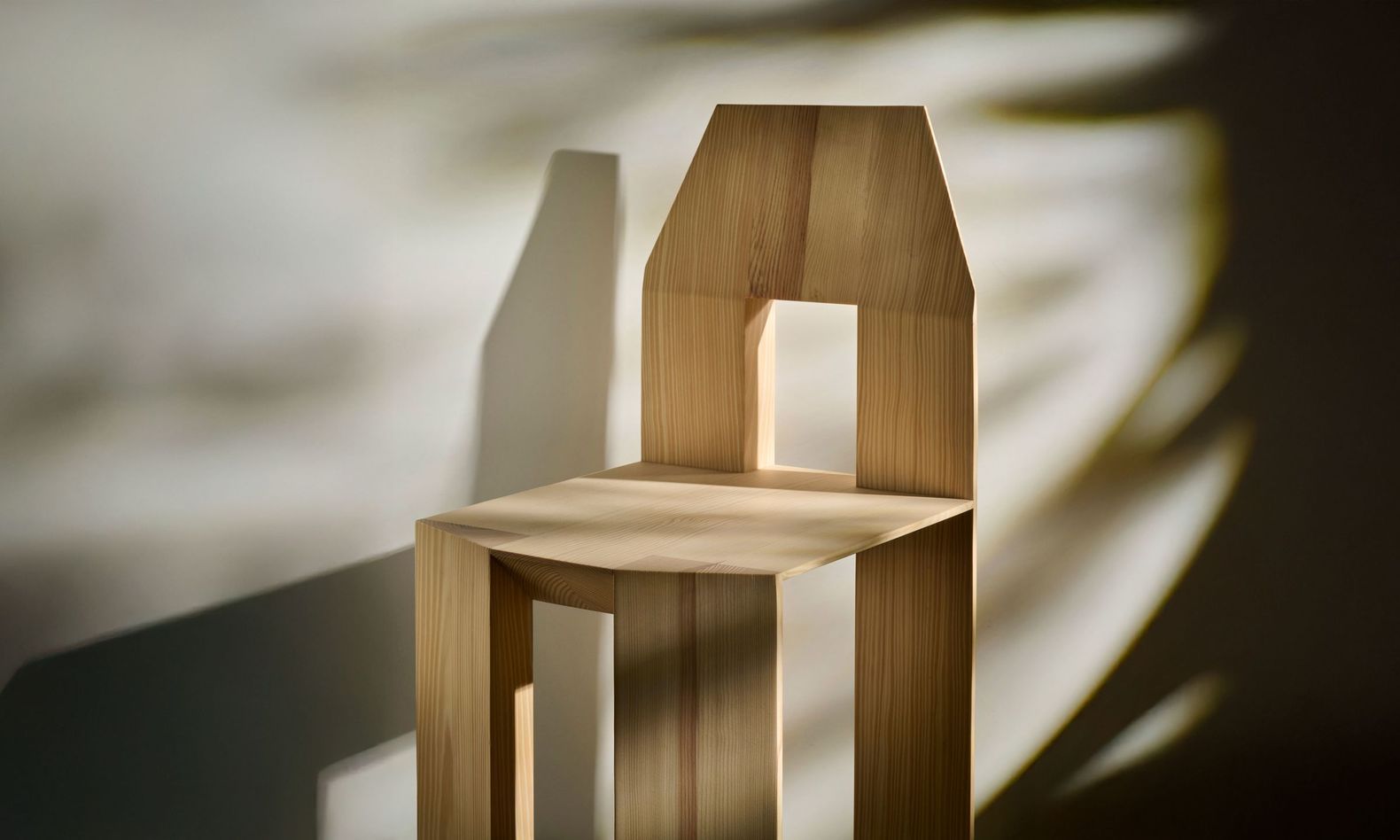
Max Lamb’s “Min” chair for Hem exemplifies material efficiency by using almost half the material of a conventional design, achieved through diagonal, triangular timber legs that allow two legs from the material needed for one. Originating from a 2020 waste‑reduction experiment, the chair combines industrial production with Lamb’s hands‑on, maker‑focused approach, resulting in a stylish, pragmatic piece priced at €799.
|
|  www.wallpaper.com www.wallpaper.com
|
|
|
|
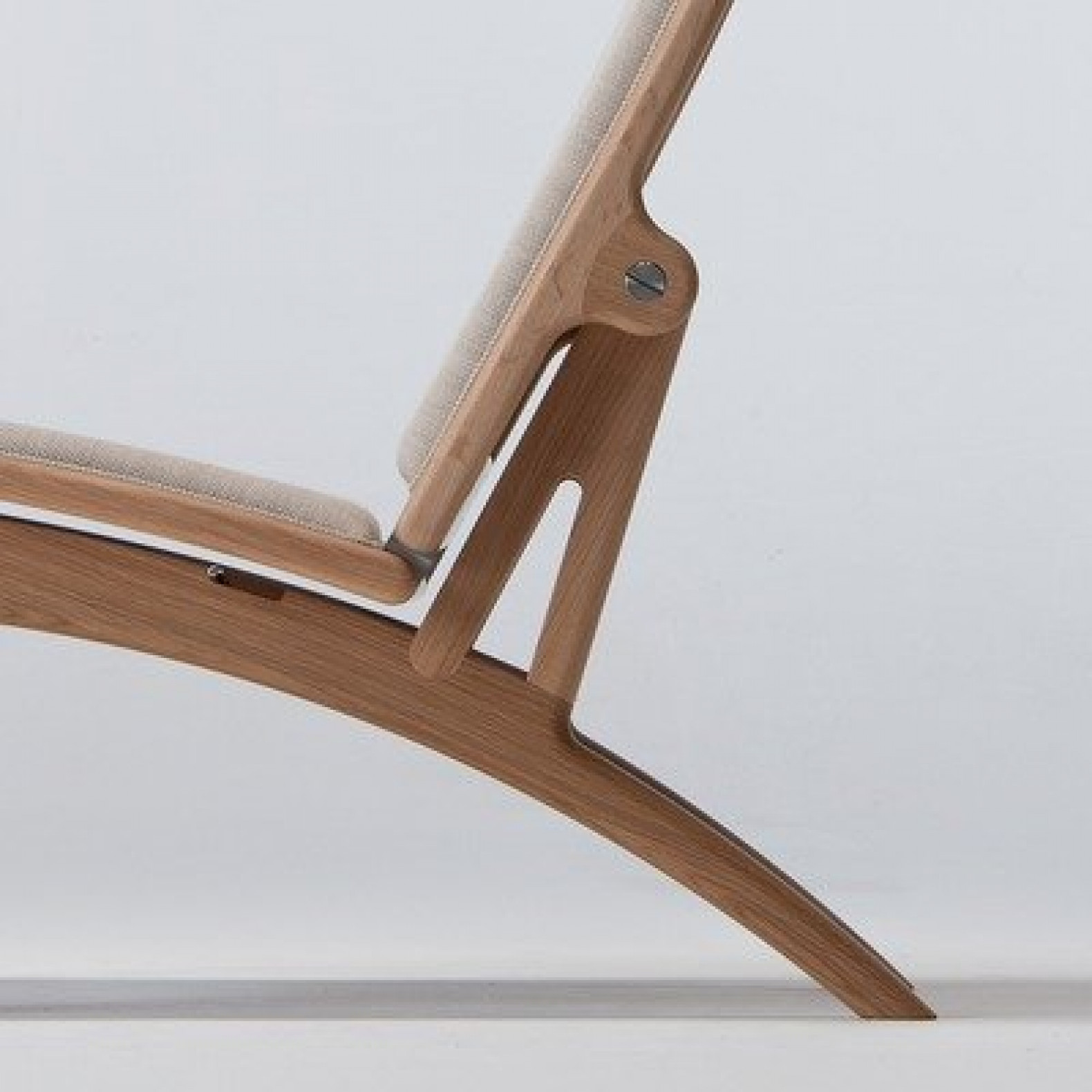
The Gorgeous Gaze Highback Chair, a collaboration between Danish designer Anker Bak and Japanese maker Takumi Kohgei, blends Nordic and Japanese minimalism with a striking mix of steel and wood, offering both armrest and non‑armrest versions and customizable finishes, including upholstered and woven rattan options. Its modular design extends to a matching oak footstool, emphasizing open construction, functional aesthetics, and the concept of “gaze” that invites users to linger and observe their surroundings in comfort.
|
|  www.core77.com www.core77.com
|
|
|
|
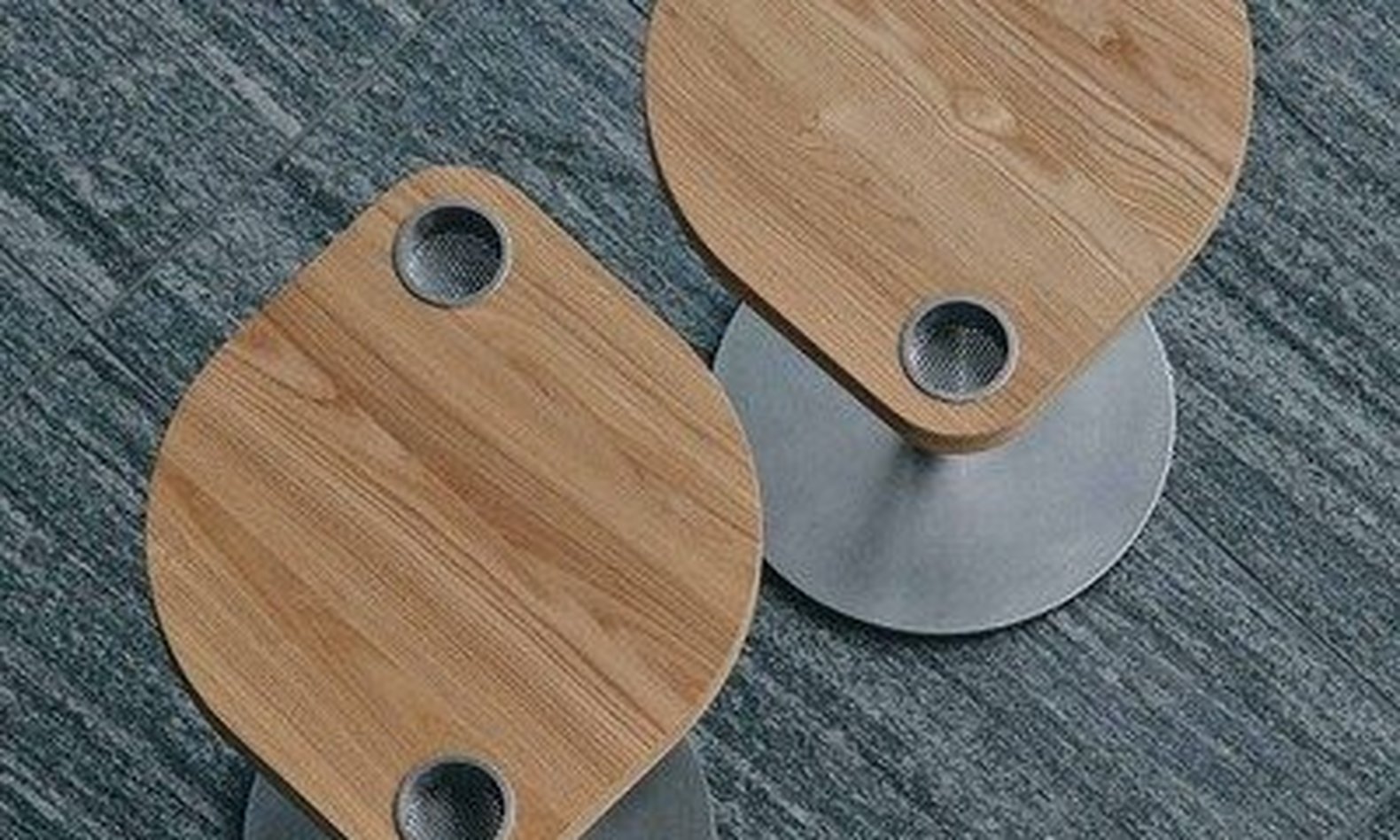
The Kadoma City Library in Osaka, Japan, features a café‑style environment designed to encourage reading with coffee, and furniture designer Tatsuki Kokubo created specialized tables that safely hold cups while users read. The two‑cup “Konoha Side Table” mimics floating leaves by the riverside, and the single‑cup “Shizuku Side Table” resembles a droplet, both enhancing the library’s relaxed, nature‑inspired atmosphere.
|
|  www.core77.com www.core77.com
|
|
|
|
NeoCon 2026 / DesignDays 2026
June 7-10, 2026 | Chicago, IL
NeoCon has served as the world’s leading platform and most important event of the year for the commercial design industry since 1969. A launch pad for innovation—NeoCon offers ideas and introductions that shape the built environment today and into the future. For 2026 NeoCon is introducing a special preview day on Sunday, June 7th, from 12-4 PM. All NeoCon attendees and exhibitors are invited to visit on Sunday.
|
|
This year's NeoCon theme, "Where Design Connects," emphasizes innovation and resilience in the built environment. Keynote speakers include Jessica O. Matthews, who will discuss the personal impact on innovation; Nick Foster, who will challenge future assumptions; and David “Shingy” Shing, who will explore the evolving relationship between technology and design. Registration for the event opened on February 3, 2026, and the event will feature seven exhibition floors, highlighting a new focus on lighting through the "Illuminate at NeoCon" initiative.
Joining at the same time, in Fulton Market is DesignDays, a compatible show that now hosts more than half of the largest office furniture manufacturers. Hint: See both.
|
|
|
|
|
|
|
Allseating Brings “Allure of All” to Chicago Design Week 2026
|
|
Allseating is expanding its footprint during Chicago Design Week 2026 with a series of activations spanning its Chicago showroom, Fulton Market Design Days, and NeoCon. Centered around the theme “Allure of All,” the company will showcase new and upcoming seating collections while hosting a range of hospitality-focused events throughout the week.
The centerpiece of the company’s programming will take place at Allseating’s showroom at 325 N. Wells Street, where the brand plans to introduce and highlight several new and recently launched products aimed at workplace, hospitality, and healthcare environments. Featured introductions include the Synergy task chair, the Rühe Sleep Sofa for healthcare applications, the Gemelli seating collection designed with Carl Gustav Magnusson, and the Olive task chair. Additional enhancements to collections including L1, Attune, Dart, Rainbow, and Rühe will also be on display.
Beyond its showroom, Allseating will participate in Fulton Market Design Days’ “Beaudega” installation at Booth #6, while also exhibiting at NeoCon inside the new “NeoCon Collab: Half Light” space on the seventh floor of The Mart. Curated by Charlie Green Studio, the collaborative installation will feature Allseating’s Astute, Jif, and Gemelli collections within a multibrand environment inspired by “Chicago Henge.”
The company is also leaning heavily into hospitality during the week with a series of events and amenities at its showroom. Programming includes barista service, prosecco and Bloody Mary bars, design personality tours with curated gifts, and baggage check services for attendees traveling between River North and Fulton Market. Allseating’s annual cocktail soirée is scheduled for Monday, June 8, from 3 p.m. to 6 p.m., featuring food, cocktails, and a live performance by Chicago electric violinist and DJ Kat V.
Located at 325 N Wells Street, Suite 210, Allseating’s Chicago showroom will serve as the heart of the brand’s Design Week experience.
|
| |
|
|
|
|
Hightower Reimagines Chicago Presence with Multiple Brand Partnerships
|
|
Hightower is expanding its Chicago presence for NeoCon and Design Days by partnering with multiple brands—Turf Design, Shaw Contract, Mantra Inspired Furniture, and Fellowes—to showcase its collections across various showrooms, while maintaining year‑round product displays and emphasizing collaborative, human‑centered design solutions.
|
| |
|
|
|
|
Studio TK Plants Its Flag in Chicago’s Fulton Market for Design Days 2026
|
|
Studio TK will host an immersive two‑day pop‑up in Chicago’s Fulton Market during Design Days 2026, transforming Morgan’s on Fulton into a multi‑level “neighborhood” showcasing its new IKONstudio collection, product launches, and a Block Party featuring international designers. The event, open June 8–9, aims to embody the brand’s “Making Space to Belong” concept by offering visitors a tangible, community‑focused experience that highlights Studio TK’s evolution and commitment to social design.
|
| |
|
|
|
|
Luum Textiles Celebrates a Decade of Design In Chicago at Design Days 2026, Displaying New Collections by Creative Director Dorothy Cosonas
|
|
Luum Textiles celebrates its 10‑year anniversary at Chicago’s Design Days 2026 with a showroom activation titled “Concept. Color. Craft.”, showcasing two new collections—Beyond The Surface and Craft Work—by Creative Director Dorothy Cosonas, a color library, product development vignettes, and a decade‑spanning timeline of 30 collection launches. The event runs June 8‑10 at 800 W Fulton St, includes a celebratory gathering on June 8, and highlights the brand’s commitment to design‑driven, sustainable textiles while inviting architects and designers to experience its vibrant offerings.
|
| |
|
|
|
|
HÅG x Recouture: Heritage Craft Meets a Design Icon at NeoCon
|
|
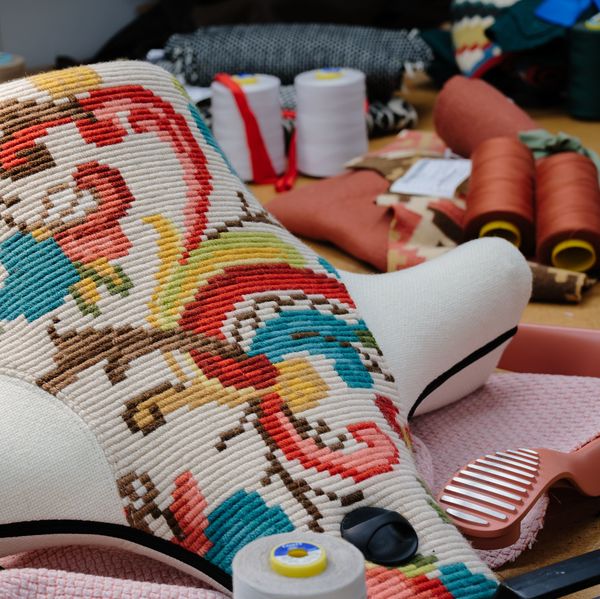
HÅG collaborates with Norwegian studio Recouture to create unique, limited‑edition Capisco chairs featuring vintage åkle tapestry, blending ergonomic design with historic textile craftsmanship. The collection, showcased at NeoCon 2026, includes exclusive pieces, a giveaway, and a commission program allowing clients to personalize chairs with heirloom or curated åkle, highlighting sustainability, cultural heritage, and innovative workplace furniture.
|
| |
|
|
|
|
Interiors from Spain Returns to Fulton Market Design Days 2026
|
|
Interiors from Spain will return to Fulton Market Design Days 2026 in Chicago from June 8‑10, showcasing ten forward‑thinking Spanish design brands in a pop‑up space at 1132 W Fulton (3rd floor). The event features new products, a first‑day party with Spanish beverages and tapas, and highlights the growing influence of Spanish design in the U.S. market.
|
| |
|
|
|
|
Ghent Celebrates 50 Years of Innovation at NeoCon 2026
|
|
Ghent will celebrate its 50‑year milestone at NeoCon 2026, inviting attendees on Monday, June 8, to showroom 1094 on the 10th floor of The MART in Chicago for a day of celebrations, product reveals, and signature Cincinnati hospitality. The event highlights Ghent’s long‑standing leadership in visual communication solutions and its commitment to innovation and hospitality.
|
| |
|
|
|
|
Configura at NeoCon 2026: Explore the Software, Save on Experience 2026, Enter to Win
|
|
Configura will exhibit at NeoCon 2026 in Chicago, showcasing its full software suite—including CET Commercial Interiors and Aline—and offering attendees a chance to win prizes such as a free Experience 2026 conference ticket, a CET license, or a SPEC license. Starting June 8, a flash sale will discount Experience 2026 tickets to $800 (down $150 from the regular $950), with the conference scheduled for October 6‑8 in Cincinnati, featuring keynotes, workshops, and evening events at iconic venues, plus a discounted hotel rate of $189 per night for bookings made by September 14.
|
| |
|
|
|
|
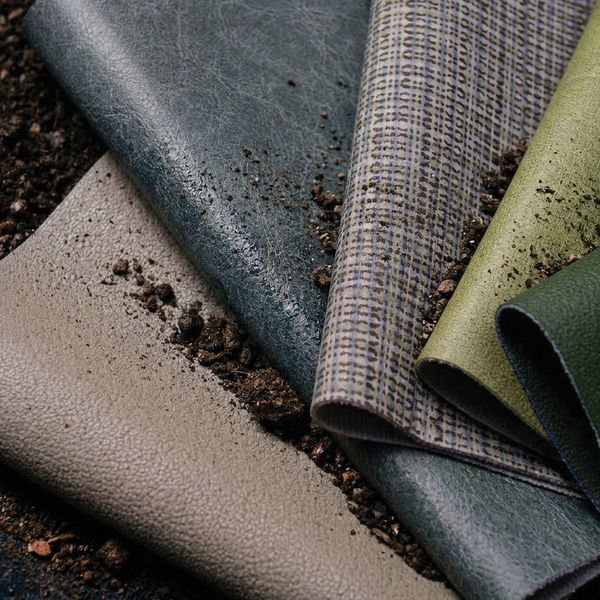
Hyphyn™ Biodegradable Vinyl Makes Its Design Days Debut and Returns to NeoCon, Sharing Latest Safety Testing Results
|
|
Hyphyn™ biodegradable vinyl, designed for high‑traffic hospitality, healthcare, education, and retail spaces, debuted at Fulton Market Design Days and will return to NeoCon, showcasing its sustainable performance, safety for incineration, and rapid biodegradation—over 90% within two years—while maintaining durability, cleanability, and cost parity with conventional vinyl.
|
| |
|
|
|
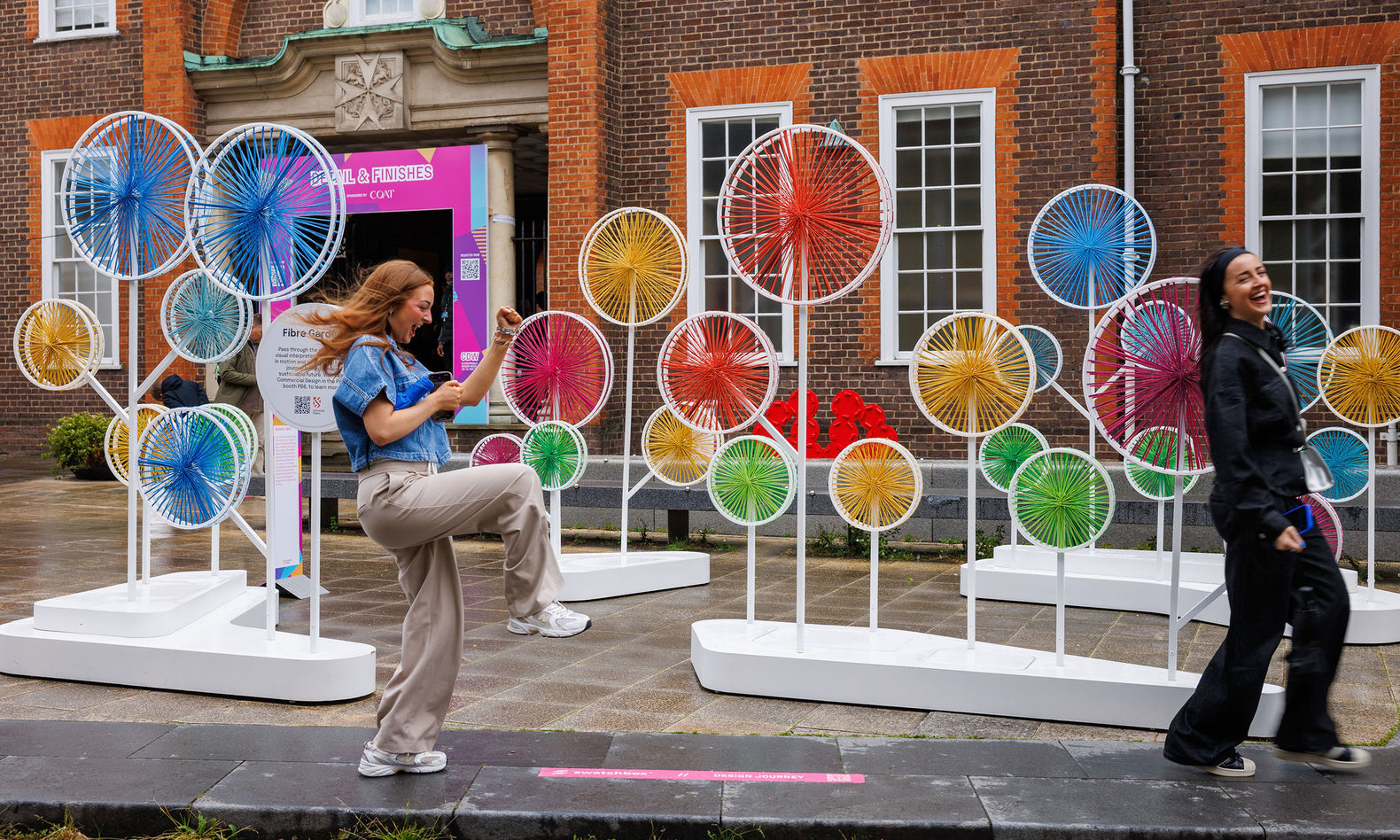
The final day of Clerkenwell Design Week 2026 showcased a range of innovative installations, talks, and product collections, highlighting the “Fountain of Technicolour Beads” installation raising awareness for colour vision deficiency, and sessions on brand integrity, workplace trust, nature‑integrated design, and neuro‑focused offices. Additional highlights included the Norwegian Boutique Bedroom collection, the sustainable Brew House pavilion made from coffee‑ground bricks, and various product showcases such as Aarea’s recycled‑material furniture, Nordlux’s minimalist pendant, Corston’s easy‑install lighting, and Dornbracht’s versatile Coya fixtures, all reflecting the festival’s focus on inclusive, sustainable, and forward‑thinking design.
|
|  design-milk.com design-milk.com
|
|
|
|
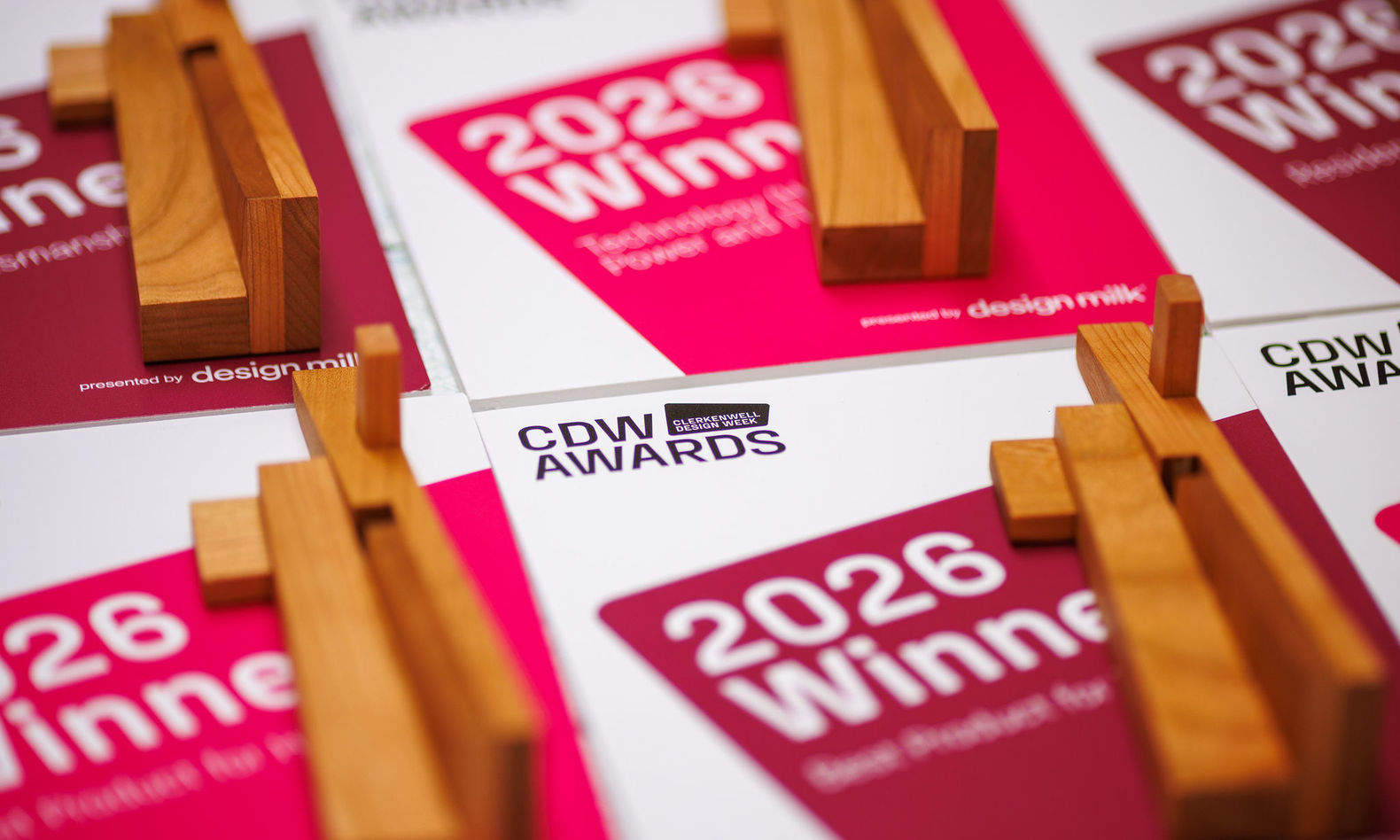
The Clerkenwell Design Week Awards, partnered with Design Milk, honor innovative products and design leaders across categories such as Best of, Products, and People. Winners include Woodbender’s Scoop 33 Chair, Cosentino’s Éclos surface, Andreu World’s Bolete Armchair, and many others spanning craftsmanship, material innovation, sustainability, inclusivity, healthcare, home, workplace, accessories, acoustics, fixtures, textiles, cladding, furniture, lighting, technology, and interior and product design. The awards also recognize top designers and studios, with Asia Miari named Interior Designer of the Year, Kerry Deffley as Product Designer of the Year, and Perkins&Will London as Studio of the Year.
|
|  design-milk.com design-milk.com
|
|
|
|
|
Trends in Commercial Projects
|
|
|
|
|
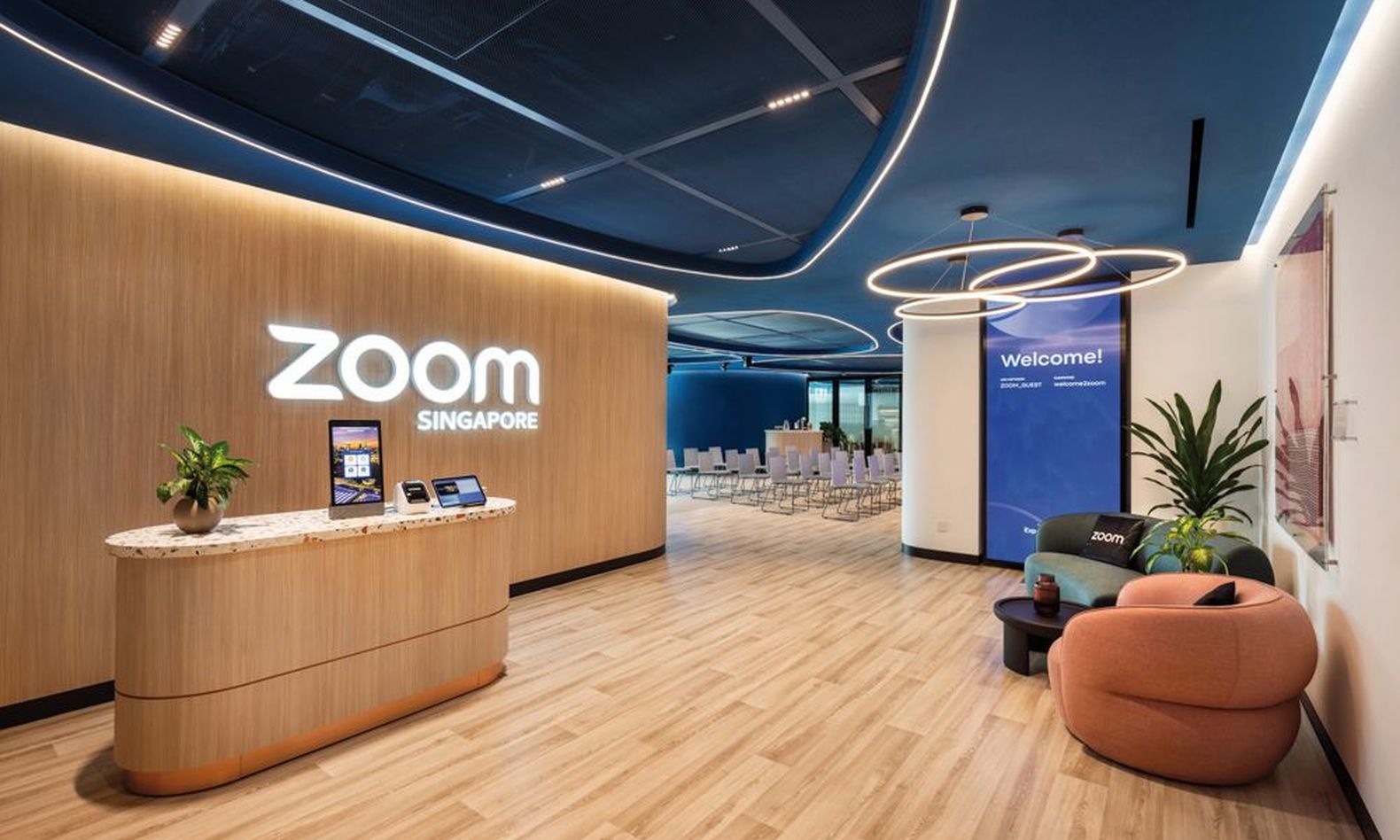
Zoom’s new Singapore headquarters, designed by Scott Brownrigg, is a 7,800 sq ft, technology‑integrated workspace on the 24th floor of the IOI Boulevard Towers. It features three zones—a flexible Engagement Hub for focused work and video calls, a central meeting hub for events, and a 2,000 sq ft Experience Hub for visitors to interact with Zoom services—blending digital connectivity with Singapore’s “Garden City” aesthetic through natural materials, greenery, timber joinery, and sky‑blue accents.
|
|  www.mixinteriors.com www.mixinteriors.com
|
|
|
|
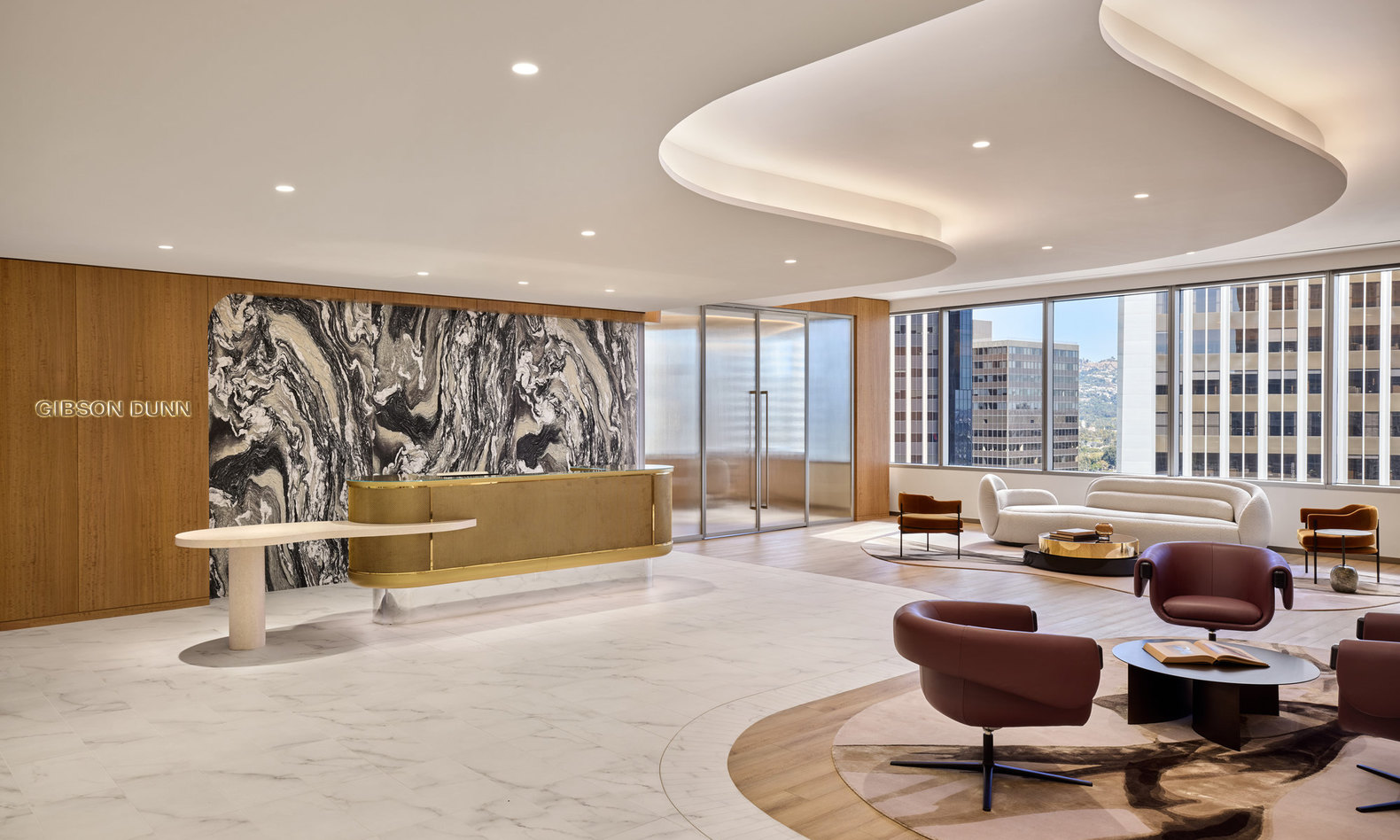
Gensler redesigned Gibson, Dunn & Crutcher’s Los Angeles office, creating a bright, collaborative 40,000 sq ft workplace that emphasizes wellbeing, natural light, and rich materials, while nearly doubling the firm’s previous space.
|
|  officesnapshots.com officesnapshots.com
|
|
|
|
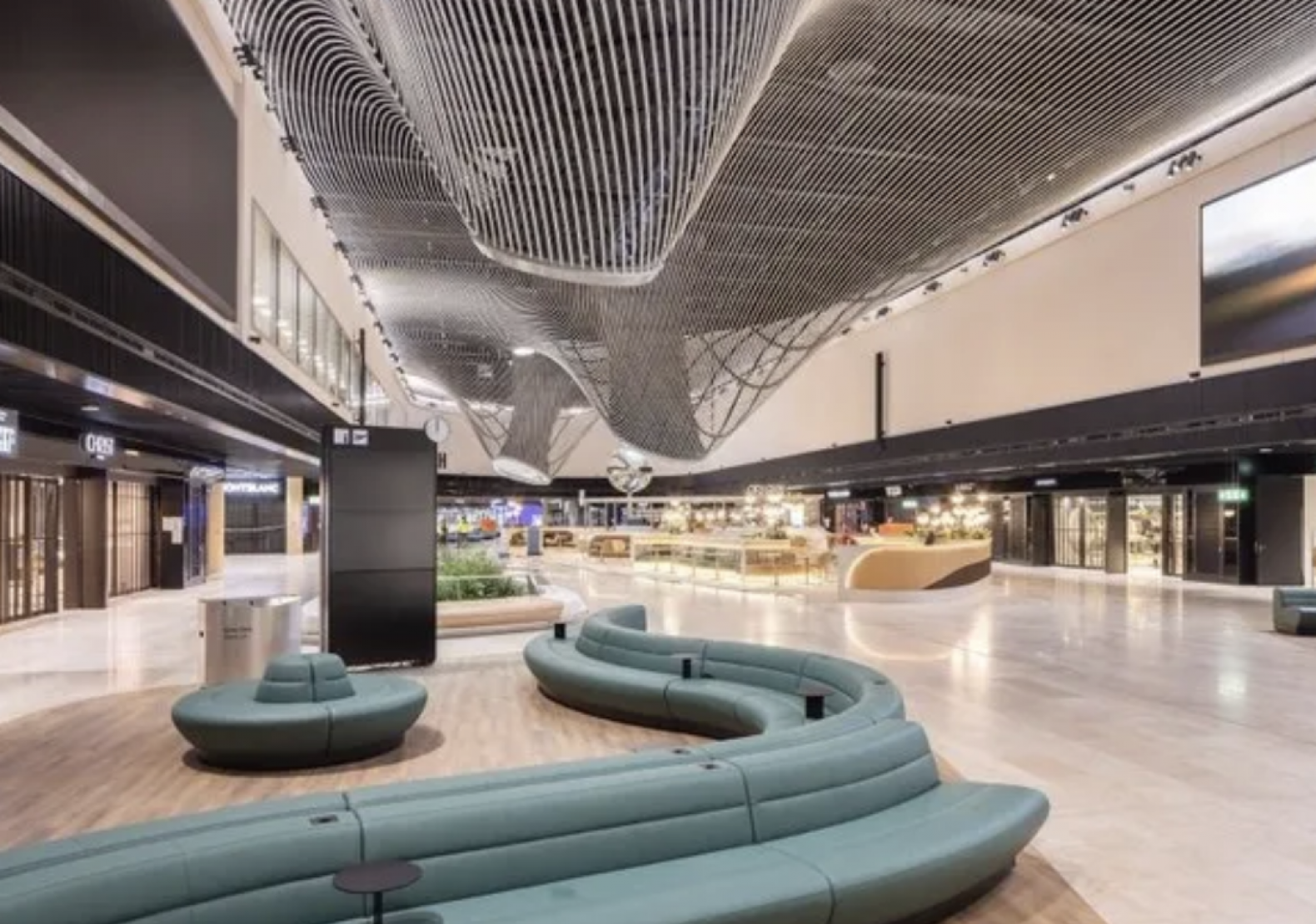
Walter Knoll installed nearly 500 m of custom bench seating throughout Frankfurt Airport’s new Terminal 3, creating modular, flexible seating zones for arrivals, transit, and gates that enhance passenger comfort and support the airport’s hospitality‑focused design.
|
|  www.interiordaily.com www.interiordaily.com
|
|
|
|
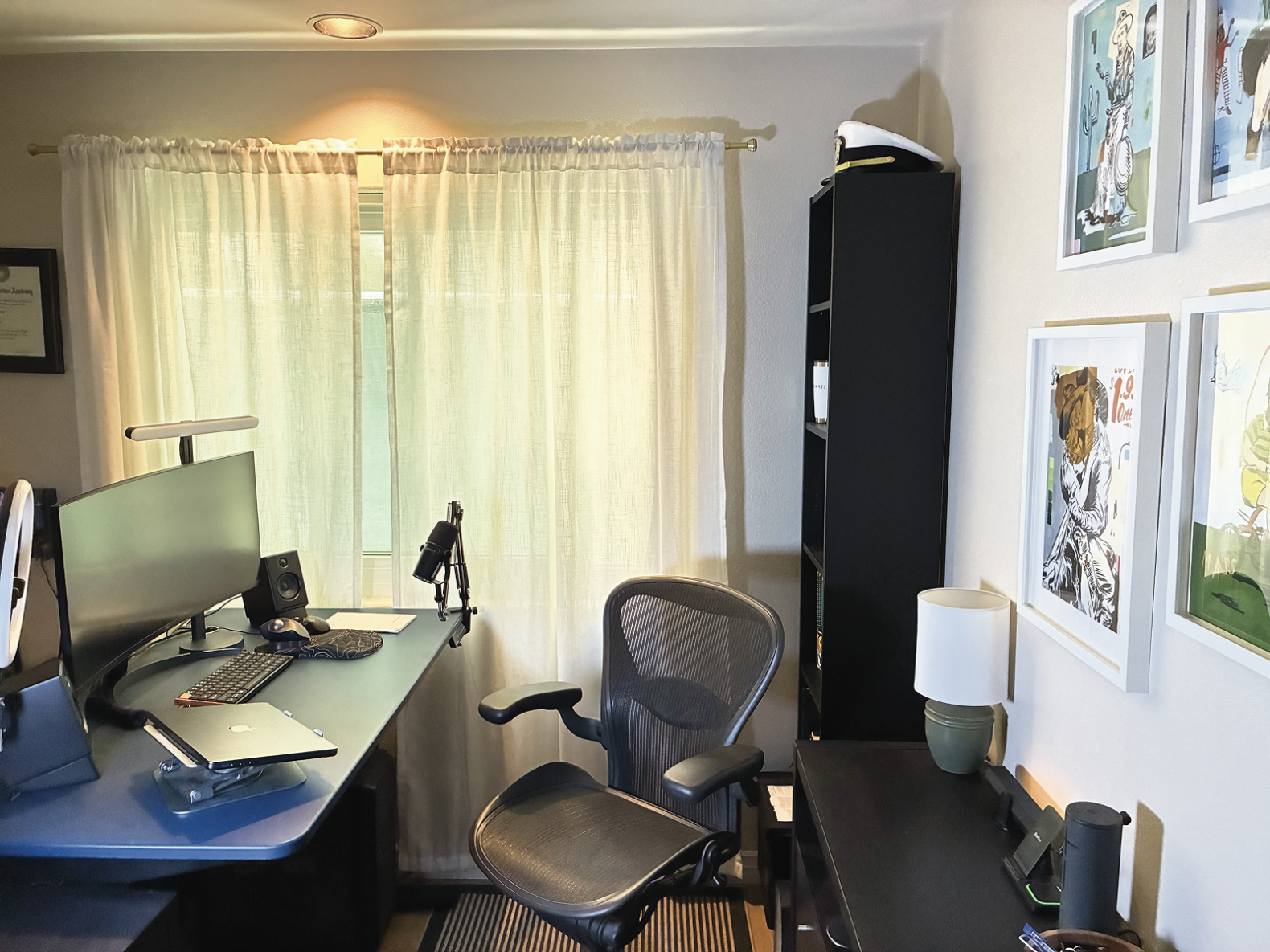
Gannon Breslin, a growth marketer and media strategist based in Newport Beach, runs a multifaceted career that blends viral content creation, fintech social strategy, and media leadership. His workspace features premium gear—including a Herman Miller Aeron chair, Autonomous standing desk, high‑end monitors, audio equipment, and lighting—and he relies daily on tools like Notion, Claude, Wispr Flow, Fireflies.ai, Affinity, Snowball, Slack, and Capcut to produce and manage content. He follows a disciplined routine of early mornings, exercise, music, news, and structured planning to stay productive, while also serving as an officer in the Navy reserves. Recent additions include a Logitech MX Ergo S mouse, and he seeks to improve his lighting setup for a more natural look.
|
|  www.workspaces.xyz www.workspaces.xyz
|
|
|
|
|
MillerKnoll Named Gala Honoree at Cooper Hewitt’s 2026 Smithsonian National Design Awards
|
|
MillerKnoll was honored as a 2026 Gala Honoree by the Cooper Hewitt Smithsonian Design Museum, highlighting its century‑long impact on American design and its role in the nation’s 250th anniversary celebrations. The recognition underscores the company’s legacy from Herman Miller and Knoll, its extensive archives, and its continued influence on modern design across workplaces, products, and cultural institutions.
|
| |
|
|
|
|
IIDA NY Bestows Leadership Award of Excellence to Tom Polucci
|
|
Tom Polucci, FIIDA, AIA, LEED GA and Firmwide Director of Interiors at HOK, received IIDA New York’s 2026 Leadership Award of Excellence, recognized for his 25‑plus years of design leadership, multidisciplinary approach, and commitment to advancing the interior design profession. Celebrated at the Leaders Breakfast with over 800 attendees, his work spans major brands and global projects, while he also contributes as a Fellow of IIDA, HOK executive, and chair of DIFFA, emphasizing mentorship, community impact, and design excellence.
|
| |
|
|
|
|
PJCArchitecture Relocates NYC Headquarters
|
|
PJCArchitecture is relocating its headquarters to 150 West 25th Street in New York’s Flatiron district to support growth and international expansion, offering a flexible 650‑sq‑ft space that enhances collaboration and proximity to design resources. The move reflects the firm’s 25‑year evolution, emphasizing agile global teamwork, sustainability, and a human‑centered approach while maintaining its presence in New York, Miami, and Quito.
|
| |
|
|
|
|
Market Development Representative (Southeast Region)
|
|
BRC is seeking a Market Development Representative (Southeast Region) to drive growth within a strategic alliance partner dealer channel, with an initial focus in the Orlando, FL market. This role focuses on building strong dealer relationships, identifying and developing opportunities, and supporting projects from early specification through order completion. Acting as a direct extension of BRC in the market, the MDR will partner with dealer sales and design teams to increase engagement, expand scope within active projects, and capture competitive opportunities, while ensuring a high level of responsiveness and execution throughout the sales process.
|
| See Job Opening > |
|
|
|
|
|