|
|
|
Thursday, January 15 | Bits & Bytes Hosts Will Leeson on "Leveraging SMT Solver Instability"
|
3:30-4:30 pm • Anderson 329 • Computer Science
Bits & Bytes Hosts Will Leeson on "Leveraging SMT Solver Instability" Abstract: The Boolean satisfiability (SAT) problem is a longstanding and well-studied problem in computer science. Given a formula consisting of boolean values, variables, and operators, the problem asks whether there is some assignment to the variables in the formula such that the formula evaluates to true. Learn more here.
|
|
|
|
|
|
|
|
Friday, January 16 | Geology Seminar: Tony Runkel
|
3:30-4:30 pm • Anderson 129
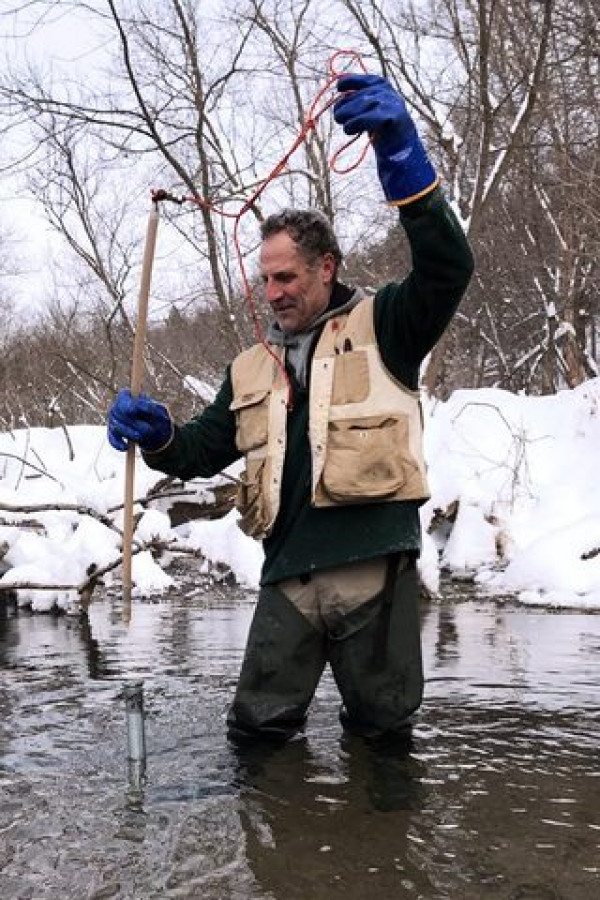
Tony Runkel - Lead Geologist, Minnesota Geological Survey "The Challenge of Implementing Geoscience-Guided Groundwater Protection Rules in Minnesota’s Vulnerable Karstic Region" Agricultural activities across southeast Minnesota’s karstic terrain have resulted in extensive areas where greater than ten percent of wells are above the drinking water standard of 10 mg/l, leading to several policy and management strategies to mitigate the problem. Many of these strategies are relatively routine and have been in practice for many years, such as setbacks of manure storage and application from karst features. More recently, Minnesota’s Groundwater Protection Rule (GPR) was established, with the purpose of minimizing nitrogen fertilizer sources of nitrate pollution. Learn more here.
|
|
|
|
|
- Biology Seminar: Sebastian Schreiber, Professor of Evolution and Ecology, University of California, Davis, “When do environmental rhythms alter ecological outcomes?” - Olin 141, 3:30-4:30 pm
We live in a world where environmental conditions are constantly changing: some years are warmer than others, some days are wetter than other days. It is well-known that this environmental variation can result in population declines or mediate coexistence between competing species. However, it is less well-known how the rhythm of this environmental variation impacts ecological outcomes. In this talk, Professor Schreiber will show that the temporal structure of environmental fluctuations—not just their magnitude—can fundamentally alter ecological outcomes. For competing species, positive autocorrelation in environmental conditions can promote coexistence while negative autocorrelations can generate alternative stable states. For structured populations, the tempo and mode of environmental change (random versus periodic) can determine whether populations persist or go extinct. Together, these results suggest that understanding when and how environments fluctuate may be just as important as understanding that they fluctuate.
|
|
|
|
|
- Physics Table - Check Radiations Newsletter for location, noon - 1 pm
If you have any sort of interest in Physics or Astronomy, come join other folks who are, and enjoy a community lunch! We usually gather at the LDC at noon each Tuesday (check our newsletter Radiations for any exceptions). If you're off board or on a limited plan, let the cashier know you're there for Physics Table and we'll treat you to lunch!
- Math/Stats Colloquium: Sebastian Schreiber, University of California, Davis - CMC 206, 4-5 pm
Diversity or Collapse? How Invasion Graphs Predict the Fate of Ecological Communities Abstract: Why do some sets of species coexist while others don't? Why does introducing one species increase community diversity while another triggers a collapse? How can environmental fluctuations promote coexistence when it's impossible in any constant environment? Learn more here
|
|
|
|
|
- Chemistry Periodic Table - Anderson, Mohrig student gathering space, noon - 1 pm
Periodic Table will meet at noon in Anderson Hall on the 2nd floor/Mohrig Student Gathering Space. If you are off board, the department will cover your lunch. Go to the Schulze Cafe in the Daugherty Atrium and ask for the chemistry charge. Any questions, contact Danielle Morisette
- Bits & Bytes Hosts Will Leeson on "Leveraging SMT Solver Instability" - Anderson 329, 3:30-4:30 pm
Bits & Bytes Hosts Will Leeson on "Leveraging SMT Solver Instability".
Abstract: The Boolean satisfiability (SAT) problem is a longstanding and well-studied problem in computer science. Given a formula consisting of boolean values, variables, and operators, the problem asks whether there is some assignment to the variables in the formula such that the formula evaluates to true. Learn more here.
- Name of event - location, time
Aenean ultrices porttitor posuere. In eget hendrerit magna. Pellentesque habitant morbi tristique senectus et netus et malesuada fames ac turpis egestas. Suspendisse potenti.
|
|
|
|
|
- Biology Seminar: Katie Sperry ‘17 - Olin 141, 3:30-4:30 pm
Marine Policy Fellow at the National Oceanic & Atmospheric Administration, Topic TBD
|
|
|
|
|
|
Campus Events and Resources
|
|
|
|
|
|
Wednesday, January 14 | Immigration 101: Overview of US Immigration Policy
|
6-7 pm • Hasenstab 002 • CCCE
Want to know more about immigration policy in the US and how it’s playing out in communities like this one? Come hear a brief presentation and help us decide what questions to ask a panel of immigration advocates who will be speaking at a follow up session later this term during Week 7. This event is open to the entire Carleton community.
This is the first event of a two part series working to raise campus awareness on immigration and ICE incidents in Northfield. The second event will have a panel of local and state wide immigration advocates to talk about the ecosystem of support for immigrants in our community and state. Email Lily with any questions, dinner provided, RSVP here.
|
|
|
|
|
- Wednesday, January 14 | Résumé Writing for Juniors & Seniors - Alumni Guest House 100, 4:30-5:30 pm
This comprehensive workshop will equip you with the essential skills and understanding to craft a standout résumé tailored to your chosen industry. Learn best practices for formatting, structuring, and articulating your skills and experiences in a clear and compelling manner. This will be a working session- bring your computer to complete the first steps and identify the next steps. Register and learn more here.
- Thursday, January 15 | Weitz Fellowship Information Session - virtual, 7-8 pm
Hear from the current Carleton Weitz Fellows: Grace Bassekle, Julia Dunn, Markus Gunadi, Will Hassell, Maya Keeney, Dani Reynoso, Ashley Rosenberg, and Mia Strubel Iram, as they present a brief overview of the program and their insights into their organization's mission and work. The Weitz Fellowship provides one-year, full-time positions for nine Carleton 2026 graduates at nonprofit organizations in Omaha and Lincoln, Nebraska. Positions are paid, include benefits and funding for professional development, and provide cross-functional, professional experience in all aspects of the fellow’s organization. Register and learn more here.
|
|
|
|
|
- Tuesday, January 13 | LTC Lunch - How Bias Shapes Low-Income Student Belonging and Success - Weitz 236, 11:45 am-1 pm
This session challenges harmful myths about low-income students, highlighting their strengths and potential. Participants will examine biases and systemic inequities and gain practical strategies to foster inclusive learning environments. Kim Hildahl, Director of TRIO/SSS
- Tuesday, January 13 | Ed Tech Tea: Without a Wire in the Classroom - AirMedia and Classroom Technology - LDC 104, 3:30-4:30 pm
This Ed Tech Tea will be a demonstration of AirMedia wireless presentation technology and discussion about how it can be used in the classroom in tandem with other av tools like the document camera. (Paul Bernhardt) Let us know you are coming and please bring your laptop. Enjoy some tea and cookies while exploring.
|
|
|
|
|
Library support course requests for Winter term are now being accepted. Please get in touch if you would like a library instruction component for your class this term! This could be a traditional librarian class visit, a custom course guide featuring selected resources, or you may just want to highlight the library consultation services available to your students. Of course library support doesn’t need to look the same for every class. Have an idea? Just reach out! Dates are filling quickly.
Events
Three College Librarian candidate interviews will take during weeks 2 and 3 this term. Public talks will be held in the Gould Library Athenaeum during Common Time (Noon-1 pm) on January 13th,15th, and 20th. All are welcome to attend.
Resources updates
 LibKey Nomad is a tool that seamlessly connects you to Carleton Library subscriptions making it easy to access a PDF with the click of a button directly from the places you already search like PubMed and many publisher websites. Learn more and download the browser add-on to get started today!
|
|
|
|
|
|
|
- Hannah Chapman Tripp, STEM and Data Librarian, Gould Library
|
|
|
|
|
Alex Knodell, professor of classics and director of archaeology, published an article with colleagues in the journal Hesperia. At 99 pages, this is the most substantial publication of the Small Cycladic Islands Project yet, detailing archaeological survey work on 14 currently uninhabited islands in the western Cyclades. New discoveries shed light on settlement patterns, subsistence, mineral extraction, and military activity across the archipelago. Several Carleton students contributed to this work as part of an international team.
Kaz Skubi ’11, assistant professor of Chemistry, was awarded funding from the provost’s Hewlett Mellon endowment for his work on “Controlling the Selectivity of Radical Reactions Enabled by Visible Light Photocatalysis.”
Cherlon Ussery, professor of cognitive science and linguistics, was awarded support from the Smith fund for her work on “Building Capacity at MMUF Liberal Arts Institutions.”
Matt Whited, professor of chemistry, was awarded funding for travel to Germany to collaborate with a colleague on new cooperative catalytic systems with earth-abundant metals.
Sarah Kennedy, assistant professor of archaeology and Latin American studies, was awarded funding from the provost’s Hewlett Mellon endowment and a Class of ’49 Fellowship to support her work on “Incan Expansion and Native Resistance in the Peruvian Altiplano.”
|
|
|
|
|
Visit Carleton Integrated Math and Science for additional news and research opportunities in Biology, Chemistry, Computer Science, Environmental Studies, Geology, Mathematics & Statistics, Neuroscience, Physics & Astronomy, and Psychology.
|
This Week in Science is produced by the Center for Integrated Math and Science. For questions about the newsletter, please contact Jesse Lewis.
|
|
|
|
|
|
|